In an era where climate consciousness shapes technological innovation, the Solar Impulse 2 emerged as a symbol of what’s possible when human ingenuity meets environmental responsibility. This solar-powered aircraft completed a historic circumnavigation of the globe in 2016, proving that long-distance flight without fossil fuels was not just a dream but a reality. The project, led by Swiss explorers Bertrand Piccard and André Borschberg, was more than an aviation milestone—it was a statement about the future of sustainable travel.
The Vision Behind Solar Impulse 2
Bertrand Piccard, a psychiatrist and balloonist, conceived the Solar Impulse project after his 1999 nonstop balloon flight around the world. He envisioned an aircraft that could fly day and night without fuel, relying solely on solar energy. Piccard teamed up with André Borschberg, an engineer and former fighter pilot, to turn this vision into a tangible mission. Their goal wasn’t just to break records but to demonstrate the untapped potential of renewable energy in aviation.
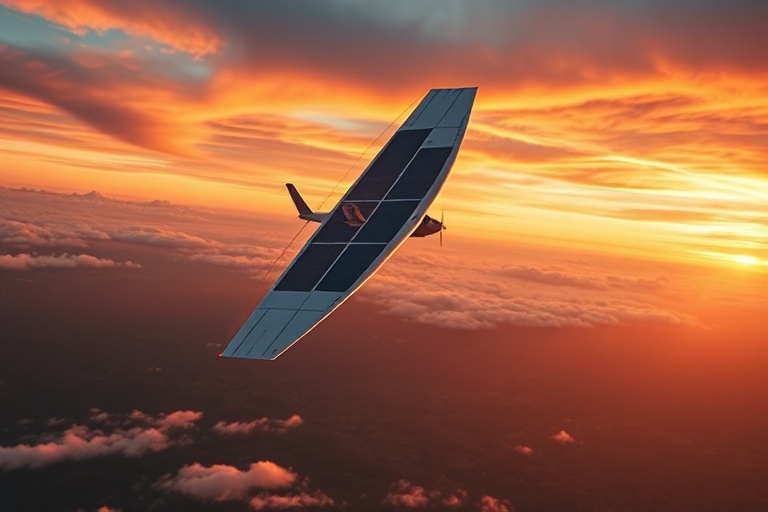
The Solar Impulse 2 was designed as a technological marvel. Its wingspan stretched 72 meters—wider than a Boeing 747—yet it weighed only 2.3 metric tons, about the same as a large SUV. Covered in 17,248 solar cells, the aircraft’s four electric motors were powered entirely by sunlight during the day, with excess energy stored in lithium-ion batteries for nighttime flights. This delicate balance of efficiency and endurance was the key to its success.
Aircraft Specifications
- Wingspan: 72 meters (236 feet)
- Weight: 2,300 kg (5,070 lbs)
- Solar Cells: 17,248 (covering the wings)
- Battery Capacity: 633 kg (1,400 lbs) of lithium-ion batteries
- Max Speed: 140 km/h (87 mph)
- Cruising Speed: 90 km/h (56 mph)
- Altitude: Up to 8,500 meters (27,900 feet)
The Round-the-World Journey
The Solar Impulse 2’s journey began on March 9, 2015, in Abu Dhabi. Over the next 16 months, the aircraft traversed four continents, three seas, and two oceans, completing 17 legs of its journey. The most grueling segment was the 8,924-kilometer (5,545-mile) nonstop flight from Nagoya, Japan, to Kalaeloa, Hawaii—a five-day, five-night ordeal that tested both pilot and machine to their limits. Borschberg, who piloted this leg, set a world record for the longest solo flight in terms of duration.
For Piccard, who took the controls for the final leg from Cairo to Abu Dhabi, the mission was as much about human endurance as it was about technological prowess. The pilots faced extreme conditions: temperatures ranging from -40°C to 40°C (-40°F to 104°F), cramped cockpits without pressurization, and the constant need to monitor battery levels and weather patterns. Sleep was a luxury, with power naps of just 20 minutes allowed during the longest flights.
Key Milestones of the Mission
- March 2015: Departure from Abu Dhabi (United Arab Emirates)
- June 2015: First ocean crossing (Muscat, Oman to Ahmedabad, India)
- July 2015: Crossing the Arabian Sea to Varanasi, India
- March 2016: First trans-Pacific leg (Nanjing, China to Kalaeloa, Hawaii)
- April 2016: Crossing the Pacific Ocean to San Francisco, California
- June 2016: Flight to New York City, USA
- July 2016: Transatlantic leg to Seville, Spain
- July 2016: Final leg from Cairo, Egypt to Abu Dhabi
Technological Innovations and Challenges
The Solar Impulse 2 wasn’t just a plane—it was a flying laboratory. Its success hinged on breakthroughs in lightweight materials, energy storage, and aerodynamics. The solar cells, developed by SunPower, achieved an efficiency of 23%, a significant improvement over earlier models. The aircraft’s structure was built using carbon fiber, which provided the necessary strength while keeping the weight minimal. Even the cockpit was designed for maximum efficiency, with a reclining seat that doubled as a toilet and a virtual co-pilot system to assist with navigation.
Yet, the project faced its share of challenges. The most critical was battery overheating during the Hawaii leg, which forced a nine-month hiatus for repairs and upgrades. Engineers had to redesign the cooling system to prevent future issues. Weather also posed a constant threat—unpredictable winds, turbulence, and storms often forced delays or route changes. The pilots relied on a team of meteorologists and engineers on the ground, who provided real-time updates and strategic advice.
Another hurdle was public perception. Many skeptics doubted the feasibility of long-distance solar flight, arguing that the technology was too fragile or impractical for commercial use. Piccard and Borschberg countered these criticisms by emphasizing the mission’s broader goals: to inspire innovation and prove that sustainable solutions were within reach. Their perseverance paid off, as Solar Impulse 2 became a global ambassador for clean energy.
Legacy and Impact
The completion of the Solar Impulse 2’s circumnavigation marked a turning point in aviation history. While the aircraft itself was not designed for commercial use—its slow speed and single-seat cockpit made it impractical for mass travel—it demonstrated that solar power could sustain flight over vast distances. The project catalyzed advancements in battery technology, lightweight materials, and energy-efficient design, which have since influenced industries beyond aviation.
Piccard and Borschberg leveraged the mission’s success to advocate for renewable energy policies. They launched the Flying Clean Challenge, urging governments and corporations to invest in clean technologies. Their work also inspired startups and researchers to explore solar-powered drones and other sustainable aviation projects. Today, companies like Airbus and Boeing are developing hybrid-electric aircraft, a direct result of the groundwork laid by Solar Impulse.
The mission also left a cultural imprint. It captured the imagination of millions worldwide, particularly younger generations, who saw it as a testament to human creativity and environmental stewardship. Schools and universities incorporated the project into STEM curricula, using it to teach principles of physics, engineering, and sustainability. The Solar Impulse 2 became a symbol of hope, proving that even the most ambitious goals could be achieved with determination and innovation.
Lessons for the Future
“Solar Impulse was never about the aircraft. It was about the message: that clean technologies can achieve the impossible. If we can fly around the world on solar power, why can’t we power our homes, our cities, and our industries the same way?” — Bertrand Piccard
The Solar Impulse 2’s journey was a reminder that progress often requires patience and resilience. The project spanned over a decade, from its inception in 2003 to its completion in 2016. Along the way, Piccard and Borschberg faced financial constraints, technical setbacks, and public skepticism. Yet, their unwavering commitment to the vision kept the project alive. This perseverance is a lesson for any endeavor aiming to push the boundaries of what’s possible.
As the aviation industry grapples with its carbon footprint, the Solar Impulse 2 stands as a beacon of what’s achievable. While fully solar-powered commercial flights remain a distant dream, the technologies and insights gained from the project are already shaping the next generation of aircraft. Hybrid-electric planes, which combine traditional fuel with electric propulsion, are in development, promising a 30% reduction in fuel consumption. These advancements owe much to the pioneering spirit of Solar Impulse.
For those passionate about technology and sustainability, the Solar Impulse 2’s story is one of inspiration. It challenges us to rethink our reliance on fossil fuels and to embrace innovation as a tool for change. The aircraft may have landed, but its legacy continues to soar.