By Alex Carter | Published June 10, 2024
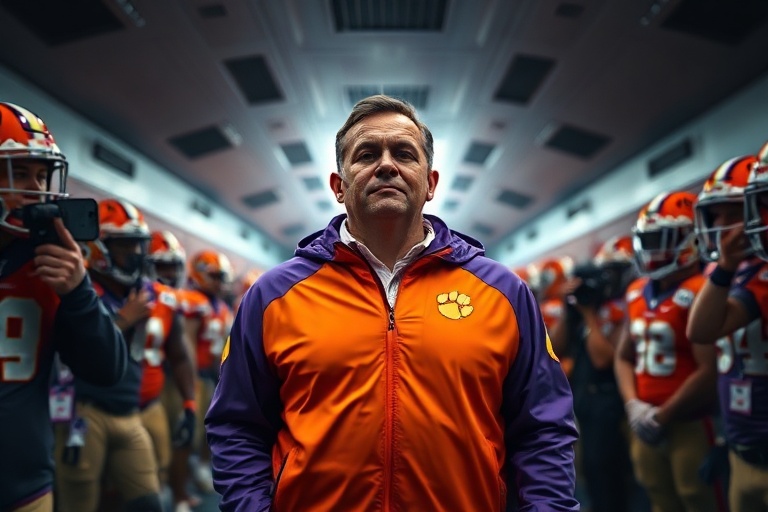
Dabo Swinney’s tenure as head football coach at Clemson University has been one of the most transformative eras in college football history. Over his 16 years at the helm, Swinney elevated the Tigers from a respected ACC program to a national powerhouse, winning two national championships and consistently competing for titles. His leadership style, recruiting prowess, and ability to develop quarterbacks have left an indelible mark on the program. Yet, as Clemson prepares for a new chapter, questions linger about the future without him and the path forward for the Tigers.
The Rise of a Program Under Swinney
When Dabo Swinney took over as interim head coach in October 2008, Clemson was a solid but unremarkable program. The Tigers had not won an ACC title since 1991, and their national relevance was sporadic at best. Swinney, a former Clemson player and longtime assistant, inherited a team that was bowl-bound but lacked the consistency to compete with bluebloods like Florida State, Miami, and later, Alabama. His appointment was initially met with skepticism—he had never been a head coach before—but Swinney quickly silenced critics by leading the Tigers to a 7-6 record in his first full season.
By 2011, Swinney had engineered a 10-4 season and a trip to the Orange Bowl, Clemson’s first major-bowl appearance since 1982. This marked the beginning of a sustained rise. The 2015 season was a turning point, as Clemson went 14-1, defeated Oklahoma in the Orange Bowl, and advanced to the College Football Playoff for the first time. The stage was set for something special, and in 2016, Swinney delivered Clemson’s first national championship in 35 years. The Tigers defeated Alabama 35-31 in a thrilling rematch of the previous year’s playoff semifinal, with quarterback Deshaun Watson leading the offense to a historic comeback.
Swinney’s ability to assemble elite recruiting classes was a cornerstone of Clemson’s success. Under his leadership, the Tigers consistently ranked in the top five nationally for recruiting, attracting five-star talent and developing them into NFL draft picks. Players like Watson, Trevor Lawrence, and DeShaun Carter became household names, while Swinney’s knack for finding late-blooming prospects—often from lesser-known high schools—kept the pipeline flowing. His emphasis on character and work ethic created a culture that extended beyond the football field.
Swinney’s Coaching Philosophy and Leadership
Swinney’s coaching philosophy revolved around three core principles: relationships, accountability, and relentless effort. He prioritized building trust with his players, often referring to them as “his sons” and fostering a family-like atmosphere. This approach paid dividends in player buy-in, particularly during high-pressure moments. For example, in the 2018 national championship game against Alabama, Clemson’s defense stifled Tua Tagovailoa and the Crimson Tide offense in the second half, thanks in part to Swinney’s ability to instill confidence in his unit.
Accountability was another hallmark of Swinney’s tenure. He held players to high standards, both on and off the field. When star wide receiver Mike Williams suffered a career-threatening injury in 2015, Swinney’s public support and the player’s subsequent recovery became a symbol of the program’s resilience. Similarly, Swinney’s decision to bench starting quarterback Kelly Bryant in favor of true freshman Trevor Lawrence ahead of the 2018 season demonstrated his willingness to make tough calls for the greater good of the team.
Off the field, Swinney’s charisma and media savvy made him a fan favorite. His folksy, motivational speeches—often peppered with Southern colloquialisms—resonated with Clemson’s fanbase and the broader college football community. Swinney’s annual “Big Monday” press conferences became must-watch events, where he blended humor with unfiltered honesty about his team’s progress. This authenticity endeared him to fans and helped Clemson build a brand that extended beyond football, including ventures like the Clemson Football Network and partnerships with major brands.
The Challenges and Criticisms of Swinney’s Later Years
Despite Clemson’s sustained success, Swinney’s later years were not without controversy. The 2020 season, played amid the COVID-19 pandemic, exposed vulnerabilities in the program. Clemson, ranked No. 1 to start the year, suffered a stunning upset to Notre Dame and finished 10-3, its worst record since 2010. The following season saw another playoff berth but a blowout loss to Ohio State in the semifinals. These setbacks raised questions about whether Swinney’s coaching had become stale or if the program had plateaued.
Recruiting also faced scrutiny. While Clemson remained a top-10 program, it began losing ground to rivals like Georgia, Alabama, and Ohio State in the battle for five-star prospects. Some analysts argued that Swinney’s reluctance to adapt to modern offensive trends—particularly the rise of the run-pass option (RPO) and spread concepts—hindered the Tigers’ ability to keep up with the most innovative offenses. The 2023 season, which ended with a 9-3 record and no playoff appearance, was the first time Clemson failed to qualify for the postseason under Swinney, further fueling debate about the program’s direction.
Swinney’s handling of player transfers also drew criticism. In 2021, several players entered the NCAA transfer portal, including starting quarterback D.J. Uiagalelei. Swinney publicly expressed frustration with the portal’s impact on roster continuity, but some former players and analysts suggested that his rigid approach to player development contributed to the exodus. The departure of key contributors like offensive coordinator Jeff Scott and defensive coordinator Brent Venables (who left for Oklahoma in 2021) also disrupted the staff’s cohesion.
A Timeline of Key Moments in Swinney’s Clemson Era
- 2008: Swinney takes over as interim head coach after Tommy Bowden’s resignation.
- 2011: Clemson wins the ACC title and plays in the Orange Bowl.
- 2015: Tigers finish 14-1 and reach the College Football Playoff.
- 2016: Clemson wins its first national championship since 1981, defeating Alabama 35-31.
- 2018: Tigers repeat as national champions, beating Alabama 44-16 in the title game.
- 2020: Clemson struggles to an 10-3 record, its worst under Swinney.
- 2023: Tigers miss the playoff for the first time under Swinney, finishing 9-3.
What’s Next for Clemson Football?
Swinney’s retirement announcement in January 2024 sent shockwaves through college football. After 16 seasons, he stepped down as Clemson’s head coach, leaving behind a program that had become synonymous with consistency and excellence. His legacy is secure: two national titles, seven ACC championships, and a place among the top 25 winningest coaches in FBS history. Yet, the question remains: Can Clemson replicate his success under a new leader?
The transition will not be seamless. Swinney’s presence loomed large over the program, and his departure leaves a void that will be difficult to fill. The search for his successor will be critical, with candidates like former Clemson offensive coordinator Tony Elliott and external hires like Mike Elko of Duke generating buzz. Whoever takes over will inherit a roster with talent but also lingering questions about offensive innovation and defensive depth.
The ACC, once considered a second-tier power conference, has become more competitive in recent years. Programs like Florida State and Louisville have closed the gap on Clemson, while traditional rivals like Florida State and Miami have regained their footing. To remain a national contender, Clemson must adapt to the evolving landscape of college football, where NIL (name, image, and likeness) deals and the transfer portal play increasingly pivotal roles.
For Swinney, the next chapter may include a role in college athletics or the NFL. He has hinted at staying involved in football in some capacity, whether as an analyst, consultant, or even a coordinator. Regardless of his next move, his impact on Clemson is undeniable. The program he leaves behind is stronger than the one he inherited, and his influence on the players he mentored will endure for years to come.
“Clemson football is more than a program; it’s a family. We’ve built something special here, and that legacy will continue long after I’m gone.” — Dabo Swinney
Conclusion: Honoring the Past While Embracing the Future
Dabo Swinney’s tenure at Clemson is a testament to the power of leadership, culture, and adaptability in college football. His ability to turn a mid-tier ACC program into a national dynasty is a rare feat, one that cements his place among the game’s all-time greats. Yet, his story is also a reminder of the cyclical nature of sports. Dynasties rise, and dynasties fall—and Clemson’s next chapter will be defined by how well it navigates the challenges ahead.
The Tigers’ fanbase, known for its passion and loyalty, will expect nothing less than excellence. As Swinney transitions from the sidelines to the next phase of his career, his impact on Clemson football will be felt for generations. For now, the program stands at a crossroads, poised to honor the past while writing a new future under fresh leadership.
One thing is certain: The Swinney era will be remembered as one of the most transformative periods in Clemson history—and its echoes will reverberate through Death Valley for decades to come.
For more analysis