The Boys Season 5 Episode 7: What Happened and Why It Matters
Episode 7 of The Boys Season 5 delivers one of the most explosive installments of the series yet, pushing the boundaries of its dark satire while deepening character arcs that have defined the show’s trajectory. This installment, titled “The Last Stand of Soldier Boy,” serves as a fulcrum for the season’s escalating tensions, particularly around Homelander’s unraveling psyche and Soldier Boy’s vengeful return.
The episode masterfully balances high-stakes action with psychological depth, culminating in a confrontation that feels both inevitable and electrifying. With corporate interests colliding with superhuman egos, the series continues to explore how power corrupts—and what happens when the mask of heroism slips entirely.
The Return of Soldier Boy: Vengeance in Neon Light
Soldier Boy’s reemergence isn’t just a plot twist—it’s a thematic earthquake. After years of being manipulated and erased from history by Vought, his return is less about redemption and more about reckoning. The episode opens with a stark flashback to Soldier Boy’s 1984 mission in Nicaragua, a sequence shot in grainy, nostalgic tones that contrast sharply with the hyper-saturated modern aesthetic of The Boys’ world.
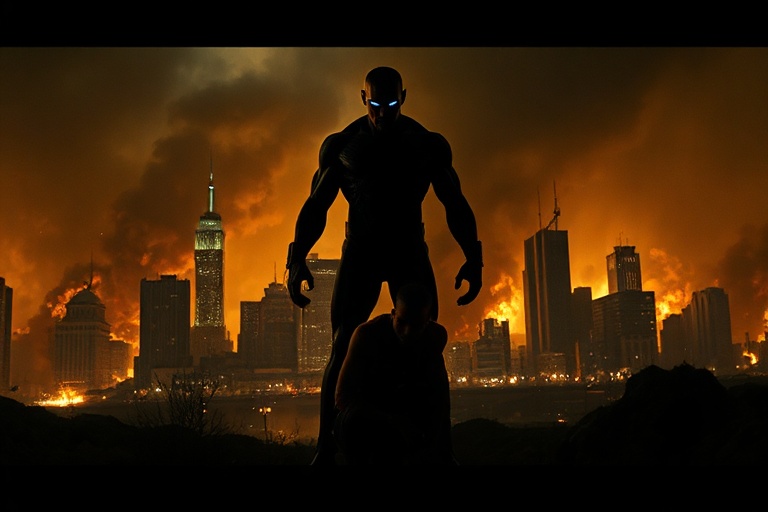
His reappearance in present-day New York is anything but subtle. Arriving like a spectral war criminal, Soldier Boy doesn’t just want to reclaim his legacy—he wants to burn the system that betrayed him. The scene where he dismantles a Vought security detail with terrifying efficiency is a visual and narrative gut punch, underscoring the show’s core question: What happens when the original super-soldier refuses to play by anyone’s rules?
Soldier Boy’s dialogue is dripping with Cold War-era bravado, delivered in a voice that’s equal parts gravel and menace. When he tells Homelander, “You’re just a corporate lapdog with godlike powers,” it’s not just a line—it’s a declaration of war. This moment crystallizes the generational battle between old-school authoritarianism and modern corporate fascism, both embodied by men who believe they are above consequence.
Homelander’s Descent: The Mask Slips
If Soldier Boy represents the past, Homelander embodies the present—and his unraveling is the episode’s most disturbing thread. Over the course of Season 5, we’ve watched him spiral from self-righteous tyrant to paranoid, violent recluse. Episode 7 pushes him further into the abyss.
His breakdown begins with a chilling private moment where he confesses to Stormfront’s AI echo (via a distorted recording): “I don’t know who I am anymore.” It’s a rare glimpse into the void beneath his god complex, a crack in the armor that makes his later outbursts even more terrifying. When he finally confronts Soldier Boy, the confrontation isn’t just physical—it’s ideological. Homelander clings to the idea that he is still America’s savior, while Soldier Boy dismisses him as a “made man” of Vought, a puppet with no real power.
The fight that follows is a masterclass in superhero deconstruction. Soldier Boy, despite his age, fights with a ruthless efficiency that exposes Homelander’s reliance on spectacle over substance. The fact that Homelander survives the encounter isn’t a victory—it’s a humiliation. He’s forced to flee, leaving behind wreckage and doubt, while Soldier Boy walks away with the moral (if not legal) high ground.
Vought’s Corporate Nightmare: The Boardroom Meets the Battlefield
While the front lines of the superhuman conflict rage, the backroom deals of Vought’s boardroom are just as volatile. Episode 7 weaves in a subplot involving Vought’s leadership scrambling to contain the Soldier Boy threat, only to realize they’ve lost control of their own creation.
The boardroom scenes are a darkly comic counterpoint to the violence outside. CEO Stan Edgar, ever the calculating opportunist, tries to spin Soldier Boy’s return as a “brand refresh.” His colleagues, however, are less sanguine. One executive bluntly states, “We turned a war criminal into a milkshake.” The line is delivered with such deadpan absurdity that it lands like a punchline—until you realize it’s not a joke, it’s the literal truth.
This subplot serves as a reminder that The Boys isn’t just a superhero show; it’s a satire of unchecked capitalism and the way industries commodify violence. Vought doesn’t care about ideals or legacies—only about profit margins and public perception. Soldier Boy’s return threatens that calculus, and the episode makes it clear: the company is more dangerous than the superheroes it creates.
The Cost of Legacy: What’s Left When the Smoke Clears?
The climax of Episode 7 leaves several critical threads hanging, but none more pressing than the question of legacy. Soldier Boy’s victory is pyrrhic at best. He defeats Homelander, but at what cost? He’s still a relic of a bygone era, a man out of time who lacks the infrastructure to truly challenge Vought’s modern empire.
Meanwhile, Homelander’s defeat is not a collapse but a transformation. His rage and paranoia have reached a fever pitch, and his next move—whatever it is—will likely define the season’s final stretch. The episode ends with Homelander staring into a mirror, his reflection fractured and distorted. It’s a chilling visual that suggests his identity is now fully splintered.
The supporting cast fares no better. Butcher remains a loose cannon, Madelyn Stillwell’s AI haunts him, and Ryan is caught in the crossfire of forces he doesn’t understand. Even Soldier Boy, for all his bravado, is left in a world that no longer has a place for him. The message is clear: in the world of The Boys, legacies are liabilities, and survival often means becoming the very thing you sought to destroy.
Key Takeaways from Episode 7
- Soldier Boy’s return is a narrative earthquake—not just a plot device, but a thematic challenge to Homelander’s (and Vought’s) authority.
- Homelander’s breakdown accelerates, revealing the hollowness beneath his godlike persona and setting up a potential fall from grace.
- Vought’s corporate machinery is exposed as the true villain, more dangerous than any superhuman because it operates without conscience or consequence.
- The cost of legacy is irrelevance—both Soldier Boy and Homelander are fighting for a world that no longer exists, or never truly did.
What Comes Next: The Endgame Approaches
With only a few episodes left in Season 5, the stage is set for a climactic confrontation. Soldier Boy and Homelander are locked in a battle of ideologies as much as strength. Soldier Boy represents the past’s brutal idealism; Homelander embodies the present’s hollow spectacle. Neither can coexist, and neither can win without destroying the other.
The supporting characters, too, are hurtling toward their own reckonings. Butcher’s obsession with Vought may finally consume him. Ryan’s innocence is fading fast. And Vought’s boardroom, now exposed and vulnerable, will likely see its own internal purge. The Boys has always thrived on escalation, and Episode 7 proves that this season is no exception.
One thing is certain: the heroes of this story were never the ones with powers. They were the ones who dared to look beneath the surface. And in Episode 7, that surface has been shattered entirely.
As the dust settles on this explosive installment, one question lingers: Who will be left standing when the smoke clears?