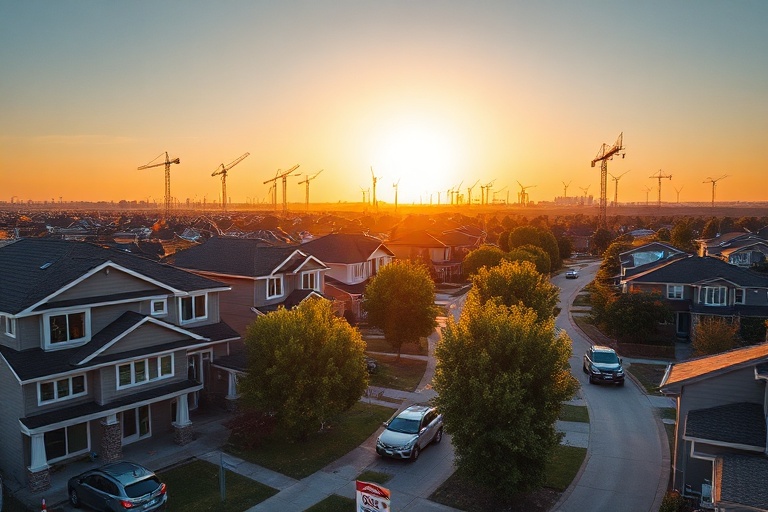
The Global Real Estate Market: Trends and Challenges in 2024
The real estate market has always been a reflection of economic health, cultural values, and societal priorities. In 2024, this dynamic landscape is evolving at an unprecedented pace, shaped by post-pandemic recovery, technological advancements, and shifting demographic preferences. From the skyscrapers of Dubai to the historic neighborhoods of Lisbon, the forces driving the market vary widely—but the underlying trends tell a cohesive story of adaptation and resilience.
Globally, real estate is no longer just about bricks and mortar. It is a barometer of geopolitical stability, a playground for digital innovation, and a battleground for affordability. Cities that once dominated skylines are now rethinking density, while once-neglected regions are becoming new hotspots. Understanding these shifts requires a broad perspective, one that examines not just prices and transactions, but the cultural narratives that define them.
Post-Pandemic Recovery: The New Urban Landscape
The COVID-19 pandemic fundamentally altered how people view space. Lockdowns accelerated a global reconsideration of urban living, leading to a surge in demand for suburban homes, remote work havens, and properties with outdoor access. While major cities like New York and London saw temporary outflows, smaller towns and secondary markets flourished. This migration wasn’t just about fleeing dense areas—it was about redefining what quality of life means.
In Asia, cities such as Tokyo and Singapore adapted quickly by repurposing commercial spaces into residential units and investing in green urban planning. Europe saw a revival of historic town centers as remote workers sought charm and community. Meanwhile, in North America, the Sun Belt states—Texas, Florida, and Arizona—became magnets for both domestic migrants and international investors.
The long-term impact? A more decentralized real estate market, where secondary cities and rural areas are no longer afterthoughts. This shift has forced developers to rethink master-planned communities, prioritizing walkability, sustainability, and mixed-use spaces over sheer density.
Technology and Transparency: The Digital Transformation of Real Estate
Technology has become the great equalizer in real estate, democratizing access to information and streamlining transactions. Proptech—short for property technology—has disrupted traditional models, from virtual tours and AI-driven valuations to blockchain-based title transfers. In markets like India and Brazil, digital platforms have made homeownership more accessible to first-time buyers, bypassing bureaucratic hurdles that once stifled growth.
Blockchain, in particular, is gaining traction for its potential to reduce fraud and speed up closings. In Dubai, the government has embraced blockchain for property registries, aiming to make transactions nearly instantaneous. Meanwhile, in Europe, smart contracts are being piloted to automate rental agreements and maintenance requests, cutting down on disputes and delays.
Yet, technology’s role isn’t limited to transactions. It’s also reshaping design. Architects and developers are using AI to optimize layouts for natural light, airflow, and energy efficiency—factors that increasingly influence buyer decisions. In cities like Copenhagen and Vancouver, buildings are being designed with climate resilience in mind, integrating flood barriers and renewable energy systems from the ground up.
Key Proptech Innovations in 2024
- Virtual Reality (VR) Tours: Buyers can now “walk through” properties in 3D, reducing the need for physical visits and expanding global reach.
- AI-Powered Valuations: Algorithms analyze market trends, property features, and even neighborhood vibes to predict prices with greater accuracy.
- Blockchain for Title Deeds: Countries like Georgia and Sweden are testing blockchain to create tamper-proof property records.
- Smart Home Integration: From automated lighting to predictive maintenance, tech-enhanced homes are becoming the norm in high-end markets.
Affordability and Inequality: The Human Cost of a Booming Market
Despite the technological leaps, the real estate market faces a growing affordability crisis. In cities like San Francisco, Hong Kong, and Sydney, homeownership is increasingly out of reach for middle-class families. The gap between wages and housing costs has widened, fueled by speculation, foreign investment, and limited supply. This has sparked protests, policy reforms, and a reevaluation of what “luxury” living truly means.
Governments are responding in varied ways. In Berlin, a referendum last year pushed for the expropriation of large corporate landlords to combat rising rents. In South Korea, the government has capped mortgage rates and increased subsidies for first-time buyers. Meanwhile, in Australia, policies like negative gearing—tax incentives for property investors—are being scrutinized for their role in inflating prices.
Culturally, this crisis has led to a redefinition of success. Younger generations, priced out of traditional homeownership, are embracing co-living spaces, tiny homes, and even van life as alternatives. In Japan, the phenomenon of “compact living” has given rise to micro-apartments in Tokyo, where residents prioritize location and convenience over square footage. These trends reflect a broader shift toward minimalism and sustainability, challenging the long-held belief that bigger always means better.
The Rise of “Third Spaces”: Redefining How We Live and Work
As remote work becomes entrenched, the boundaries between home, office, and leisure are blurring. The concept of “third spaces”—environments outside the home and workplace—has gained traction, with co-working hubs, cafes, and community centers evolving into hubs for productivity and social interaction. Developers are taking note, designing mixed-use properties that integrate work, retail, and living spaces seamlessly.
In Europe, cities like Amsterdam and Barcelona are leading the charge by converting underutilized office buildings into residential and communal spaces. The goal? To create vibrant, self-sustaining neighborhoods where residents can live, work, and socialize without relying on cars or long commutes. This model aligns with the United Nations’ Sustainable Development Goals, particularly those related to sustainable cities and communities.
Meanwhile, in Africa, where urbanization is accelerating rapidly, developers are experimenting with “15-minute city” models. Inspired by Paris’ urban planning initiatives, these developments ensure that essential services—schools, markets, healthcare—are within a short walk or bike ride. The approach not only reduces traffic and pollution but also fosters a stronger sense of community.
This shift toward holistic living spaces is more than a trend—it’s a cultural evolution. It reflects a growing desire for connection, convenience, and resilience in an increasingly fragmented world. For real estate, it presents both a challenge and an opportunity: to move beyond transactional relationships and build environments that enrich lives.
Conclusion: A Market in Motion
The global real estate market in 2024 is defined by its contradictions: high-tech yet deeply human, centralized yet decentralized, luxurious yet increasingly unaffordable. To navigate this landscape, stakeholders must look beyond traditional metrics and consider the cultural, social, and environmental forces shaping demand. Whether it’s the rise of proptech or the reimagining of urban living, the market is evolving in ways that demand adaptability and foresight.
For buyers, sellers, and investors, the key to success lies in understanding these broader trends. The properties that will thrive in the coming years won’t just be those with the right amenities or locations—they’ll be those that align with the values and lifestyles of their inhabitants. As cities and societies continue to transform, real estate will remain not just a financial asset, but a mirror of who we are and who we aspire to be.
For those interested in diving deeper into how these trends intersect with specific sectors, explore our Business and Technology categories for more insights.