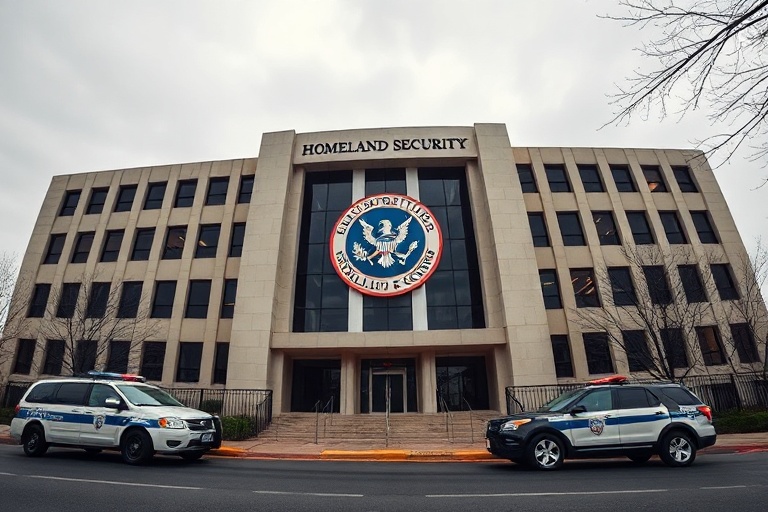
u.s. department of homeland security
The U.S. Department of Homeland Security (DHS) stands as a cornerstone of national security infrastructure, tasked with protecting the country from a wide range of threats. Established in the aftermath of the September 11, 2001 attacks, the DHS consolidated 22 federal agencies into one cohesive unit. Its creation marked one of the most significant reorganizations of the federal government in modern history.
Over two decades later, the DHS has evolved into a sprawling organization with over 240,000 employees. The agency oversees everything from border security and cybersecurity to disaster response and aviation safety. Its work touches nearly every aspect of American life, often operating behind the scenes to maintain the nation’s resilience.
This article explores the DHS’s structure, key responsibilities, and the broader implications of its policies. By examining its history, challenges, and impact, we gain insight into how this agency shapes both domestic security and international perceptions of the United States.
The Origins and Structure of the DHS
The idea for a unified homeland security agency gained momentum in the weeks following the 9/11 attacks. The bipartisan support for such a reorganization was overwhelming, culminating in the Homeland Security Act of 2002. This legislation created the DHS, which officially began operations on March 1, 2003.
The DHS’s structure reflects its broad mandate. It operates through five core mission areas:
- Counterterrorism and Homeland Security Threats: This includes efforts to prevent terrorist attacks, protect critical infrastructure, and respond to natural disasters.
- Securing U.S. Borders: The DHS manages border security through agencies like Customs and Border Protection (CBP) and Immigration and Customs Enforcement (ICE).
- Enforcing and Administering Immigration Laws: The DHS plays a central role in shaping and enforcing immigration policies, including deportation and naturalization processes.
- Safeguarding and Securing Cyberspace: With cyber threats on the rise, the DHS’s Cybersecurity and Infrastructure Security Agency (CISA) works to protect critical infrastructure from digital attacks.
- Ensuring Resilience to Disasters: The Federal Emergency Management Agency (FEMA), now part of the DHS, coordinates disaster response and recovery efforts across the country.
This consolidation was not without controversy. Critics argued that merging so many agencies could create bureaucratic inefficiencies. Others questioned whether such a massive organization could effectively coordinate its diverse responsibilities. Yet, proponents contended that a unified approach was necessary to address the complex, interconnected threats facing the nation.
Today, the DHS’s organizational chart is a testament to its multifaceted mission. The agency is led by the Secretary of Homeland Security, a cabinet-level position appointed by the President and confirmed by the Senate. Key components include:
- Customs and Border Protection (CBP): Responsible for regulating and facilitating international trade while enforcing U.S. laws at ports of entry.
- Immigration and Customs Enforcement (ICE): Focuses on identifying and removing undocumented immigrants, as well as combating human trafficking and financial crimes.
- Transportation Security Administration (TSA): Oversees security at airports, seaports, and other transportation hubs.
- Federal Emergency Management Agency (FEMA): Provides disaster relief and recovery assistance to states and local communities.
- Cybersecurity and Infrastructure Security Agency (CISA): Works to protect critical infrastructure from physical and cyber threats.
Key Responsibilities and Policy Implications
The DHS’s responsibilities are vast, touching nearly every facet of American life. One of its most visible roles is border security. The agency’s officers patrol thousands of miles of land borders with Canada and Mexico, as well as coastal waters. They also manage ports of entry, where millions of travelers and tons of cargo pass each year.
Immigration enforcement is another critical function. ICE, in particular, has been a lightning rod for controversy. Its operations include arrests, deportations, and investigations into human trafficking and drug smuggling. Critics argue that ICE’s tactics are overly aggressive and contribute to a climate of fear in immigrant communities. Supporters, however, point to the agency’s role in combating criminal networks and upholding the rule of law.
Cybersecurity has emerged as a growing concern for the DHS. The agency’s CISA division works with private companies and government agencies to identify vulnerabilities and respond to cyberattacks. High-profile incidents, such as the 2021 Colonial Pipeline ransomware attack, have underscored the importance of these efforts. The DHS’s role in cybersecurity is likely to expand as digital threats become more sophisticated.
Disaster response is another area where the DHS’s impact is undeniable. FEMA coordinates relief efforts in the wake of hurricanes, wildfires, and other natural disasters. The agency’s response to events like Hurricane Katrina and the 2020 California wildfires has drawn both praise and criticism. While FEMA provides critical assistance, its effectiveness often depends on the scale and nature of the disaster.
The DHS also plays a role in aviation security. The TSA, best known for its airport checkpoints, employs advanced screening technologies and behavioral analysis techniques to identify potential threats. The agency’s work has significantly reduced the risk of in-flight attacks, though it has also faced scrutiny over issues like passenger privacy and screening efficiency.
Controversies and Challenges Facing the DHS
Despite its critical role, the DHS has faced persistent controversies. One of the most contentious issues is immigration enforcement. ICE’s operations have been criticized for separating families, detaining individuals in poor conditions, and targeting individuals without criminal records. These practices have sparked protests and legal challenges, with advocates calling for reforms to the agency’s policies.
Border security is another flashpoint. The DHS’s approach to border enforcement has drawn criticism from both sides of the political spectrum. Some argue that the agency’s policies are too lenient, allowing undocumented immigrants to enter the country. Others contend that the DHS’s tactics, such as family separations and the use of detention facilities, are inhumane and violate human rights.
The DHS has also faced challenges in balancing security with civil liberties. For example, the agency’s use of surveillance technologies, such as facial recognition and drones, has raised concerns about privacy and government overreach. Critics argue that these tools could be used to target marginalized communities or suppress dissent.
Another challenge is the DHS’s response to domestic extremism. Following the January 6, 2021, attack on the U.S. Capitol, the agency has faced calls to do more to combat far-right extremist groups. However, critics argue that the DHS has been slow to act, citing bureaucratic inertia and political pressures.
Budget constraints and bureaucratic inefficiencies also plague the DHS. The agency’s sheer size and complexity make coordination difficult, and critics argue that overlapping responsibilities among its components create redundancy and waste. Efforts to streamline operations have had mixed results, with some reforms improving efficiency while others have fallen short.
The Future of the DHS: Priorities and Evolving Threats
As the DHS looks to the future, it must adapt to an evolving threat landscape. Cybersecurity will likely remain a top priority, as digital attacks grow in frequency and sophistication. The agency’s CISA division is expected to play a larger role in protecting critical infrastructure, including power grids, financial systems, and communication networks.
Climate change is another emerging challenge. The DHS’s FEMA division will need to prepare for more frequent and severe natural disasters, including hurricanes, wildfires, and floods. The agency’s disaster response capabilities will be tested as extreme weather events become more common.
Border security will also remain a contentious issue. The DHS must balance enforcement with humanitarian concerns, particularly as migration patterns shift due to climate change, economic instability, and political unrest in other regions. The agency’s approach to border security will likely continue to spark debate, with advocates calling for more humane policies and critics pushing for stricter enforcement.
The DHS’s role in combating domestic extremism will also evolve. As far-right and far-left groups gain prominence, the agency will face pressure to address the threat of domestic terrorism more aggressively. However, it must do so without infringing on civil liberties or targeting individuals based on their political beliefs.
Finally, the DHS will need to address its own internal challenges. Streamlining operations, improving coordination among its components, and addressing bureaucratic inefficiencies will be critical to its long-term success. The agency’s ability to adapt to these challenges will determine its effectiveness in the years to come.
For more insights into national security and policy, visit our Politics and Analysis sections. These categories offer in-depth coverage of the issues shaping the DHS and its broader impact on society.
Conclusion
The U.S. Department of Homeland Security is a complex and multifaceted agency that plays a critical role in protecting the nation. From border security to cybersecurity, disaster response to immigration enforcement, its responsibilities touch nearly every aspect of American life. While the DHS has faced significant challenges and controversies, its work remains essential to the country’s security and resilience.
As the threat landscape evolves, the DHS must adapt to new challenges, from climate change to domestic extremism. Its ability to address these issues while balancing security with civil liberties will determine its effectiveness in the years to come. For now, the DHS remains a vital institution, quietly working behind the scenes to safeguard the nation.