United Airlines CEO Scott Kirby: Strategy and Industry Impact
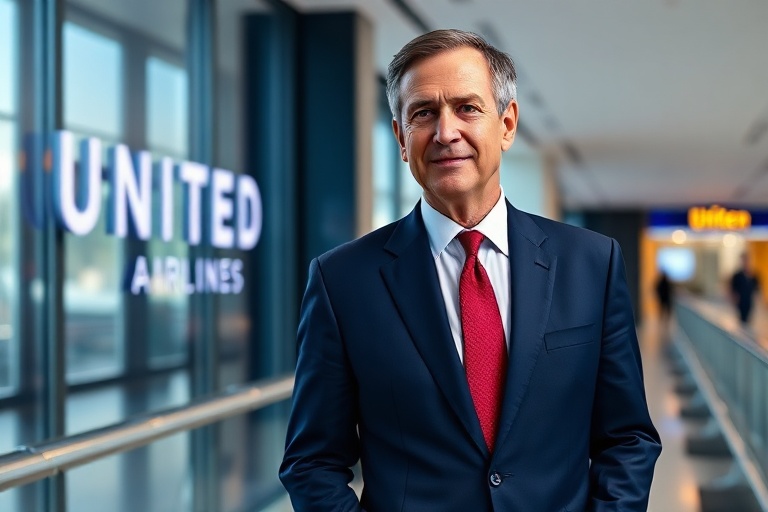
Scott Kirby took the helm as CEO of United Airlines in August 2020, stepping into the role at a uniquely challenging moment for global aviation. The airline industry was reeling from the COVID-19 pandemic, with passenger numbers plummeting and operational uncertainty dominating the landscape. Kirby, who joined United in 2000 and previously served as president, brought a steady hand and a clear strategic vision to steer the carrier through uncharted territory.
Under his leadership, United has pursued an aggressive expansion strategy centered on domestic dominance, premium customer experiences, and sustainable operations. Kirby’s approach blends operational rigor with a forward-looking mindset, positioning United not just to recover from the pandemic but to redefine air travel in the years ahead. His decisions—from fleet investments to route expansions—reflect a bet on long-term growth rather than short-term survival.
Kirby’s Leadership and Strategic Vision
Kirby is widely recognized for his analytical rigor and data-driven decision-making. A former United pilot and executive at Continental and US Airways, he rose through the ranks by emphasizing efficiency, customer service, and financial discipline. His tenure as president under Oscar Munoz saw the airline weather the Boeing 737 MAX crisis and lay the groundwork for post-pandemic recovery.
Since becoming CEO, Kirby has overseen a series of bold moves that underscore his strategic priorities:
- Domestic network expansion: United has significantly increased its presence in key U.S. markets, including new routes to cities like Bakersfield, California, and growing hub operations in Denver and Houston.
- Premium and loyalty focus: The airline invested heavily in its Polaris business class product and expanded its credit card partnership with Chase, driving high-margin revenue.
- Sustainability initiatives: United launched the Eco-Skies Alliance, a program enabling corporate customers to fund sustainable aviation fuel (SAF), positioning the airline as an industry leader in decarbonization.
- Technology and efficiency: Kirby championed the use of data analytics to optimize crew scheduling, fuel efficiency, and turnaround times, reducing operational costs and improving on-time performance.
These strategies reflect Kirby’s belief that United must differentiate itself in a commoditized industry by offering superior service, operational excellence, and environmental responsibility. His leadership style is characterized by direct communication and a focus on measurable outcomes, a stark contrast to the more consensus-driven approaches of some predecessors.
Industry Context and Broader Implications
The airline industry has always been cyclical, but the COVID-19 pandemic accelerated structural shifts that Kirby has navigated with precision. As travel demand rebounded, competition intensified among major U.S. carriers, particularly on domestic routes where United competes directly with Delta, American, and Southwest. Kirby’s strategy has emphasized maintaining a strong presence in core hubs while selectively expanding into underserved markets—a balance that minimizes risk while capturing growth opportunities.
One of Kirby’s most notable decisions was the airline’s order of 100 Boeing 737 MAX 10 aircraft in 2021, a $15 billion investment aimed at modernizing United’s narrowbody fleet. This move not only signaled confidence in Boeing’s troubled aircraft but also underscored United’s commitment to fuel efficiency and passenger comfort. The MAX 10’s extended range and capacity align with Kirby’s vision of connecting more cities with nonstop service, reducing reliance on connecting flights.
Beyond fleet and network strategies, Kirby has positioned United at the forefront of the airline industry’s sustainability movement. The Eco-Skies Alliance, launched in 2021, allows corporate partners to purchase SAF to offset their travel emissions. This initiative not only supports United’s carbon reduction goals but also creates a new revenue stream and strengthens relationships with environmentally conscious businesses. Kirby has even suggested that airlines could eventually produce their own SAF, a bold vision that could reshape the industry’s environmental footprint.
Challenges and Controversies
Kirby’s tenure has not been without criticism. United has faced scrutiny over labor relations, particularly during the pandemic when the airline offered buyouts to thousands of employees. While Kirby has defended these measures as necessary for survival, they sparked backlash from unions and advocacy groups. Additionally, United’s handling of customer service issues—such as flight cancellations and overbooking incidents—has drawn media attention, raising questions about operational resilience.
Another point of contention is United’s aggressive expansion into smaller markets, which some analysts argue could dilute profitability. Kirby has countered that these routes tap into latent demand and reduce dependence on highly competitive coastal hubs. The success of this strategy remains a subject of debate, especially as fuel prices and labor costs continue to pressure airline margins.
Despite these challenges, Kirby’s leadership has been credited with restoring investor confidence in United. The airline’s stock performance has outpaced many peers since 2020, reflecting market optimism about its long-term strategy. Kirby’s focus on shareholder returns—through stock buybacks and dividend policies—has also endeared him to investors, though it has occasionally clashed with labor priorities.
Looking Ahead: Kirby’s Vision for the Future
As United Airlines moves beyond the pandemic era, Kirby’s vision for the airline’s future is anchored in three pillars: connectivity, customer experience, and carbon neutrality. He has repeatedly emphasized the importance of maintaining a strong domestic network while selectively pursuing international expansion, particularly in Asia and Latin America. United’s recent additions of routes to Tokyo, Seoul, and San José, Costa Rica, reflect this global ambition.
Customer experience remains a cornerstone of Kirby’s strategy. United has invested in improving its Polaris lounges and introducing new digital tools, such as the United app’s real-time baggage tracking and personalized travel alerts. These enhancements aim to elevate United’s brand perception and foster loyalty among frequent flyers. Kirby has also championed the airline’s “United Next” initiative, which promises faster boarding, more comfortable seating, and improved reliability across its fleet.
Perhaps most ambitiously, Kirby is steering United toward a future of net-zero carbon emissions by 2050, with an interim goal of reducing greenhouse gas emissions by 50% by 2035. Achieving this will require unprecedented innovation, including advancements in SAF, electric aircraft, and operational efficiency. Kirby has positioned United as a leader in this space, collaborating with companies like Honeywell and Neste to scale up SAF production and exploring hydrogen-powered aircraft for regional flights.
The broader implications of Kirby’s strategy extend beyond United Airlines. His approach to fleet modernization, sustainability, and customer service sets a benchmark for the industry. As other carriers grapple with post-pandemic recovery and environmental pressures, Kirby’s playbook offers valuable lessons in balancing growth with responsibility. Whether United can fully execute this vision remains to be seen, but Kirby’s leadership has already reshaped the airline’s trajectory.
For industry observers, Kirby’s tenure is a case study in resilience and reinvention. His ability to navigate crises, capitalize on opportunities, and articulate a clear vision has redefined United Airlines as a forward-thinking carrier. As the airline industry continues to evolve, Kirby’s strategies will likely influence the broader sector for years to come.
For more insights on airline industry trends and executive leadership, visit our Travel and Business sections.
Conclusion
Scott Kirby’s leadership of United Airlines represents a pivotal chapter in the airline’s history. In a period marked by unprecedented challenges, he has steered the carrier toward a future defined by innovation, sustainability, and customer-centric growth. While controversies and operational hurdles persist, Kirby’s strategic clarity and bold investments position United to thrive in a rapidly changing industry.
As the airline continues to expand its network, modernize its fleet, and lead in sustainability, Kirby’s vision will be put to the test. Yet, his track record suggests that United is not merely recovering from the pandemic—it is redefining what it means to be a leading airline in the 21st century.
The legacy of Scott Kirby’s tenure may well be measured not just by United’s financial performance, but by its ability to inspire the entire airline industry to aim higher.