Brexit Five Years Later: Economic, Cultural, and Global Impact
The Ripple Effects of Brexit: A Global Perspective Five Years Later
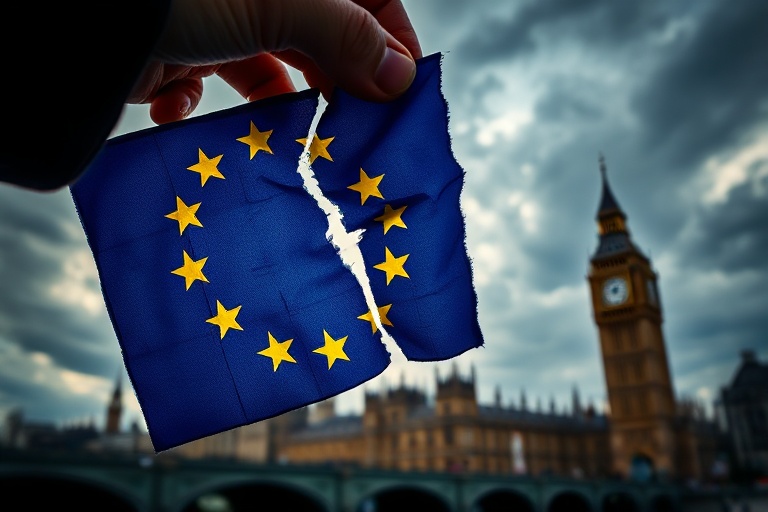
Half a decade after the United Kingdom’s departure from the European Union, the consequences of Brexit continue to unfold across borders, economies, and cultural exchanges. The 2016 referendum and its aftermath reshaped trade policies, redefined diplomatic alliances, and altered the flow of people between continents. While the immediate political turmoil has subsided, the long-term implications persist in unexpected ways, from the menus in London restaurants to the supply chains of small manufacturers in Poland.
The decision to leave the EU was not made in isolation. It reflected deeper societal shifts occurring across the West, where skepticism toward supranational institutions grew alongside a renewed emphasis on national sovereignty. In the years since the 2016 vote, the UK has navigated a complex transition, balancing economic stability with political identity. Meanwhile, the rest of Europe watched closely, some countries contemplating their own paths toward greater autonomy, while others doubled down on unity.
The Economic Aftermath: Trade, Labor, and the Cost of Change
One of the most visible impacts of Brexit has been on trade. The UK’s departure from the EU single market introduced new barriers to commerce, particularly for businesses reliant on just-in-time supply chains. Sectors such as automotive, agriculture, and pharmaceuticals faced immediate disruptions, with delays at customs and increased regulatory checks slowing down deliveries. Small and medium-sized enterprises, which often lack the resources to absorb such shocks, were hit hardest.
According to the UK Office for National Statistics, exports to the EU fell by nearly 16% in the first year post-Brexit, while imports declined by 23%. These figures do not tell the full story, however. Some industries adapted by shifting trade flows to non-EU markets, particularly in Asia and North America. Yet the loss of frictionless trade within Europe has left lasting scars on sectors like fishing, where UK boats now face strict quotas and tariffs when selling to their traditional markets.
Labor markets have also undergone significant changes. Before Brexit, EU citizens could freely move to the UK to work, filling critical roles in healthcare, hospitality, and agriculture. Post-referendum, the government introduced a points-based immigration system that prioritized skilled workers over general labor. While this has reduced net migration from the EU, it has created shortages in key industries, particularly in social care and food processing. The hospitality sector, which once relied heavily on seasonal workers from Eastern Europe, now grapples with staffing crises that affect everything from hotel operations to restaurant kitchens.
Cultural Shifts: From Expat Communities to Creative Industries
Beyond economics, Brexit has reshaped the cultural landscape of the UK and Europe. Expat communities that once thrived in cities like London, Berlin, and Paris now face new bureaucratic hurdles. British retirees in Spain, for example, must navigate residency requirements and healthcare access that were once automatic. Similarly, young professionals who once moved freely between EU countries now confront visa restrictions and increased paperwork.
Creative industries have also felt the pinch. Musicians, artists, and performers who once toured the EU without visas now require work permits for individual performances. The loss of the EU’s Creative Europe funding program has left many cultural projects without financial support. UK-based film productions, which often relied on EU co-productions and funding, now face higher costs and administrative burdens. These changes threaten the UK’s reputation as a global hub for the arts, a status built over decades of collaboration and exchange.
The UK’s departure has also influenced cultural narratives. In literature and film, Brexit has become a recurring theme, reflecting the anxieties and divisions of modern society. Works like Jonathan Coe’s Middle England and Armando Iannucci’s The Personal History of David Copperfield explore the political and social fractures that defined the referendum era. Meanwhile, across the Channel, European artists and writers have used Brexit as a lens to examine broader questions about nationalism, identity, and the future of the continent.
Diplomatic Realignments: The UK’s New Role on the World Stage
Brexit did not occur in a vacuum. It accelerated shifts in global diplomacy, as the UK sought to redefine its relationships outside the EU framework. The government pursued trade deals with distant partners, from Japan to Australia, aiming to offset the loss of European markets. While these agreements have opened new opportunities, they have also highlighted the challenges of negotiating from a position of reduced economic leverage.
One of the most significant diplomatic moves was the UK’s application to join the Comprehensive and Progressive Agreement for Trans-Pacific Partnership (CPTPP), a trade bloc representing 11 countries across Asia and the Americas. While the agreement promises long-term benefits, critics argue that it does little to address the immediate trade disruptions caused by Brexit. The UK’s departure from the EU has also strained relations with its closest neighbors. Disputes over fishing rights, the Northern Ireland Protocol, and financial services have created friction that lingers to this day.
The UK’s relationship with Ireland, a fellow EU member, has been particularly complex. The Irish border, once a symbol of division, became a focal point of Brexit negotiations due to its potential to reignite tensions. The Northern Ireland Protocol, designed to prevent a hard border between Northern Ireland and the Republic of Ireland, has sparked political disputes and legal challenges. While it has maintained an open border on the island of Ireland, it has also created a regulatory border in the Irish Sea, complicating trade between Great Britain and Northern Ireland.
Lessons and Lingering Questions
As the UK and the EU move forward, Brexit serves as a case study in the unintended consequences of political decisions. It highlights the interconnectedness of modern economies and the challenges of disentangling decades of integration. While some sectors have adapted, others continue to struggle with the fallout. The cultural and diplomatic shifts sparked by Brexit are still evolving, with long-term effects that remain unclear.
One thing is certain: Brexit has changed the way the world views the UK. No longer seen as a reliable partner within the EU, the UK now navigates a more fragmented international landscape. Its ability to forge new alliances and rebuild trust will depend on its willingness to address the challenges left in the wake of its departure.
For a deeper look at how Brexit has influenced specific industries, explore our coverage of Politics and Economy.
Key Takeaways
- The UK’s departure from the EU has led to significant trade disruptions, particularly in sectors reliant on seamless supply chains.
- Labor shortages in key industries, such as healthcare and hospitality, persist due to changes in immigration policies.
- Cultural and creative industries face new barriers, from visa requirements to lost funding opportunities.
- The UK’s diplomatic realignments have opened new trade routes but also created tensions with the EU and other global partners.
- The long-term effects of Brexit are still unfolding, with economic, cultural, and political consequences yet to be fully realized.
Brexit was never just a British issue. Its ripple effects have been felt across the globe, from the boardrooms of multinational corporations to the streets of small European towns. As the world continues to grapple with the challenges of globalization and nationalism, the lessons of Brexit remain a vital part of the conversation.