How one coach’s radical methods reshaped youth hockey, challenged tradition, and left an indelible mark on the sport.
The Early Years: From Player to Innovator
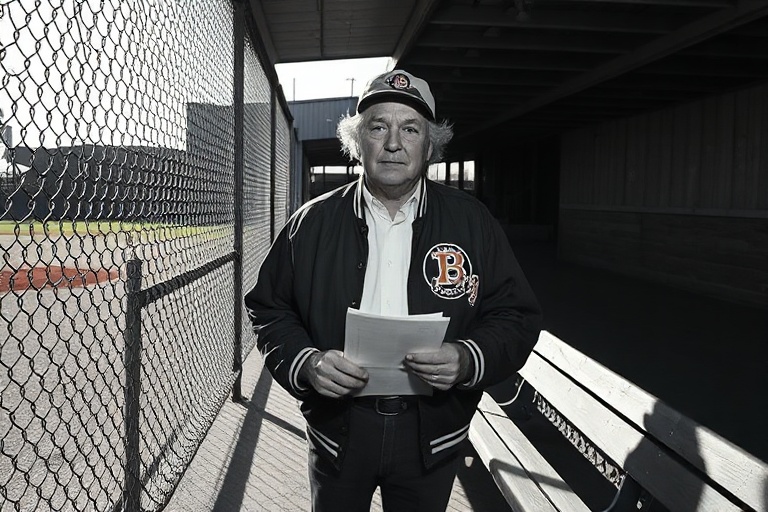
Billy Stokoe’s journey in hockey began not as a coach, but as a player who recognized the sport’s inherent flaws. Born in 1939 in Saskatchewan, Canada—a region synonymous with hockey’s grassroots—he grew up in an environment where raw talent often overshadowed technical development. Stokoe played professionally in the minor leagues, but his true calling emerged when he transitioned into coaching. Unlike his contemporaries, who emphasized brute strength and repetitive drills, Stokoe questioned the status quo.
By the 1970s, he had already begun experimenting with new training methodologies. His approach was rooted in two core principles: skill acquisition through repetition without fatigue, and small-area games to maximize touches on the puck. These ideas were radical at the time, but they laid the foundation for what would later become a coaching revolution. Stokoe’s methods weren’t just about winning—they were about fostering hockey IQ in players from an early age.
His work caught the attention of the Canadian Hockey Association, which hired him in 1981 as the national under-17 coach. It was here that Stokoe’s influence began to spread beyond local rinks and into the broader hockey community. He didn’t just teach players how to skate or shoot; he taught them how to think the game.
Breaking the Mold: Stokoe’s Coaching Philosophy
Stokoe’s coaching philosophy was a direct challenge to the traditional hockey development model, which often prioritized physicality over skill. He believed that young players were being stifled by rigid systems that valued endurance over creativity. His solution? A shift toward what he called “controlled chaos”—environments where players were encouraged to make decisions under pressure, even if it meant making mistakes.
One of his most enduring contributions was the development of the “Stokoe Drill,” a simple yet effective exercise that emphasized quick transitions, puck protection, and spatial awareness. The drill became a staple in hockey programs across North America, particularly in youth and junior leagues. Players who trained under Stokoe often spoke of a newfound confidence in their abilities, a testament to his ability to demystify the game.
Stokoe also pioneered the use of video analysis in hockey coaching, a practice now ubiquitous in professional and amateur sports. He recorded games and practices, then reviewed them with players to highlight decision-making patterns. This approach not only improved individual performance but also fostered a deeper understanding of team dynamics.
Key Tenets of Stokoe’s Methodology
- Small-Area Games: Reducing the playing space to increase puck touches and decision-making frequency.
- Repetition Without Fatigue: Structuring drills to maintain high skill repetition while minimizing physical strain.
- Decision-Making Under Pressure: Creating game-like scenarios where players must think and react quickly.
- Video Feedback: Using recorded sessions to analyze and improve individual and team performance.
The Ripple Effect: Stokoe’s Influence on Modern Hockey
Stokoe’s impact on hockey extends far beyond the players he directly coached. His ideas have seeped into the fabric of modern hockey development, influencing everything from NHL training camps to grassroots programs. The rise of analytics in hockey, for instance, owes much to the emphasis on decision-making and spatial awareness that Stokoe championed decades ago.
In the 1990s and early 2000s, Stokoe’s methods gained traction in Europe, particularly in Sweden and Finland, where hockey development was already undergoing a transformation. Coaches in these countries adopted his small-area games and decision-focused drills, contributing to a surge in skilled European players who could compete at the highest levels. Today, it’s common to see NHL teams incorporating Stokoe-inspired drills into their practice regimens.
His influence is also evident in the growth of hockey academies and elite training programs. Institutions like the Dave’s Locker Hockey Academies have integrated Stokoe’s principles into their curricula, emphasizing skill development and hockey IQ alongside physical training. These programs are now producing players who are not only technically proficient but also tactically astute—exactly what Stokoe envisioned.
Stokoe’s legacy is perhaps most visible in the NHL Draft, where teams increasingly prioritize players with high hockey sense over raw athleticism. While this shift can’t be attributed solely to Stokoe, his contributions were among the earliest to challenge the traditional scouting model that undervalued skill and creativity.
The Man Behind the Method: Stokoe’s Personal Journey
Despite his outsized influence, Billy Stokoe remained a humble figure, often shying away from the spotlight. Colleagues and players who knew him described him as a quiet, thoughtful man who led by example. He was known for his dry wit and his ability to connect with players on a personal level, often using humor to diffuse tension in high-pressure situations.
Stokoe’s career wasn’t without controversy. His unorthodox methods occasionally clashed with traditionalists who viewed his approach as too soft or lacking in discipline. Some critics argued that his emphasis on small-area games didn’t adequately prepare players for the physical demands of professional hockey. Stokoe, however, remained steadfast in his belief that skill and intelligence were the ultimate equalizers.
After retiring from coaching, Stokoe continued to mentor young coaches and players, often through clinics and seminars. He also wrote extensively about hockey development, leaving behind a body of work that serves as a blueprint for modern coaching. His writings, though not as widely circulated as those of other hockey figures, are studied by coaches who seek to understand the deeper nuances of the game.
Stokoe passed away in 2018, but his ideas live on. The next generation of hockey players and coaches owe him a debt of gratitude for challenging the norms and pushing the sport toward a more thoughtful, skill-based future.
Conclusion: Why Stokoe’s Legacy Endures
Billy Stokoe’s career was a study in contrast: a man of quiet intensity who reshaped an entire sport through bold ideas. He didn’t seek fame or fortune; he sought to change the way hockey was taught and played. His methods, once considered radical, are now the bedrock of modern hockey development. From youth rinks to NHL locker rooms, his influence is everywhere.
Perhaps Stokoe’s greatest contribution was his ability to see potential in players that others overlooked. He understood that hockey wasn’t just a physical game—it was a mental one. By fostering creativity, decision-making, and confidence, he helped unlock the potential of countless athletes who might have otherwise been lost in the system.
For those looking to understand the evolution of hockey coaching, Stokoe’s story is essential reading. His life and work remind us that innovation often comes from questioning the status quo—and that the best coaches are not just teachers, but visionaries.
To explore more about hockey development and coaching, visit the Dave’s Locker Hockey Training section for resources and insights from experts in the field.