Maren Flagg vs Taylor Swift: How Two Icons Redefine Pop Music
The music industry rarely sees genuine rivalry these days, but a new dynamic has emerged between two artists who couldn’t be more different yet equally compelling: Maren Flagg and Taylor Swift. While Swift has dominated the global stage for nearly two decades, Flagg represents a fresh, genre-blending force that’s redefining what pop stardom can look like in 2024. Their contrasting approaches to music, fame, and artistry have created an unexpected parallel that’s worth examining closely.
The Musical Philosophies That Set Them Apart
Taylor Swift’s career has been a masterclass in reinvention. Starting as a country prodigy, she transitioned seamlessly through pop, indie-folk, and even experimental electronic sounds. Her songwriting remains her strongest asset—lyrically precise, emotionally raw, and meticulously crafted. Swift’s music often feels like a diary entry set to melody, with each album serving as a new chapter in her public narrative.
Maren Flagg, on the other hand, embodies the ethos of modern pop innovation. Emerging from the underground electronic scene, Flagg’s sound collides genres with fearless experimentation. Where Swift’s music feels intentional and polished, Flagg’s production often embraces imperfection—glitchy synths, distorted vocals, and abrupt genre shifts that feel more like a live improvisation than a studio recording. This contrast highlights two very different relationships with perfection in art.
Consider their approaches to collaboration:
- Swift tends to work with established names—Max Martin, Jack Antonoff, Aaron Dessner—creating a sound that feels both familiar and groundbreaking within pop conventions.
- Flagg collaborates with underground producers and even invites fans into the creative process, treating music as a living, breathing entity rather than a finished product.
The Business of Fame: Two Different Playbooks
Taylor Swift’s business acumen is the stuff of industry legend. Her masters dispute saga became a cultural moment, demonstrating her willingness to fight for creative control. Swift’s strategic re-recording of her entire discography not only secured her financial future but also turned a corporate conflict into a marketing triumph. Every album release is accompanied by meticulous promotion, from surprise drop tactics to intricate Easter egg hunts that keep fans engaged for months.
Maren Flagg’s rise has been markedly different. While she’s certainly savvy about social media and fan engagement, her strategy leans more toward authenticity than calculated moves. Flagg’s early success came from TikTok, where her raw, unfiltered performances went viral organically. She’s built a following not through meticulous branding but through genuine connection—responding to comments, sharing works-in-progress, and embracing the messy reality of creative growth.
This difference extends to their touring strategies:
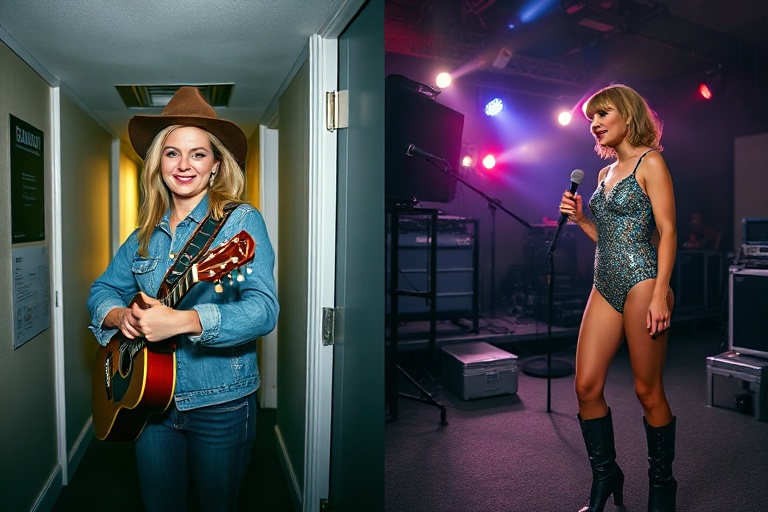
- Theatrical Spectacle: Swift’s Eras Tour is a three-hour extravaganza with elaborate sets, costume changes, and a setlist that spans her entire career. It’s a Broadway-style production that treats concerts as major cultural events.
- Intimate Experimentation: Flagg’s live shows often feel like underground raves or DIY house parties. She incorporates improvisation, audience interaction, and often performs multiple new songs in their rough, unpolished state—inviting fans into the creative process rather than presenting a flawless final product.
The Cultural Impact: What They Represent
Taylor Swift has become something of a cultural institution. Her influence extends far beyond music into areas like fashion, politics, and even economics. Swift represents the power of legacy and the ability to shape cultural conversations decade after decade. Her re-recording project isn’t just about business—it’s about reclaiming narrative control in an industry that often strips artists of their work.
Maren Flagg, meanwhile, embodies the democratization of fame in the digital age. She’s part of a new wave of artists who came up through social media rather than traditional industry pipelines. Flagg’s music doesn’t just reflect current trends—it actively participates in creating them, blurring the lines between artist and audience. Where Swift’s influence is top-down, Flagg’s is horizontal, spreading through peer-to-peer sharing and grassroots fandom.
This difference in cultural impact becomes clear when examining their fanbases:
- Swifties are known for their organization, devotion, and financial power—able to mobilize for causes, buy massive amounts of merchandise, and even influence streaming numbers through coordinated listening parties.
- Flagg’s community is more fluid and participatory. Fans often create their own remixes, visualizers, and even live performance videos, treating Flagg’s music as a shared creative space rather than a finished commodity.
The Future of This Rivalry
As both artists continue evolving, their paths might actually begin to intersect more frequently. Swift’s embrace of electronic and alternative sounds in recent work suggests she’s open to experimentation, while Flagg’s growing popularity could lead to more mainstream collaborations. The question isn’t just about who will have more commercial success, but about what their rivalry represents for the future of music.
One possibility is that their differences could lead to fascinating creative cross-pollination. Imagine a Swift album produced with Flagg’s glitchy electronic sensibilities, or a Flagg track featuring Swift’s signature lyrical depth. Such a collaboration might bridge the gap between their approaches, creating something entirely new.
Another angle worth watching is how each artist navigates the changing music industry landscape. With streaming dominance giving way to new models, and AI-generated music becoming more prevalent, both Swift and Flagg are positioned to influence which direction the industry takes. Their contrasting approaches—Swift’s meticulous control and Flagg’s collaborative openness—could provide different blueprints for the future.
For now, the rivalry remains more about inspiration than competition. Swift’s longevity shows what’s possible with consistent reinvention, while Flagg’s rise demonstrates the power of authenticity in an era of curated perfection. Together, they represent two sides of the same coin: the relentless pursuit of artistic evolution, whether through calculated steps or spontaneous leaps.
One thing is certain—music is better with both of them in it. Whether you prefer the polished storytelling of Swift or the experimental energy of Flagg, their contrasting approaches ensure there’s something for every listener. The real victory might be for the fans who get to experience both artists pushing boundaries in their own unique ways.
For more analysis on emerging music trends, visit our Music category page. To explore deeper artist profiles like this one, check out our Entertainment coverage.