backrooms movie
The Backrooms, a sprawling online mythos born from a 2018 4chan post, has evolved from cryptic forum lore into a cultural touchstone that now threatens to leap from screens to theaters. What began as a simple thought experiment—what if you could step into a place that exists just beyond our reality?—has mushroomed into a multimedia phenomenon spanning video games, podcasts, and most recently, film adaptations. With multiple studios racing to bring The Backrooms to life, the question isn’t whether it will happen, but how it will shape—or be shaped by—the expectations of a generation raised on internet horror and participatory storytelling.
The Origins of The Backrooms as Digital Mythology
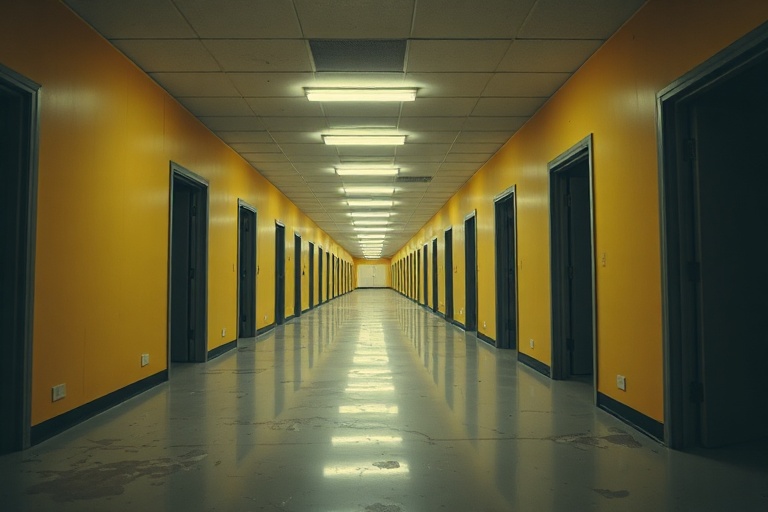
The Backrooms narrative started with a single post: an anonymous user described a “non-Euclidean space” that could be accessed by “noclipping” out of reality. The post included a short, unsettling image of a hallway carpeted in yellow, lit by flickering fluorescent lights. That image, simple as it was, became iconic. It tapped into a universal fear—the fear of the unknown, of spaces that shouldn’t exist but do. Within weeks, users began expanding the lore: adding levels to The Backrooms, naming them (Level 0: The Lobby, Level 1: Pipe Dreams, Level 2: Backstreets), and populating them with entities—entities that watch, mimic, or worse. What made The Backrooms different from other creepypastas was its collaborative, ever-evolving nature. It wasn’t just a story; it was a world anyone could contribute to.
The Backrooms quickly became a sandbox for horror. Fans created 3D animations, short films, and even full video games like The Backrooms Game on Steam, which sold over a million copies. The lore grew organically, with fans debating theories about its origins—was it a failed experiment? A glitch in reality? A purgatory for forgotten buildings? The ambiguity fueled its appeal. Unlike traditional horror, which relies on closure, The Backrooms thrives on the unknown. Every answer only leads to more questions.
Why Hollywood Is Racing to Adapt The Backrooms
Hollywood has long mined internet culture for fresh material—think Slender Man, Ben Drowned, or Local 58. But The Backrooms presents a unique challenge: it’s not a single story, but a vast, decentralized universe. How do you condense something that has no clear beginning or end into a two-hour film? Yet that’s precisely why studios are lining up. The Backrooms offers something rare in modern horror: built-in audience investment. Millions of fans already feel ownership over the lore. They’re not just consumers; they’re co-creators. That kind of engagement is gold for marketers and producers alike.
Several projects are already in development. New Line Cinema (a Warner Bros. subsidiary) acquired rights in 2022 and has reportedly tapped James Wan’s production company, Atomic Monster, to oversee the film. Wan, known for The Conjuring and Insidious, is no stranger to franchise horror, but The Backrooms demands a different approach. The challenge isn’t just scaring the audience—it’s making them feel the dread of a place that defies logic. Other adaptations are reportedly in the works from A24 and Blumhouse, suggesting a potential franchise war. But with so many cooks in the kitchen, the risk of dilution—or worse, a generic jump-scare fest—looms large.
The most promising adaptation may come from Kane Senes, the creator of The Walten Files and Local 58, who has teased a Backrooms series on his YouTube channel. Senes’ work is known for its atmospheric dread and meta-commentary on media consumption, making him a natural fit for The Backrooms. A serialized format could better handle the lore’s complexity, allowing for episodic exploration of different levels and entities. Still, the pressure to satisfy fans while appealing to mainstream audiences will be immense.
What Makes The Backrooms Different from Other Horror Films
The Backrooms isn’t just another haunted house movie. It’s a horror of space—of corridors that stretch too far, of doors that shouldn’t exist, of sounds that come from nowhere. It plays on primal fears: the fear of being lost, of being watched, of being trapped in a system you can’t escape. This isn’t about ghosts or slashers; it’s about the terror of the uncanny, of places that feel almost real but never quite are. That kind of horror is deeply psychological, and it requires a director who understands how to manipulate space and sound as much as visuals.
Compare this to The Shining, which uses isolation and madness to create dread, or The Ring, which relies on supernatural curses. The Backrooms has no curse, no clear villain—just an environment that’s inherently hostile. It’s the difference between a haunted house and a maze with no exit. The horror comes from the player’s (or viewer’s) inability to navigate the system. This makes The Backrooms uniquely suited to interactive media like games, but also ripe for cinematic experimentation.
The Challenges of Translating Lore into Film
Adapting The Backrooms is less about adapting a story and more about adapting a feeling. Fans don’t just want a plot; they want the experience of The Backrooms—the creeping paranoia, the sense of infinite possibility, the eerie silence punctuated by distant, unplaceable noises. Capturing that on film will require innovative cinematography. Think long, unbroken takes (à la The Witch), distorted perspectives (like Jacob’s Ladder), and a sound design that makes the audience’s skin crawl. The Backrooms isn’t a place you watch; it’s a place you feel.
There’s also the issue of canon. With so many fan-made levels and entities, which ones make the cut? Will the film focus on Level 0, the iconic Lobby, or will it jump between multiple levels to showcase the mythos? The risk of alienating fans is real—what if your favorite level gets cut, or worse, butchered? Some purists argue that The Backrooms shouldn’t be adapted at all—that its power lies in its ambiguity and interactivity. But Hollywood rarely resists the urge to monetize the next big thing, and The Backrooms is too big to ignore.
One solution could be a multi-film or series approach, allowing different directors to tackle different levels. Imagine a Love Actually-style anthology, where each episode explores a distinct part of The Backrooms. That way, fans get their fix without feeling like the lore has been oversimplified. It’s a model that worked for Black Mirror and could work here, especially if the tone varies between episodes—some surreal, some terrifying, some even darkly comedic.
What Fans Want—and What They Should Be Wary Of
Fans have already built a wishlist of what they hope to see in any adaptation. Top of the list: the Lobby—the yellow-carpeted hallway that started it all. Its endless corridors, flickering lights, and distant hum are the stuff of nightmares for many. Others are desperate to see Skin-Stealers, entities that mimic humans, or The Hounds, creatures that stalk intruders. There’s also curiosity about The Backrooms’ lore itself—was it created by a corporation? A government experiment? A glitch in reality? The mystery is part of the appeal.
But fans should temper their expectations. Hollywood has a poor track record with internet-based horror. Slender Man (2018) was met with backlash for its watered-down scares and perceived disrespect for the source material. Nerve (2016), while not a horror film, suffered from trying to force internet culture into a traditional narrative structure. The key to success will be respecting the source material while giving it room to breathe. The Backrooms isn’t a franchise to be exploited; it’s a shared dream (or nightmare) that needs to be nurtured.
Another concern is tone. The Backrooms thrives on uncertainty—is it horror? Sci-fi? Psychological thriller? A comedy of errors? The best adaptations will embrace that ambiguity. A film that tries too hard to explain The Backrooms will lose what makes it special. The mystery isn’t a flaw; it’s a feature.
Looking Ahead: The Future of The Backrooms on Screen
The next few years will be critical for The Backrooms’ cinematic future. With multiple studios involved, the potential for a fragmented, inconsistent franchise is high. But there’s also an opportunity for something groundbreaking—a horror film that redefines the genre by prioritizing atmosphere over scares, collaboration over control, and mystery over resolution. The Backrooms could be the next Paranormal Activity—a low-budget phenomenon that explodes into mainstream success. Or it could become another cautionary tale about Hollywood’s inability to handle decentralized storytelling.
What’s certain is that the internet is watching. Fans will dissect every frame, every line of dialogue, every change from the original lore. There’s no room for half-measures. The Backrooms deserves better than a forgettable cash grab. It deserves a vision—something that honors its roots while pushing the boundaries of what horror can be on screen.
As for whether The Backrooms should be adapted at all? That’s up to the fans. If they rally behind the right projects, demand authenticity, and hold studios accountable, the result could be something truly special. If not? Well, at least we’ll always have the original lore—endless, evolving, and just a noclip away.
One thing is clear: The Backrooms is no longer just a creepypasta. It’s a cultural artifact, a digital myth, and soon—whether we’re ready or not—it will be a movie.
What do you think? Should The Backrooms stay in the digital realm, or is the big screen the next logical step? Share your thoughts in the comments.