Maren Flagg vs Taylor Swift: The Cultural Clash Reshaping Music
In the vast landscape of contemporary music, few artists have risen as rapidly as Taylor Swift. With a career spanning over a decade, Swift has cemented her status as a global icon, her influence extending far beyond music into fashion, film, and even political discourse. Yet, in recent years, a new figure has emerged on the scene, one whose quiet intensity and raw authenticity have begun to challenge the established order.
Maren Flagg, though still relatively unknown to mainstream audiences, has quietly cultivated a devoted following. Her music, often described as a blend of folk, indie, and Americana, resonates with a generation seeking authenticity in an era of manufactured pop. This unlikely pairing has sparked curiosity among fans and critics alike, prompting comparisons that go beyond mere musical style. What happens when the polished, industry-savvy Swift meets the raw, unfiltered Flagg? The answer may redefine the future of pop culture.
The Rise of Two Icons: A Tale of Two Eras
Taylor Swift’s ascent to superstardom is a well-documented phenomenon. Beginning as a country artist in the mid-2000s, Swift transitioned seamlessly into pop with her 2014 album 1989, a move that broadened her appeal while maintaining her signature storytelling. Her ability to reinvent herself—from heartbroken teenager to savvy businesswoman—has kept her relevant across generations. Swift’s influence is undeniable, with records broken, awards amassed, and a fanbase that spans continents.
Maren Flagg, on the other hand, represents a different kind of stardom. Emerging from the indie folk scene, Flagg’s music is rooted in vulnerability and introspection. Her lyrics, often drawn from personal experiences, offer a stark contrast to the polished productions of mainstream pop. While Swift’s music is meticulously crafted for mass appeal, Flagg’s feels like a diary set to melody, a raw and unfiltered glimpse into her soul. This authenticity has earned her a cult following, particularly among younger listeners disillusioned by the homogeneity of contemporary pop.
The juxtaposition of these two artists highlights a broader cultural shift. Swift embodies the culmination of decades of pop evolution, a product of the industry’s machinery. Flagg, meanwhile, represents a reaction against that machinery—a return to roots, to the unvarnished truth of personal expression. Their rivalry, if it can even be called that, is less about competition and more about the tension between authenticity and artifice in modern music.
Musical Contrasts: From Pop Anthems to Folk Poetry
The differences between Swift and Flagg extend beyond their public personas into the very fabric of their music. Swift’s discography is a study in genre fluidity, from country ballads to synth-pop bangers. Her songs often explore themes of love, betrayal, and resilience, but always with an eye toward accessibility. Tracks like Blank Space and Shake It Off are designed to be anthemic, their hooks infectious and their messages universal.
Flagg’s music, by contrast, is intimate and understated. Her melodies are soft, her lyrics dense with meaning. Songs like Midnight Confessions and The Weight of Silence feel like whispered secrets, meant for a small, devoted audience rather than a stadium crowd. Where Swift’s music is a celebration, Flagg’s is a confession. This contrast raises an intriguing question: Can raw authenticity coexist with mass appeal, or are they inherently at odds?
To better understand these differences, consider the following aspects of their music:
- Production Style: Swift’s music is polished and radio-friendly, with layered production and catchy hooks. Flagg’s is sparse and organic, often featuring just her voice and an acoustic guitar or piano.
- Themes: Swift’s lyrics frequently revolve around personal relationships and self-empowerment. Flagg’s delve into introspection, societal issues, and existential musings.
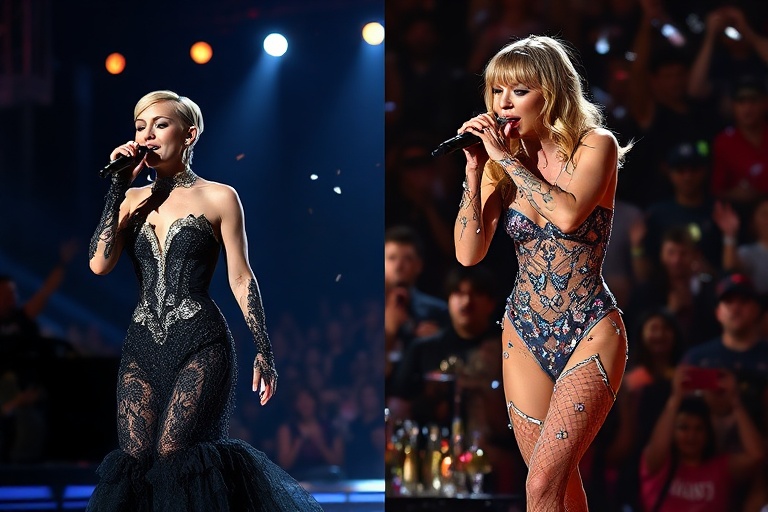
- Performance Style: Swift is a dynamic live performer, known for her high-energy shows and meticulously choreographed tours. Flagg’s performances are more subdued, focusing on the emotional weight of her songs rather than spectacle.
These distinctions highlight a fundamental divide in modern music. Swift represents the triumph of the industry, while Flagg embodies its critique. Their contrasting approaches underscore a broader cultural debate: What does it mean to be an artist in an era dominated by algorithms and data-driven hits?
The Cultural Impact: Authenticity in the Age of Algorithms
The rise of both Swift and Flagg reflects larger trends in the music industry. Swift’s dominance is a testament to the power of branding and strategic reinvention. She has mastered the art of giving her audience exactly what they want, whether it’s a catchy pop song or a heartfelt ballad. Her ability to connect with fans on a personal level—through social media, surprise album drops, and intimate concert experiences—has set a new standard for artist-fan relationships.
Flagg, meanwhile, thrives in the cracks of the industry. Her success is organic, built on word-of-mouth and grassroots support rather than corporate backing. This has led to a dedicated fanbase that values her music precisely because it feels untainted by the machinery of the music business. In an era where authenticity is increasingly commodified, Flagg’s refusal to conform is both refreshing and radical.
Their contrasting paths raise important questions about the future of music. Is there still room for artists who prioritize artistic integrity over commercial success? Can raw, unfiltered music find a place in a world dominated by streaming algorithms and viral trends? These questions are particularly relevant for younger artists, who must navigate a landscape where success is often measured in streams and social media followers rather than artistic merit.
Consider the global response to both artists. Swift’s influence is undeniable, with her tours selling out within minutes and her albums topping charts worldwide. Yet Flagg’s music resonates deeply with a niche audience, particularly in regions where folk and indie music have a strong cultural foothold. In places like Scandinavia and parts of Europe, Flagg’s style is celebrated as a breath of fresh air in an oversaturated pop market. This global perspective highlights the cultural specificity of their appeal, as well as the universal longing for authenticity.
The Future of the Rivalry: What Comes Next?
As both artists continue to evolve, the question of their rivalry—or lack thereof—becomes more intriguing. Swift shows no signs of slowing down. With her recent re-recordings of her early albums, she has not only reclaimed her artistic legacy but also set a precedent for artist autonomy in the streaming era. Her influence on the industry is undeniable, and her ability to shape trends is unparalleled.
Flagg, on the other hand, remains an enigma. Her music is gaining traction, but she has yet to achieve mainstream success. Will she continue to carve out her own niche, or will she be co-opted by the industry she critiques? The answer may depend on her ability to balance authenticity with accessibility. If she can find a way to maintain her artistic integrity while reaching a wider audience, she could become a powerful voice for a new generation of listeners.
One possibility is that their paths will intersect in unexpected ways. Swift has already demonstrated her versatility, collaborating with artists across genres and eras. Could she and Flagg ever work together? The idea seems far-fetched, but in the ever-evolving world of music, nothing is impossible. Such a collaboration could bridge the gap between mainstream and indie, creating something entirely new.
Regardless of what the future holds, the story of Maren Flagg vs Taylor Swift is more than just a tale of two artists. It is a reflection of the broader cultural landscape, a snapshot of the tensions and possibilities that define our era. In a world where music is both a commodity and a form of personal expression, their contrasting journeys offer a glimpse into the future of artistry itself.
For fans of both artists, this rivalry—if it can be called that—is a reminder of the diversity and richness of modern music. It challenges us to think critically about what we value in art and why. And perhaps most importantly, it reminds us that music, at its core, is about connection. Whether through the polished anthems of Swift or the raw confessions of Flagg, music has the power to bring us together, to challenge us, and to inspire us.