Mount Dukono: Indonesia’s Fiery Giant Among Active Volcanoes
Perched on the remote island of Halmahera in Indonesia’s North Maluku province, Mount Dukono is one of the world’s most active and least observed volcanoes. Unlike the more famous peaks such as Krakatau or Merapi, Dukono rarely garners global attention. Yet, its persistent activity paints a vivid picture of the dynamic geological forces shaping the Pacific Ring of Fire. For adventurers, scientists, and local communities alike, this volcano remains both a spectacle and a challenge.
The Geological Profile of Mount Dukono
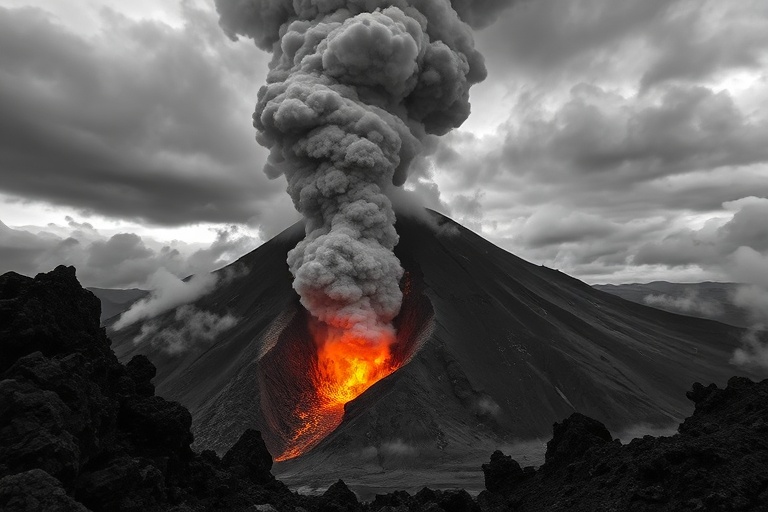
Mount Dukono is a stratovolcano standing at approximately 1,335 meters (4,380 feet) above sea level. Its complex structure includes multiple craters, with the most active being the Malupang Magiwe crater. Unlike dormant volcanoes that may lie quiet for centuries, Dukono has erupted continuously since 1933, making it one of the few volcanoes with a documented half-century of uninterrupted activity.
The volcano’s eruptions are characterized by explosive ash emissions rather than massive lava flows. These eruptions produce plumes that often reach several kilometers into the sky, disrupting air traffic and affecting air quality across wide areas. The ash clouds from Dukono have been detected as far as the Philippines and northern Australia, illustrating the far-reaching consequences of its activity.
Geologists classify Dukono as a high-risk volcano due to its unpredictable behavior and proximity to populated areas. While the island of Halmahera has a relatively small population, the potential for ashfall and respiratory health issues remains a constant concern. Monitoring efforts by Indonesia’s Center for Volcanology and Geological Hazard Mitigation (PVMBG) are crucial in mitigating risks for local residents and travelers.
Cultural and Historical Significance in North Maluku
For the indigenous communities of Halmahera, Mount Dukono is more than just a geological formation—it holds deep cultural and spiritual significance. Local folklore often depicts the volcano as a living entity, with eruptions seen as expressions of its mood or displeasure. These beliefs have shaped traditional practices, including rituals to appease the spirit of the mountain.
The name “Dukono” itself is believed to derive from local dialects, with varying interpretations. Some elders suggest it means “the one that smokes,” referencing the volcano’s constant emission of ash and steam. Others link it to ancient stories of a giant who once lived on the mountain, adding layers of myth to its natural history.
The presence of the volcano has also influenced the region’s economy. While agriculture thrives in the fertile volcanic soil, the constant threat of eruptions forces communities to adapt. Farmers cultivate crops like cloves and nutmeg, which are resilient to minor ashfall, while fishing remains a stable livelihood due to the island’s coastal geography.
Tourism and Exploration: A Double-Edged Opportunity
Despite its dangers, Mount Dukono attracts a niche group of adventurers and volcano enthusiasts. Hiking to the summit offers breathtaking views of the surrounding islands and the vast expanse of the Pacific Ocean. However, the journey is not for the faint-hearted. The terrain is rugged, and the air is often thick with sulfur, requiring proper safety gear and guidance.
Tourism in the region is slowly growing, with local guides playing a pivotal role in ensuring safe and responsible exploration. The Indonesian government has designated certain areas as protected zones, balancing the need for economic growth with safety regulations. Visitors are encouraged to check the latest volcanic activity reports before planning their trips.
For those interested in volcano tourism, Halmahera offers more than just Dukono. Nearby attractions include the stunning Jailolo volcano and the biodiverse forests of Aketajawe-Lolobata National Park. Together, these sites make North Maluku a hidden gem for nature lovers and photographers.
Global Perspective: Volcanoes and Human Resilience
Mount Dukono’s story is part of a larger narrative about human resilience in the face of natural disasters. Around the world, communities living near active volcanoes have developed unique strategies to coexist with these powerful forces. From the terraced rice fields of Bali, nurtured by volcanic soil, to the geothermal energy harnessed in Iceland, volcanoes have shaped civilizations in profound ways.
In Indonesia alone, there are over 130 active volcanoes, making it one of the most volcanically active countries in the world. The country’s disaster management agencies have become global leaders in volcanic monitoring, using advanced technology to predict eruptions and warn communities. These efforts are critical in a nation where volcanic activity is a part of daily life.
Dukono’s continuous activity also serves as a reminder of the Earth’s ever-changing nature. While modern science provides tools to understand and predict volcanic behavior, the natural world remains unpredictable. This duality underscores the importance of respecting these natural giants while advancing our knowledge of them.
For further reading on Indonesia’s volcanic landscape and its impact on local communities, explore our Travel section, where we delve into sustainable tourism and cultural insights across the archipelago.
Conclusion: A Volcano That Demands Respect
Mount Dukono is more than just an active volcano—it is a symbol of nature’s raw power and humanity’s enduring relationship with it. Its constant activity challenges us to remain vigilant, adaptable, and respectful of the forces that shape our planet. Whether viewed through the lens of science, culture, or adventure, Dukono offers valuable lessons about coexistence with the natural world.
As Indonesia continues to monitor and study this fiery giant, the story of Mount Dukono reminds us that our planet is alive in every sense of the word. It is a call to action for researchers, policymakers, and travelers to approach these natural wonders with caution, curiosity, and a deep sense of responsibility.