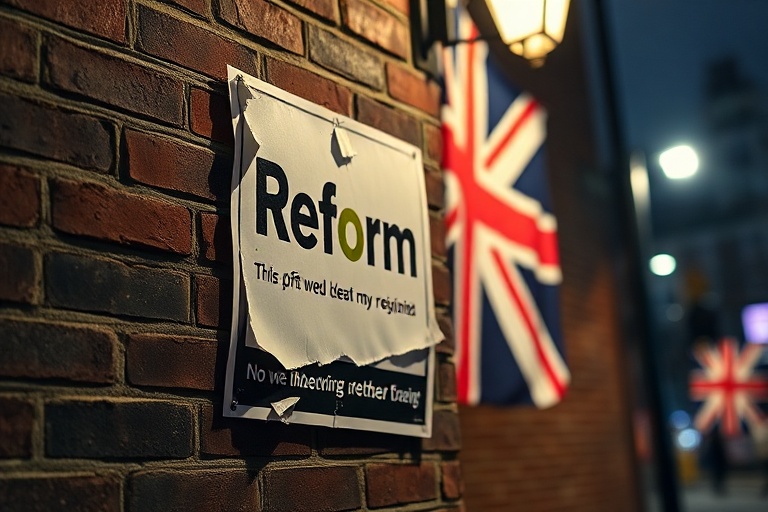
Reform UK has emerged as one of the most talked-about political movements in Britain over the past few years. Born out of the Brexit Party, the party has repositioned itself as a vocal advocate for conservative and populist policies, challenging the traditional grip of the Conservative Party on the right-wing vote. But what exactly is Reform UK, and where does it fit within the broader political landscape?
Founded in 2019 as the Brexit Party by Nigel Farage, the party rebranded in 2021 to Reform UK, signaling a broader ambition beyond the single-issue focus on leaving the European Union. Today, it positions itself as a party of national renewal, advocating for stricter immigration controls, economic deregulation, and a rejection of what it terms “woke” policies in government and public life. While it has yet to win a seat in the House of Commons, its influence on British politics is undeniable—pushing major parties to adopt tougher stances on immigration and public spending.
The Origins and Evolution of Reform UK
Reform UK’s roots trace back to the United Kingdom Independence Party (UKIP), the party that Farage led during the 2014 European Parliament elections when it won the most seats. UKIP’s success in securing the Brexit referendum in 2016 marked a turning point in British politics. However, after the referendum, UKIP’s influence waned, and internal divisions grew.
In 2019, Farage launched the Brexit Party as a vehicle to ensure Britain left the EU on the terms he supported—free from compromise. The party won the most votes in the 2019 European elections, ahead of both Labour and the Conservatives. When Brexit was delivered, the party rebranded as Reform UK in 2021, expanding its platform to include broader conservative and populist themes.
Today, Reform UK is led by Richard Tice, a businessman and former Brexit Party chairman. Under his leadership, the party has sought to position itself as a credible alternative to the Conservative Party, particularly among voters disillusioned with the government’s handling of immigration, the economy, and cultural issues. While Reform UK has not yet gained a foothold in Westminster, its polling numbers have consistently hovered around 10–15%, making it a persistent thorn in the side of the Conservatives.
Key Policies and Political Stances
Reform UK’s policy platform is built on several core principles, many of which resonate with traditional conservative and populist voters. The party’s agenda includes:
- Strict immigration controls: Reform UK advocates for the immediate reduction of legal immigration, the removal of asylum seekers to safe third countries, and stricter enforcement of deportation orders.
- Economic deregulation: The party calls for the repeal of “excessive” regulations, particularly in energy and business sectors, to stimulate growth and reduce costs for consumers.
- Opposition to net zero policies: Reform UK argues that the UK’s push toward net zero carbon emissions is economically damaging and advocates for a more pragmatic, cost-effective approach to climate policy.
- Rejection of “woke” culture: The party opposes what it sees as the imposition of progressive values in public institutions, including education and the civil service, and has called for reforms to prevent “left-wing bias.”
- Lower taxes and public spending: Reform UK supports significant tax cuts, particularly for businesses and high earners, and advocates for a reduction in overall government expenditure to stimulate private sector growth.
These policies have resonated with a segment of the electorate that feels alienated by the mainstream parties’ approach to culture, economics, and national identity. Reform UK’s rhetoric often frames Britain as a nation in decline, threatened by mass immigration, cultural change, and an overbearing state. This narrative has helped the party attract voters who feel ignored by traditional politics.
Reform UK’s Impact on British Politics
While Reform UK has not yet won a seat in the House of Commons, its influence on British politics is significant. The party has forced the Conservative Party to adopt tougher stances on immigration and public spending, particularly on issues like the Rwanda deportation plan and the cap on refugee numbers. Prime Minister Rishi Sunak has acknowledged the pressure from Reform UK, framing his government’s policies as a response to public concern over immigration and economic stagnation.
Reform UK’s rise also reflects broader trends in European politics, where populist and right-wing parties have gained ground by tapping into concerns over national identity, immigration, and economic insecurity. In countries like France, Germany, and the Netherlands, similar movements have reshaped the political landscape, pushing mainstream parties to adopt more restrictive policies. Reform UK’s success in polling suggests that the UK is not immune to this trend.
However, Reform UK faces significant challenges. The first-past-the-post electoral system in the UK makes it difficult for smaller parties to win seats, even if they secure a sizable share of the vote. Additionally, the party’s association with controversial figures like Farage has led to accusations of extremism, which could limit its appeal to more moderate voters.
Despite these obstacles, Reform UK’s continued presence in the political arena is likely to shape the outcome of future elections. If the party can consolidate its support and present a more disciplined image, it could become a permanent fixture in British politics—or even a kingmaker in coalition talks.
What’s Next for Reform UK?
As Reform UK looks ahead to the next general election, its strategy will likely focus on maximizing its influence rather than winning a majority. The party’s goal is to pull voters away from the Conservatives, particularly in marginal constituencies where a split right-wing vote could hand victories to Labour. This tactic mirrors the approach of the Brexit Party in the 2019 European elections, which siphoned off Conservative voters and contributed to the party’s defeat.
Reform UK’s future success will depend on several factors. First, its ability to present a coherent and electable leadership team will be crucial. The party has struggled to shake off its association with Farage, whose polarizing presence has both energized and alienated voters. A shift toward a more moderate image could help Reform UK broaden its appeal.
Second, the party’s policy platform will need to evolve to address the concerns of a wider electorate. While its focus on immigration and cultural issues resonates with a core base, it must also offer credible solutions to economic stagnation and public service decline to attract undecided voters.
Finally, Reform UK’s relationship with the Conservative Party will be pivotal. If the Conservatives continue to struggle in the polls, Reform UK could position itself as the natural successor to the right-wing vote. However, if the Conservatives manage to regain their footing, Reform UK’s influence may wane.
For now, Reform UK remains a significant force in British politics—a party that has redefined the boundaries of acceptable discourse on immigration, economics, and national identity. Whether it becomes a lasting movement or a fleeting protest vote will depend on its ability to adapt and grow in an increasingly volatile political landscape.
One thing is clear: Reform UK has already changed the game. And in British politics, that’s no small feat.
For more analysis on political trends, visit our News and Politics sections.