Damien Hirst remains one of the most polarizing yet undeniably influential figures in contemporary art. His work—ranging from preserved animal carcasses to diamond-encrusted skulls—has consistently challenged conventions while commanding record-breaking auction prices. Born in 1965 in Bristol, England, Hirst rose to prominence in the late 1980s and 1990s as a leading figure in the YBA (Young British Artists) movement, a group that redefined the art world’s boundaries through shock value and conceptual daring.
The Birth of a Provocateur: Hirst’s Early Career and Breakthrough
Hirst’s artistic career began at Goldsmiths, University of London, where he studied fine art. It was there that he curated the seminal 1988 exhibition Freeze, which launched the careers of several YBAs and established Hirst as a force to be reckoned with. His early works, such as the Medicine Cabinets series, explored themes of life, death, and human fragility by displaying pharmaceutical packaging in glass vitrines—a precursor to his later, more visceral installations.
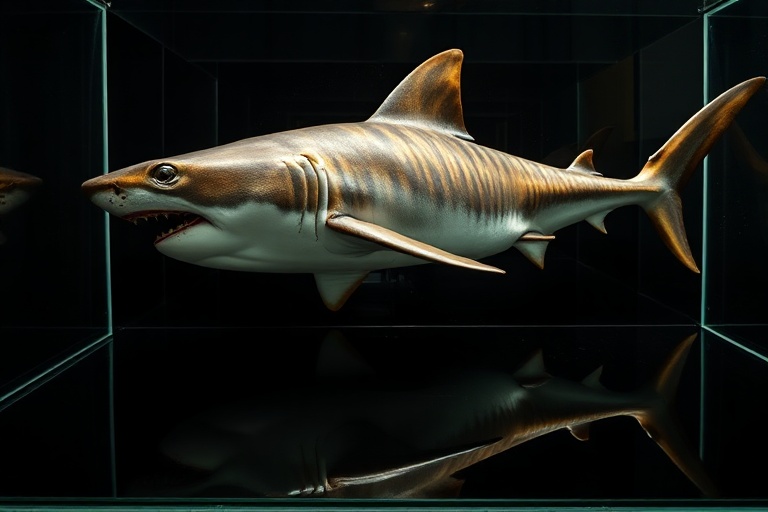
The breakthrough came in 1991 with The Physical Impossibility of Death in the Mind of Someone Living, a 14-foot tiger shark preserved in formaldehyde. The piece, part of his Natural History series, became an instant icon, encapsulating Hirst’s fascination with mortality and the unnerving beauty of decay. The shark, later sold for a reported $12 million, cemented his reputation as an artist who could turn macabre subject matter into high art.
Key Themes in Hirst’s Work
- Death and Decay: Hirst’s obsession with mortality is evident in works like For the Love of God (a diamond-encrusted skull) and his Butterfly Paintings, where vibrant insects symbolize both beauty and transience.
- Science and Medicine: His Medicine Cabinets and Pharmaceutical Paintings blur the line between art and medical documentation, questioning the role of science in society.
- Religion and Iconography: Works like The Last Supper (a series of spot paintings replicating Da Vinci’s masterpiece) and Mother and Child (Divided) (a cow and calf cut in half) explore spiritual themes through a contemporary lens.
- Consumerism and Value: Hirst’s spot paintings and spin paintings challenge notions of artistic labor and commercial viability, often produced in series to critique the art market’s obsession with quantity over quality.
Controversy and Criticism: The Double-Edged Sword of Shock Art
Hirst’s career has been as much about controversy as it has been about art. Critics argue that his work relies too heavily on shock value, with some dismissing his formaldehyde pieces as mere gimmicks. The 2006 exhibition In and Out of Love, featuring live butterflies emerging from pupae in a controlled environment, was praised for its beauty but also criticized for its perceived lack of depth.
In 2008, Hirst bypassed galleries entirely by selling a complete exhibition, Beautiful Inside My Head Forever, directly at auction through Sotheby’s. The move sparked debates about the commercialization of art and whether Hirst’s work had become more about spectacle than substance. Yet, the sale grossed over $200 million, proving that his brand of provocative art had an undeniable market appeal.
Even his spot paintings, once dismissed by some as repetitive and mechanical, have been reappraised as significant contributions to abstract art. In 2012, a retrospective at the Tate Modern drew record crowds, with visitors either revering or reviling Hirst’s oeuvre. The exhibition highlighted how his work forces audiences to confront uncomfortable truths about life, death, and the commodification of art.
The Broader Implications: Hirst’s Impact on Art and Culture
Hirst’s influence extends far beyond the confines of galleries and auction houses. He has redefined the role of the artist as a brand, blurring the lines between creator, entrepreneur, and celebrity. His collaborations with fashion houses like Alexander McQueen and his own ventures into publishing (Other Criteria) demonstrate his ability to transcend traditional artistic boundaries.
The YBA movement, of which Hirst was the most prominent figure, democratized contemporary art by making it accessible to a broader audience. While critics argued that the movement prioritized provocation over skill, its legacy is undeniable: it challenged the elitism of the art world and paved the way for a new generation of artists to explore unconventional mediums and themes.
Hirst’s work also raises important questions about the commodification of art. By producing art in series—such as his spot paintings, which he outsourced to assistants—he challenged the notion of the artist as a solitary genius. This approach, while controversial, reflects a broader cultural shift toward valuing ideas over craftsmanship, a trend that continues to shape contemporary art markets.
Hirst’s Enduring Legacy
Today, Hirst’s work continues to command high prices, with his 2022 exhibition The Currency selling out within hours despite its conceptual complexity. The project involved 10,000 spot paintings, each linked to a unique NFT. Buyers were given the option to exchange their NFT for a physical painting after a year, forcing a reckoning with the value of digital versus tangible art.
Whether celebrated or condemned, Hirst’s impact on modern art is undeniable. He has forced audiences to confront uncomfortable truths while simultaneously becoming a symbol of the art world’s commercial excesses. Love him or loathe him, Damien Hirst has left an indelible mark on the cultural landscape, proving that art can be both a mirror and a provocation.
“Art is about life and it can’t be about anything else… there isn’t anything else.” — Damien Hirst
As the art world continues to evolve, Hirst’s legacy serves as a reminder of the power—and the pitfalls—of pushing boundaries. In an era where art is increasingly commodified and spectacle often overshadows substance, his work challenges us to ask: What is art for? And who gets to decide its value?