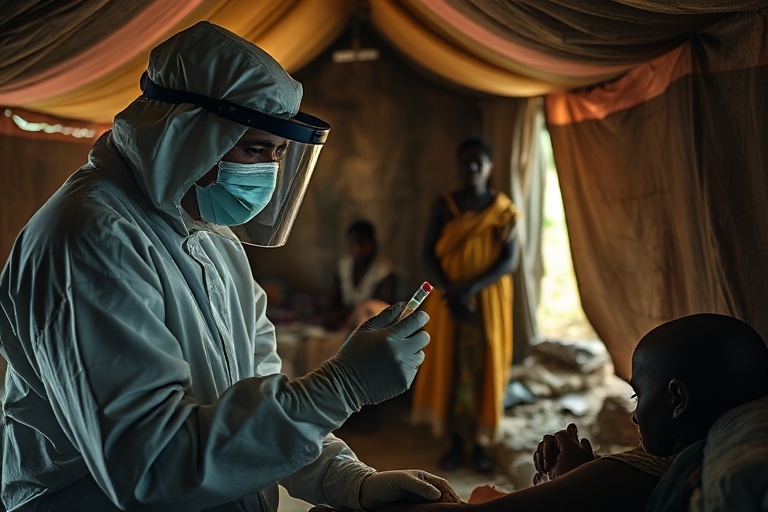
Ebola Outbreak: A Timeline of Crisis, Response, and Lessons Learned
The Ebola Outbreak: A Timeline of Crisis and Response
The Ebola outbreak remains one of the most devastating public health emergencies in modern history. Originating in remote villages of Central Africa, the virus spread rapidly, crossing borders and overwhelming healthcare systems. Unlike seasonal influenza, Ebola carries a high fatality rate—often exceeding 50%—leaving communities shattered and governments scrambling for solutions. The 2014–2016 West Africa outbreak alone resulted in over 11,000 deaths, according to the World Health Organization (WHO), illustrating the catastrophic potential of this hemorrhagic fever when containment fails.
Understanding the timeline of Ebola’s emergence and the global response is essential to grasping both its medical and societal impact. From initial misdiagnoses to international aid missions, the outbreak exposed weaknesses in public health infrastructure and highlighted the need for rapid, coordinated intervention. This article examines the origins of the crisis, key moments in its spread, and the lessons learned from one of the deadliest pandemics in recent memory.
The Origins and Early Spread of Ebola
The Ebola virus was first identified in 1976 near the Ebola River in Zaire (now the Democratic Republic of Congo). Two simultaneous outbreaks occurred—one in a mission hospital and another in a small village—both linked to contaminated needles and close contact with infected patients. The virus, named after the river, belongs to the Filoviridae family and is transmitted through bodily fluids, making it particularly dangerous in settings with limited sanitation.
Early outbreaks were confined to rural areas, where dense forests and limited healthcare access allowed the virus to spread undetected for weeks or even months. The 1976 and 1995 outbreaks in Congo and the 2000–2001 epidemic in Uganda demonstrated Ebola’s ability to exploit weak health systems. However, the 2014–2016 outbreak in West Africa marked a turning point, as the virus reached urban centers like Monrovia, Freetown, and Conakry—home to millions of people.
Several factors contributed to the unprecedented spread:
- Urbanization: Rapid population growth in cities increased human-to-human transmission opportunities.
- Cultural practices: Traditional burial rituals involving close contact with the deceased accelerated transmission.
- Healthcare shortages: Hospitals lacked protective gear, isolation units, and trained staff to manage highly infectious patients.
- Mistrust in authorities: Rumors and misinformation led some communities to resist quarantine measures and medical teams.
Global Response and International Aid Efforts
The international community’s response to the 2014–2016 outbreak was slow and fragmented. The WHO faced criticism for its delayed declaration of a Public Health Emergency of International Concern (PHEIC), which occurred only after the virus had already claimed thousands of lives. By then, the epidemic had spiraled out of control, with cases reported in the United States, Spain, and the United Kingdom due to international travel.
Countries like the United States, the United Kingdom, and Canada deployed medical teams, field hospitals, and funding to affected regions. The U.S. Agency for International Development (USAID) and the Centers for Disease Control and Prevention (CDC) played pivotal roles in training local healthcare workers and establishing treatment centers. Médecins Sans Frontières (Doctors Without Borders) was among the first organizations on the ground, treating patients and advocating for a stronger global response.
Despite these efforts, challenges persisted:
- Logistical hurdles: Delivering medical supplies to remote areas with poor infrastructure delayed aid.
- Staffing shortages: Fear of infection deterred many healthcare workers from volunteering.
- Coordination gaps: Multiple agencies operated independently, leading to duplication of efforts and missed opportunities.
- Vaccine development delays: Although experimental vaccines were fast-tracked, they arrived too late for most patients.
The outbreak underscored the need for a unified global health strategy, one that prioritizes early detection, rapid response, and equitable access to medical interventions. The experience also highlighted the role of community engagement in controlling infectious diseases, as top-down approaches often failed to gain public trust.
Scientific Breakthroughs and Lessons Learned
One of the most significant outcomes of the Ebola crisis was the acceleration of vaccine development. In 2015, the rVSV-ZEBOV vaccine, developed by Merck and the Public Health Agency of Canada, demonstrated 100% efficacy in a ring vaccination trial in Guinea. This breakthrough marked the first successful Ebola vaccine and provided hope for future outbreaks.
Researchers also gained valuable insights into the virus’s genetic evolution. Genome sequencing revealed how Ebola adapted during human-to-human transmission, offering clues for tracking and predicting outbreaks. Additionally, studies on post-Ebola syndrome—long-term health complications in survivors—expanded our understanding of the virus’s lingering effects on the immune system.
The 2014–2016 outbreak also prompted reforms in global health governance. The WHO established the Contingency Fund for Emergencies to enable rapid financial responses, while the Global Health Security Agenda (GHSA) aimed to strengthen disease surveillance and laboratory capacities in vulnerable countries. These initiatives sought to prevent future pandemics by addressing the root causes of health system failures.
Yet, despite these advancements, gaps remain. Many African countries still lack the resources to implement robust early warning systems. The COVID-19 pandemic later revealed how quickly progress can unravel when global attention shifts. Ebola’s legacy serves as both a warning and a blueprint for how the world can—and must—prepare for the next emerging infectious disease.
Preparing for the Next Outbreak: A Call to Action
The Ebola crisis was a stark reminder that infectious diseases know no borders. A localized outbreak in a remote village can, within weeks, become a global emergency. This reality demands a shift in how we approach pandemic preparedness—prioritizing prevention, investing in health systems, and fostering international cooperation.
Key strategies for future readiness include:
- Strengthening local healthcare: Training community health workers and improving diagnostic capabilities in at-risk regions.
- Enhancing surveillance: Deploying real-time data systems to detect unusual disease patterns early.
- Stockpiling medical supplies: Maintaining reserves of personal protective equipment (PPE), treatments, and vaccines.
- Promoting global collaboration: Ensuring equitable access to medical countermeasures and sharing data transparently.
The world cannot afford another delayed response. The lessons from Ebola must inform our approach to COVID-19, mpox, and the next unknown pathogen lurking in the shadows. Public health is not just a scientific challenge; it is a moral and economic imperative. The cost of inaction is measured in lives lost, economies disrupted, and trust eroded.
As we reflect on the Ebola outbreak, we must ask ourselves: Will we remember its lessons, or will complacency allow history to repeat itself? The choice lies in how seriously we take the warnings of the past.
Further Reading and Resources
For those interested in delving deeper into the science and policy behind Ebola, the following resources provide valuable insights:
- Health Section – Explore in-depth analyses of infectious disease outbreaks and public health responses.
- Science Section – Learn about the latest research on vaccines, virology, and pandemic preparedness.
- World Health Organization (WHO): Official reports and outbreak updates.
- Centers for Disease Control and Prevention (CDC): Ebola resources and guidance.