Georgia Fort: A Historical Landmark with Global Significance
Perched along the Black Sea coast in the nation of Georgia, Georgia Fort stands as a testament to centuries of cultural exchange, military strategy, and architectural innovation. This 14th-century fortress, also known as Gonio Fortress, has witnessed the rise and fall of empires, from the Roman and Byzantine eras to the Ottoman and Russian occupations. Today, it remains one of the most visited historical sites in the Caucasus region, drawing travelers and historians alike.
The Origins and Evolution of Georgia Fort
Georgia Fort’s history begins in the 1st century AD, when it was established as a Roman military outpost under Emperor Vespasian. The fortress served as a strategic stronghold along the eastern frontier of the Roman Empire, controlling trade routes between the Black Sea and the interior of the Caucasus. Archaeological evidence suggests that the Romans built the initial fortifications to protect against invasions and secure their economic interests in the region.
By the 5th century, the fortress had expanded under Byzantine rule. The Byzantines reinforced the walls and added religious structures, including a basilica that still stands today. The site became a hub for early Christianity in the region, with the fortress serving as a refuge for monks and missionaries. The layers of history embedded in Georgia Fort’s walls reflect the shifting political and religious dynamics of the medieval era.
Cultural Crossroads: A Melting Pot of Empires
Georgia Fort’s location made it a prized possession for successive empires. The Ottomans captured it in the 16th century, using it as a military base and tax collection point. Later, the Russians took control in the 19th century during their expansion into the Caucasus. Each occupying force left its mark, from Ottoman-era bathhouses to Russian administrative buildings.
The fortress also played a role in Georgia’s national identity. During the Soviet era, Georgia Fort was preserved as a cultural monument, though its significance was often overshadowed by propaganda. After Georgia regained independence in 1991, the fortress became a symbol of the country’s resilience and rich heritage. Today, it is a UNESCO World Heritage site candidate, recognized for its historical depth and architectural integrity.
Architectural Highlights and Preservation Efforts
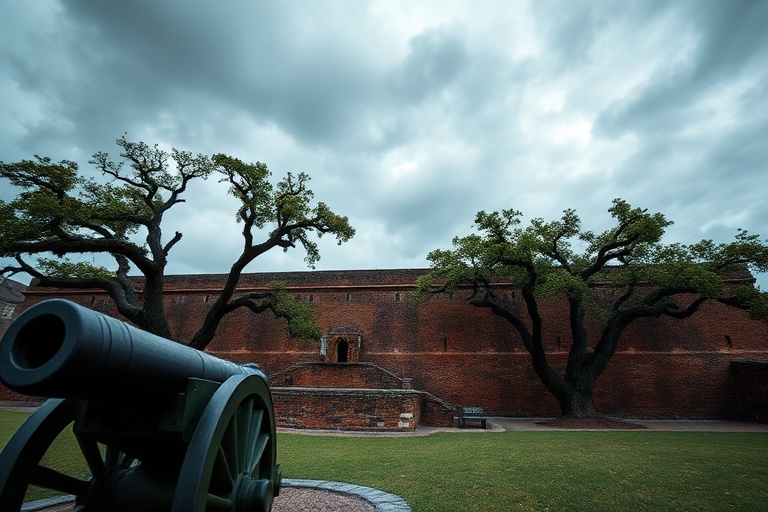
Georgia Fort’s layout is a masterclass in defensive architecture. The fortress is enclosed by massive stone walls, some reaching up to 10 meters in height, with towers positioned at strategic intervals. The main entrance, known as the Gate of the Sun, features intricate carvings that may date back to Roman or Byzantine times. Inside, visitors can explore ruins of barracks, bathhouses, and churches, each telling a story of the fortress’s layered past.
Preservation has been an ongoing challenge. The humid Black Sea climate accelerates erosion, while tourism poses risks to the fragile structures. In recent years, Georgian authorities have partnered with international organizations to stabilize the walls and restore key buildings. These efforts aim to balance accessibility with conservation, ensuring that future generations can experience Georgia Fort’s grandeur.
Georgia Fort in the Modern Era: Tourism and Education
Today, Georgia Fort is more than a relic of the past—it is a living classroom. The site hosts annual festivals celebrating Georgia’s medieval heritage, featuring traditional music, crafts, and reenactments. Schools across the country organize field trips here, using the fortress as a tool to teach history in an immersive way. The Georgian National Museum even offers guided tours that delve into the fortress’s archaeological secrets.
For international visitors, Georgia Fort is a gateway to the broader region. It lies just 15 kilometers south of Batumi, a vibrant coastal city known for its modern architecture and lively culture. Travelers often combine a visit to the fortress with explorations of nearby wineries, where Georgia’s ancient winemaking traditions are still practiced. The contrast between the ancient ruins and the bustling modern city underscores Georgia’s ability to honor its past while embracing the future.
Why Georgia Fort Matters Beyond Borders
The story of Georgia Fort transcends its physical walls. It is a microcosm of the Caucasus region’s complex history—a place where empires clashed, cultures merged, and identities were forged. In an era where global heritage sites face threats from conflict and climate change, Georgia Fort stands as a reminder of the importance of preservation.
Moreover, the fortress challenges Western-centric narratives of history. While Europe’s medieval castles are well-documented, sites like Georgia Fort highlight the interconnectedness of the medieval world. Trade, religion, and warfare linked the Caucasus to Rome, Constantinople, and beyond. Recognizing this interconnectedness can foster greater appreciation for the diversity of human experience.
For those planning a visit, Georgia Fort offers more than just a glimpse into the past. It is an opportunity to engage with a living history, one that continues to evolve with each archaeological discovery and restoration project.
Plan Your Visit
Georgia Fort is open year-round, though the best time to visit is during the spring or autumn, when the weather is mild and crowds are smaller. Here’s what you need to know before you go:
- Location: Near the town of Gonio, 15 km south of Batumi, Georgia.
- Hours: Open daily from 9:00 AM to 6:00 PM (extended hours in summer).
- Admission: Approximately 7 GEL (about $2.50 USD).
- Guided Tours: Available in English, Georgian, and Russian. Highly recommended for deeper insights.
- Nearby Attractions: Batumi’s seaside promenade, the Alphabet Tower, and local wineries in the Kakheti region.
To learn more about Georgia’s rich history and cultural sites, explore our Culture category for additional articles and travel guides. Whether you’re a history buff or a casual traveler, Georgia Fort promises an unforgettable journey through time.