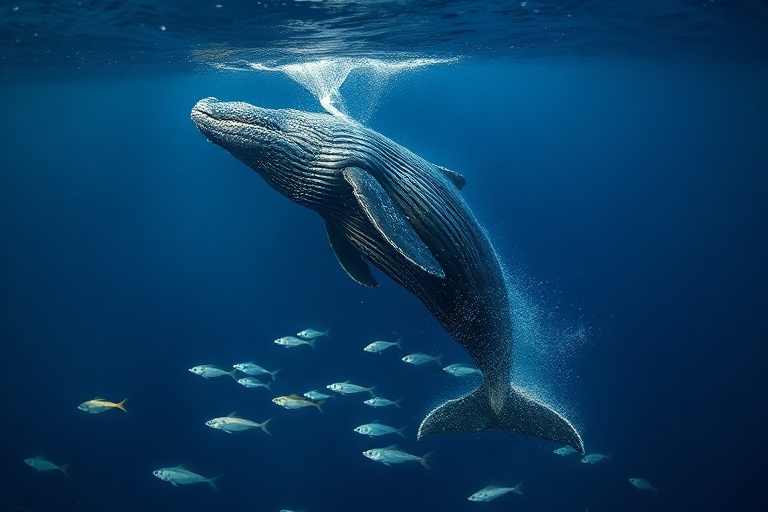
Humpback Whale: Gentle Giants of the Ocean and Their Survival Story
The humpback whale (Megaptera novaeangliae) stands as one of the most recognizable and charismatic creatures in the marine world. Known for their acrobatic breaches and haunting songs, these baleen whales have captivated scientists and ocean enthusiasts alike. Their presence in oceans worldwide—from icy polar waters to tropical coastlines—highlights their remarkable adaptability and ecological importance.
Physical Characteristics and Adaptations
Humpback whales are easily identified by their massive size, reaching up to 52 feet in length and weighing as much as 40 tons. Their scientific name, Megaptera novaeangliae, translates to “big-winged New Englander,” a nod to their long pectoral fins—often one-third the length of their bodies—which can span up to 16 feet. These elongated fins, combined with a stocky body and a distinctive hump before their dorsal fin, give them a uniquely graceful appearance in the water.
Their bodies are predominantly black or dark gray, with white patches on their undersides and flippers. These markings are as unique as human fingerprints, allowing researchers to identify individuals through photo-identification techniques. Humpbacks also possess a series of 270 to 400 baleen plates on each side of their mouths, which they use to filter feed on small fish and krill.
Acrobatic Behavior and Feeding Techniques
Humpback whales are renowned for their aerial displays, often launching their massive bodies out of the water in breaches. These breaches may serve multiple purposes: removing parasites, communicating with others, or simply playful behavior. Their breaches are not just visually stunning but also physically demanding, requiring significant energy expenditure.
Their feeding strategy, known as bubble-net feeding, showcases remarkable teamwork and coordination. In this method, a group of humpbacks swims in a shrinking circle while blowing bubbles from their blowholes. The bubbles form a cylindrical “net” that traps krill or small fish, allowing the whales to swim upward with their mouths agape to consume their prey. This cooperative hunting technique demonstrates the intelligence and social structure of these marine mammals.
Migration Patterns and Habitat
Humpback whales are migratory giants, traveling up to 5,000 miles between their feeding and breeding grounds each year. Their annual journey is one of the longest of any mammal, with populations in the Northern and Southern Hemispheres following distinct but predictable routes. During the summer months, humpbacks feed in nutrient-rich polar waters, where they build up blubber reserves for the leaner winter months.
As temperatures drop, they embark on their journey to tropical or subtropical waters to mate, give birth, and nurse their calves. These warmer regions, such as Hawaii, the Dominican Republic, and the Great Barrier Reef, provide calm waters ideal for raising young. Calves are born after an 11-12 month gestation period and measure about 10-15 feet in length. They rely entirely on their mother’s milk for the first year, growing rapidly before beginning to feed independently.
Breeding Grounds and Calving
The breeding season is a time of intense competition among males, who vie for the attention of females through complex songs and physical displays. Male humpbacks are known for their elaborate, ever-changing songs, which can last for hours and are thought to play a role in mating rituals. These songs, composed of sequences of moans, howls, and clicks, travel vast distances underwater, serving as a form of long-distance communication.
Females typically give birth every two to three years, selecting warm, sheltered waters to ensure the survival of their calves. The bond between mother and calf is strong, with the calf staying close for at least one year. During this time, the mother teaches her offspring essential survival skills, including feeding and migration routes.
Conservation Status and Threats
Humpback whales were once hunted to the brink of extinction during the commercial whaling era, with populations declining by an estimated 90% by the mid-20th century. However, their fortunes changed with the 1986 global moratorium on commercial whaling, which allowed many populations to recover. Today, the International Union for Conservation of Nature (IUCN) classifies humpback whales as Least Concern, though some regional populations remain endangered or vulnerable.
Despite this recovery, humpback whales face ongoing threats from human activities. Entanglement in fishing gear is a leading cause of injury and death, with thousands of whales becoming trapped in nets and lines each year. Ship strikes also pose a significant risk, particularly in heavily trafficked coastal areas. Additionally, climate change is altering ocean temperatures and food availability, potentially disrupting their migration patterns and feeding grounds.
Conservation Efforts and Success Stories
Global and local conservation initiatives have played a crucial role in the recovery of humpback whale populations. The Endangered Species Act in the United States and similar protections worldwide have provided legal safeguards for these whales. Non-governmental organizations, such as the Whale and Dolphin Conservation (WDC), work tirelessly to reduce entanglement risks, advocate for sustainable shipping practices, and promote whale-friendly tourism.
One notable success story is the recovery of the humpback whale population in the North Atlantic, which has rebounded to an estimated 12,000 individuals. Similarly, populations in the Southern Hemisphere have shown signs of recovery, though some remain critically low. These improvements underscore the importance of international cooperation and sustained conservation efforts.
Cultural Significance and Human Connection
Humpback whales have long held a special place in human culture, appearing in the myths, legends, and art of coastal communities worldwide. Indigenous peoples such as the Haida of the Pacific Northwest and the Aboriginal Australians have revered these whales as spiritual beings, often associating them with creation stories and ancestral wisdom. Their songs, which can travel for miles underwater, have inspired musicians and sound artists, blending natural acoustics with human creativity.
In modern times, humpback whales have become ambassadors for marine conservation, drawing tourists to whale-watching destinations such as Alaska, Maui, and Tonga. Responsible whale-watching tours not only provide economic benefits to local communities but also foster a deeper appreciation for these animals and their habitats. Educational programs, such as those offered by aquariums and marine research centers, further strengthen the connection between humans and humpback whales.
The Role of Citizen Science
Citizen science initiatives have become an invaluable tool in humpback whale research and conservation. Programs like Happywhale and WhaleNet allow volunteers to contribute to data collection by submitting sightings, photos, and acoustic recordings. These efforts help researchers track migration patterns, identify individual whales, and monitor population health on a global scale.
For example, the Happywhale database contains over 100,000 sightings and has facilitated the identification of thousands of individual humpbacks. Such collaborative efforts not only advance scientific knowledge but also engage the public in meaningful conservation work.
Conclusion: Protecting the Future of Humpback Whales
Humpback whales are more than just magnificent ocean dwellers; they are vital components of marine ecosystems and symbols of global conservation success. Their recovery from the brink of extinction is a testament to the power of international cooperation and dedicated conservation efforts. However, their future remains uncertain, with new challenges such as climate change and ocean pollution threatening their long-term survival.
Protecting humpback whales requires a multifaceted approach, including reducing entanglement risks, mitigating ship strikes, and addressing the impacts of climate change. By supporting conservation organizations, advocating for sustainable policies, and promoting responsible tourism, individuals can contribute to the ongoing protection of these gentle giants.
The story of the humpback whale is one of resilience and hope. As we continue to learn about their complex behaviors and ecological roles, we are reminded of the interconnectedness of all life on Earth. Ensuring the survival of humpback whales is not just about saving a species—it is about preserving the health and vitality of our oceans for generations to come.