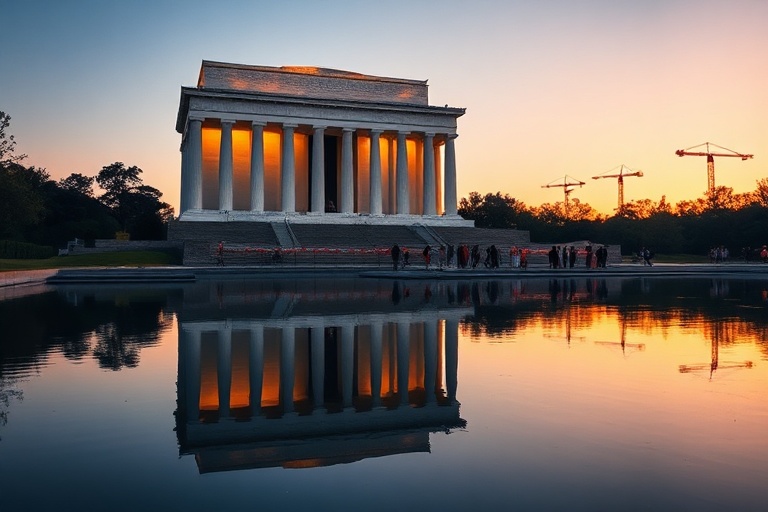
The Lincoln Memorial Reflecting Pool, a centerpiece of Washington D.C.’s National Mall, has long served as more than just a scenic water feature. It is a silent witness to history, a stage for civil rights marches, and a place where visitors pause to reflect on America’s ideals. After decades of wear and environmental challenges, a comprehensive renovation project has restored its former grandeur while adapting to modern needs.
The Historical Significance of the Reflecting Pool
Designed by architect Henry Bacon and completed in 1922, the Lincoln Memorial stands at the western end of the Reflecting Pool, which stretches 2,029 feet toward the Washington Monument. The pool’s mirror-like surface was intended to symbolize unity and tranquility, reflecting both the monument and the sky above. Over the years, it has become an iconic backdrop for protests, concerts, and national ceremonies.
By the 2010s, the pool’s original concrete and travertine construction had deteriorated. Cracks, leaks, and algae blooms marred its appearance, while outdated drainage systems struggled with Washington D.C.’s variable climate. The National Park Service identified critical repairs needed to prevent further damage and ensure public safety.
A Global Perspective on Monumental Preservation
The challenges faced in Washington echo similar struggles worldwide. From Rome’s Trevi Fountain to Paris’ Trocadéro reflecting ponds, historic water features require constant upkeep. Unlike newer constructions, these landmarks carry the weight of cultural memory. Their preservation often involves balancing authenticity with modern engineering.
For example, Venice’s canals undergo regular dredging to maintain their historic character while accommodating tourism. The Lincoln Memorial Reflecting Pool renovation followed comparable principles—restoring original materials where possible while incorporating contemporary solutions for longevity.
- Material conservation: Original travertine coping stones were repaired or replaced with matching Italian stone.
- Drainage upgrades: A new system prevents stagnation, reducing algae growth.
- Accessibility improvements: Wider walkways and better lighting accommodate visitors of all abilities.
The Renovation Process: Challenges and Innovations
Work began in phases in 2021, with the pool drained for the first time in decades. Engineers discovered significant subsidence in some areas, requiring reinforced concrete bases. The project team also addressed environmental concerns by installing filtration systems to reduce chemical runoff into the Tidal Basin.
One unexpected challenge emerged: maintaining the pool’s symbolic role during construction. The National Park Service coordinated with event organizers to minimize disruptions, ensuring that the site remained accessible for key gatherings like the March for Life and Memorial Day observances.
Lessons from International Conservation Efforts
Washington’s approach mirrored techniques used in Amsterdam’s historic canals, where sediment removal balances preservation with flood control. The Reflecting Pool’s renovation also drew from Tokyo’s Shinjuku Gyoen, where modern filtration systems were integrated into a 1906 landscape without compromising its aesthetic.
Such projects highlight a global trend: the merging of heritage conservation with sustainable infrastructure. The Reflecting Pool’s new system, which uses ultraviolet light to inhibit algae, reflects this forward-thinking approach.
Cultural Impact and Future Considerations
With the renovation complete, the Reflecting Pool has regained its role as a gathering place for national discourse. Its restored condition supports both quiet contemplation and large-scale events, from the annual Easter Sunrise Service to impromptu vigils.
Yet the project also raises broader questions about monument maintenance in an era of climate change. Rising temperatures and increased storm frequency pose new threats to historic sites. The Reflecting Pool’s upgrades provide a model for resilience, but future efforts may need to consider even more adaptive strategies.
Visitor Experience and Educational Opportunities
The renovation included new interpretive signage that explains the pool’s history and significance. These additions align with the National Park Service’s goal of engaging younger audiences while honoring the site’s legacy. Interactive elements, such as augmented reality apps, could further enhance understanding in the years ahead.
For those unable to visit in person, the project has sparked renewed interest in virtual exploration. The National Park Service’s website now features 360-degree tours, allowing global audiences to experience this landmark from anywhere.
Conclusion: A Legacy Restored and Renewed
The Lincoln Memorial Reflecting Pool renovation was more than a structural repair—it was a reaffirmation of the site’s enduring importance. By blending traditional craftsmanship with modern technology, the project ensures that this iconic space will continue to inspire for generations. As visitors once again pause to see the monument reflected in its waters, they witness not just a restored landmark, but a living symbol of American ideals.
Looking ahead, the Reflecting Pool stands as a testament to the power of preservation. Its story reminds us that even the most enduring symbols require care and adaptation to remain relevant in an ever-changing world.
Explore more stories on cultural preservation and historical landmarks on Dave’s Locker.
For those interested in the technical aspects of such projects, our Technology section covers innovations in heritage conservation.