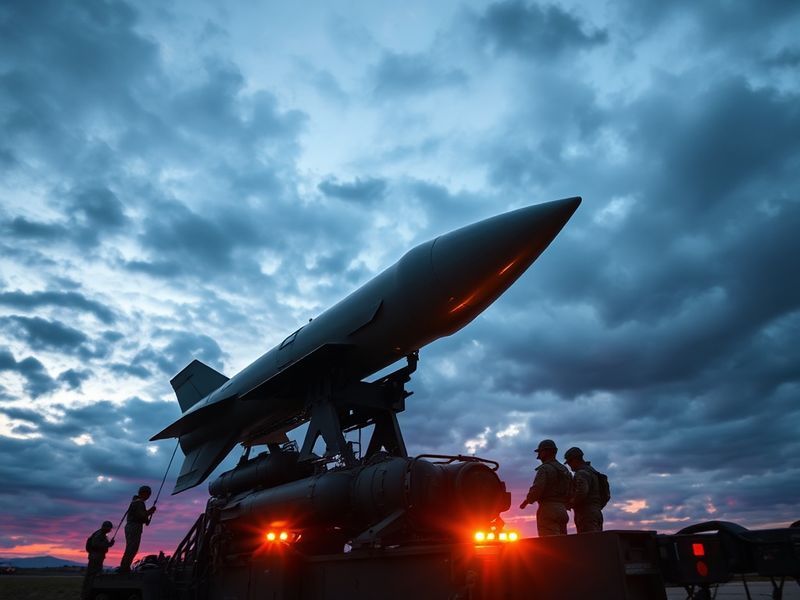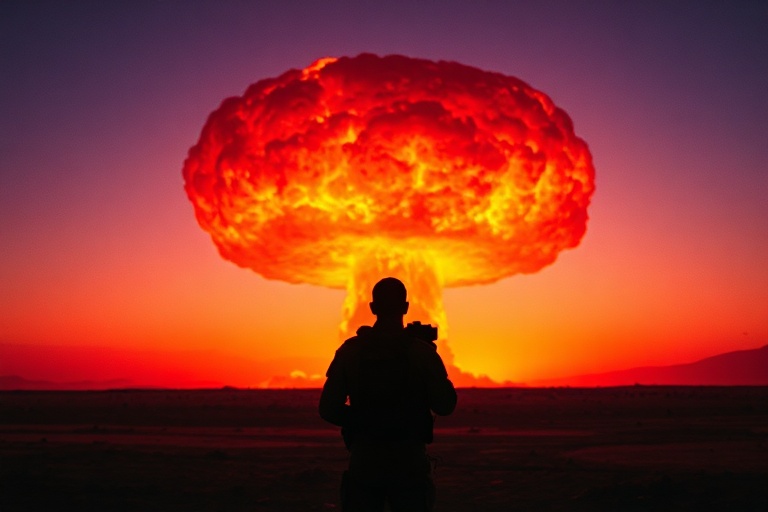
Nuclear explosions represent one of humanity’s most destructive capabilities, blending scientific complexity with geopolitical gravity. Unlike conventional explosives, nuclear detonations release energy through fission or fusion reactions, producing effects that can span miles in seconds. These events aren’t confined to wartime scenarios; they carry implications for energy policy, global security, and even cosmic research. To grasp their significance, it’s essential to examine their mechanics, historical context, and the broader consequences they impose on society.
The Science Behind Nuclear Detonations
At the core of a nuclear explosion lies the rapid release of binding energy stored in atomic nuclei. There are two primary types of nuclear weapons: fission bombs, which split heavy atoms like uranium-235 or plutonium-239, and thermonuclear (fusion) bombs, which combine lighter nuclei such as hydrogen isotopes under extreme heat and pressure. The latter, often called hydrogen bombs, are exponentially more powerful than their fission counterparts.
When a fission reaction occurs, neutrons collide with atomic nuclei, triggering a chain reaction that releases vast quantities of heat and radiation. In a thermonuclear device, this initial fission reaction serves as a trigger, compressing and heating a secondary fusion fuel to initiate a more energetic explosion. The energy output is typically measured in kilotons or megatons of TNT equivalent, with modern weapons capable of yields exceeding 1,000 times those of the bombs dropped on Hiroshima and Nagasaki.
The destructive power unfolds in distinct stages:
- Blast Wave: A supersonic shockwave flattens structures within a radius proportional to the yield.
- Thermal Radiation: Intense heat ignites fires and causes severe burns up to several miles from ground zero.
- Ionizing Radiation: Gamma rays and neutrons inflict acute radiation sickness on those exposed.
- Electromagnetic Pulse (EMP): Disrupts electronic systems, potentially crippling infrastructure.
- Fallout: Radioactive debris spreads through wind and precipitation, contaminating vast areas.
A Historical Perspective: From Trinity to Modern Threats
The atomic age began in earnest on July 16, 1945, when the United States detonated the first nuclear device, codenamed “Trinity,” in the New Mexico desert. This test marked the culmination of the Manhattan Project and demonstrated the terrifying potential of nuclear fission. Within weeks, the world witnessed the devastating civilian impact when Hiroshima and Nagasaki were struck by atomic bombs, hastening Japan’s surrender and ending World War II.
The Cold War era saw a rapid escalation in nuclear proliferation, as the U.S. and Soviet Union engaged in a deadly arms race. By the mid-1960s, both nations possessed intercontinental ballistic missiles capable of delivering nuclear warheads across continents. Treaties such as the Nuclear Non-Proliferation Treaty (NPT) and Strategic Arms Reduction Treaties (START) emerged in response, aiming to curb the spread and stockpile of nuclear weapons.
Today, the threat landscape has evolved. While large-scale nuclear war remains a horrifying possibility, smaller incidents involving radiological dispersal devices or improvised nuclear devices present new challenges. Rogue states, non-state actors, and technological advancements in uranium enrichment have intensified global anxiety. Recent tensions between nuclear-armed nations underscore the fragile balance of deterrence and diplomacy.
Broader Implications: Security, Ethics, and the Future
The existence of nuclear weapons has reshaped international relations, creating a paradoxical state of “mutually assured destruction” (MAD). While MAD prevented direct conflict between superpowers during the Cold War, it also normalized the idea that large-scale annihilation could be deterred through fear. Critics argue this doctrine is morally indefensible, as it prioritizes stability over human safety.
Beyond geopolitics, nuclear technology has found civilian applications, most notably in energy production. Nuclear power plants generate electricity without emitting greenhouse gases, offering a partial solution to climate change. However, risks such as meltdowns, waste disposal, and weaponization potential continue to spark debate. The 2011 Fukushima disaster in Japan highlighted the vulnerability of such facilities to natural disasters and raised questions about long-term sustainability.
Ethically, the use of nuclear weapons raises profound questions about proportionality and civilian immunity. The indiscriminate nature of their effects challenges the principles of just war theory. Meanwhile, the psychological impact on survivors—known as hibakusha in Japan—reverberates across generations, serving as a haunting reminder of war’s enduring scars.
Looking ahead, advancements in technology may offer both risks and opportunities. Hypersonic missiles and AI-driven defense systems could destabilize existing treaties, while breakthroughs in fusion energy might one day provide a safer alternative to fission-based power. The international community continues to grapple with these dual-use technologies, seeking a balance between innovation and control.
What Can Be Done? Policy and Personal Preparedness
Addressing the nuclear threat requires a multi-faceted approach. On a global scale, strengthening non-proliferation regimes and promoting diplomatic engagement remain critical. The Joint Comprehensive Plan of Action (JCPOA), though imperfect, demonstrated the potential for negotiated solutions to prevent nuclear development. Meanwhile, grassroots movements advocating for disarmament, such as the International Campaign to Abolish Nuclear Weapons (ICAN), have gained traction in recent years.
At the individual level, awareness and preparedness are vital. Understanding the signs of a potential nuclear incident, knowing evacuation routes, and assembling emergency kits can save lives. Authorities recommend “duck and cover” techniques as a last resort, though their efficacy in modern scenarios remains debated. Public education campaigns, such as those conducted by the Federal Emergency Management Agency (FEMA), provide practical guidance for surviving such events.
For policymakers, the challenge lies in reconciling security imperatives with ethical responsibilities. Investing in early warning systems, cybersecurity for nuclear arsenals, and arms control verification technologies can reduce risks. Simultaneously, fostering international cooperation through forums like the United Nations and the International Atomic Energy Agency (IAEA) remains essential.
Ultimately, the legacy of nuclear technology is a dual-edged sword—one that demands vigilance, foresight, and collective action. Whether viewed through the lens of science, history, or ethics, its impact on humanity is undeniable. The question is not whether we can afford to confront this challenge, but whether we can afford not to.
For further reading on related topics, explore our Science and Politics categories on Dave’s Locker.