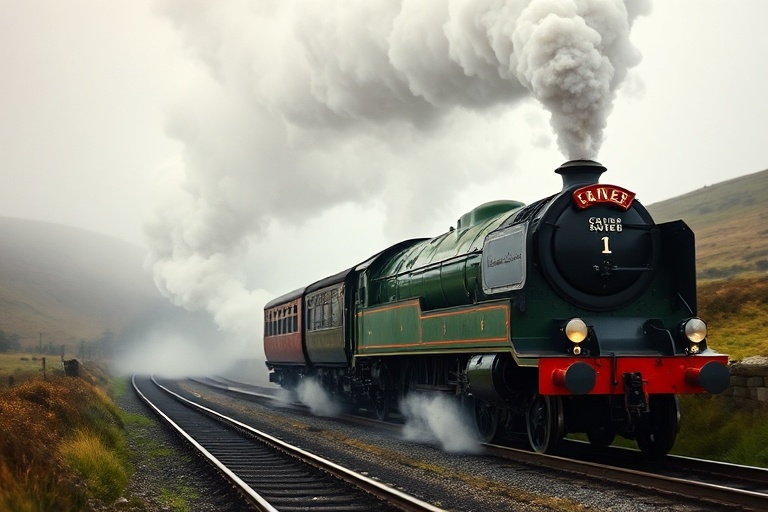
The Flying Scotsman is more than a locomotive; it is a symbol of engineering ambition, national pride, and mechanical endurance. Built in 1923 at Doncaster Works, this iconic steam engine has outlived generations of technology, becoming a cultural touchstone for both Britain and the world. Its story is one of speed, survival, and spectacle—traits that have cemented its place in history as one of the most famous trains ever built.
A Brief History: From Steam to Stardom
Originally designed for the London and North Eastern Railway (LNER), the Flying Scotsman was one of the first locomotives built to operate the 393-mile route between London King’s Cross and Edinburgh Waverley in under eight hours. At the time, such speed was revolutionary. The locomotive quickly became a flagship for LNER’s fleet, leading to its name being adopted as a brand for high-speed services.
Its fame grew exponentially in 1934 when, driven by LNER’s chief mechanical engineer Sir Nigel Gresley, it became the first steam locomotive to officially reach 100 miles per hour. This feat wasn’t just a technical milestone—it was a public relations triumph. Newspapers across the globe heralded the achievement, and the Flying Scotsman became a global ambassador for British engineering.
During World War II, the locomotive was repurposed for troop transport, a reminder of how industrial icons often serve multiple roles beyond their original purpose. After the war, it continued in service before being retired from active rail operations in 1963. Rather than ending its story, this marked the beginning of a new chapter.
The Rescue and Rebirth
In 1963, the Flying Scotsman was purchased by enthusiast Alan Pegler for preservation. This was a bold move during an era when steam was rapidly giving way to diesel and electric power. Pegler’s vision ensured that the locomotive would not be scrapped or left to decay. Instead, it was restored to working order and, in 1968, became the first steam locomotive to circumnavigate the globe, traveling over 35,000 miles through the United States and Australia.
That journey wasn’t just a stunt—it was a cultural statement. It proved that steam power still had a role to play in the modern imagination. The Flying Scotsman became a symbol of nostalgia, innovation, and the enduring allure of steam locomotion in an increasingly digital world.
Engineering Excellence: What Made It Special
The Flying Scotsman was designed under the supervision of Gresley, one of the most influential locomotive engineers of the 20th century. The locomotive is a Class A3 Pacific, known for its streamlined shape, powerful boiler, and the iconic valance that housed its six driving wheels. Its 4-6-2 wheel arrangement provided both stability and speed—essential for the long-distance express services it was built to operate.
Key features included:
- High-pressure boiler: Capable of generating immense steam, which translated into sustained power and speed.
- Aerodynamic casing: Early streamlining elements reduced air resistance, aiding efficiency at high speeds.
- Articulated tender: Extended fuel and water capacity allowed for non-stop long-distance runs.
- Precision valve gear: Gresley’s patented conjugated valve gear synchronized the motion of all three cylinders, improving performance and reducing wear.
These innovations weren’t just technical—they represented a philosophy. The Flying Scotsman was built to move people, both literally and emotionally. Its design reflected a belief in progress, craftsmanship, and the power of human ingenuity.
Cultural Impact: Beyond the Rails
The Flying Scotsman’s influence extends far beyond railway enthusiasts. It has appeared in films, documentaries, and literature, often symbolizing speed, adventure, and British identity. It starred in the 1970s television series The Flying Scotsman, brought steam back to British mainlines in the 1980s, and continues to feature in modern media as a nostalgic icon.
It also serves as a case study in heritage conservation. Unlike many steam locomotives that were scrapped after retirement, the Flying Scotsman was saved through public interest and private passion. Its ongoing preservation and operation serve as a model for how industrial heritage can be maintained and shared with future generations.
Today, the locomotive operates special excursion trains, pulling modern carriages through scenic routes in the UK. These trips are not just tourist attractions—they are living history lessons. Passengers experience the sound, smell, and rhythm of steam travel, a sensory experience that digital simulations cannot replicate.
The Broader Implications of a Living Legend
The Flying Scotsman’s story raises important questions about sustainability, heritage, and technology. In an era dominated by electric and autonomous systems, why does a steam locomotive from the 1920s still captivate millions? The answer lies in its authenticity. It represents a tangible connection to the past—a time when machines were built to last, not just to be replaced.
Moreover, the locomotive’s global journeys in the 1960s and 1980s foreshadowed modern trends in experiential tourism and cultural diplomacy. By crossing continents, it became a mobile ambassador, demonstrating how heritage assets can promote international goodwill.
Yet, its preservation is not without challenges. Maintaining a 100-year-old steam engine requires specialized skills, rare materials, and significant funding. The Flying Scotsman’s continued operation depends on a delicate balance between conservation and innovation—much like the broader challenge of preserving industrial heritage in a fast-changing world.
Looking Ahead: The Future of a National Icon
The Flying Scotsman is currently owned by the National Railway Museum in York, where it undergoes periodic overhauls. While it no longer runs daily services, it remains a working museum piece, available for special events and educational programs. Its future is secure, but its role is evolving.
As climate concerns grow, the locomotive also sparks debates about sustainability in heritage tourism. Could steam trains ever be powered by sustainable fuels? Some engineers are experimenting with hydrogen and biomass as alternatives to coal. If successful, such innovations could allow the Flying Scotsman—and other steam icons—to run for decades to come without compromising environmental values.
Regardless of technological changes, the Flying Scotsman’s cultural legacy is assured. It is a reminder that progress does not always mean erasing the past. Sometimes, it means restoring, reviving, and reimagining it for new audiences.
The Flying Scotsman’s whistle still echoes across British landscapes—sometimes a distant rumble, sometimes a full-throated roar. Each time it sounds, it calls out not just to the past, but to the future, asking us to remember what it means to build something that lasts.
For more on historic locomotives and their impact on modern engineering, visit the Travel and Technology sections on Dave’s Locker.