national portrait gallery
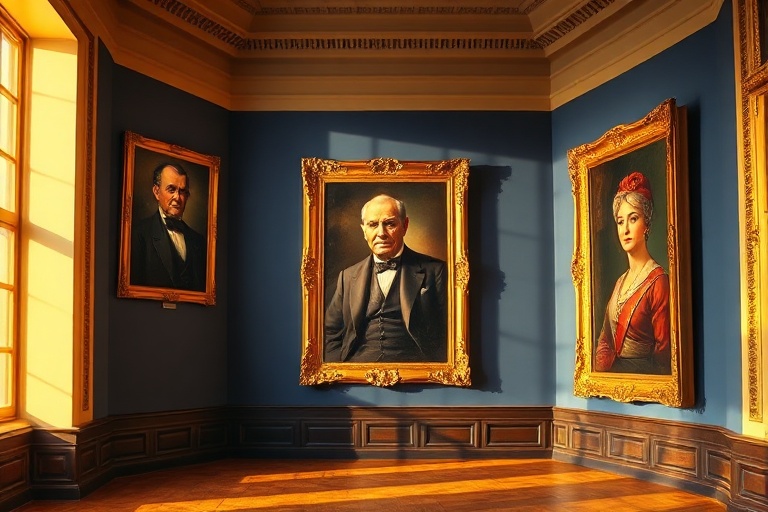
The National Portrait Gallery stands as one of the most distinctive cultural institutions in the world, blending art, history, and public engagement into a single compelling narrative. Unlike traditional museums focused solely on aesthetic mastery, this gallery places faces at the center of its mission—literally. From monarchs to musicians, scientists to social activists, the portraits here are not just images; they are windows into the lives and legacies that have shaped nations.
Established in 1856, the gallery has grown from a modest collection of 57 portraits to a vast repository of over 230,000 pieces. Its home on London’s bustling St Martin’s Place, adjacent to Trafalgar Square, makes it a cultural hub in one of the world’s most visited cities. But what truly sets the National Portrait Gallery apart is its commitment to accessibility and relevance. It’s not a static archive but a living institution that continually refreshes its narratives to reflect modern identities and ongoing conversations.
The Origins and Evolution of a Unique Institution
The idea for a national portrait gallery emerged from a growing Victorian fascination with biography and public memory. In an era when photography was still in its infancy, painted and sculpted likenesses were the primary means of preserving a person’s image for posterity. The gallery’s founders—including historian Thomas Babington Macaulay and philanthropist Philip Henry Stanhope—envisioned a space where the public could encounter the faces behind the names that loomed large in British history.
Initially housed in various temporary locations, the gallery finally found a permanent home in the 1890s when it moved into its current building, designed by Ewan Christian in the Victorian Gothic style. The architecture itself tells a story: grand staircases, ornate ceilings, and intimate galleries create a journey through time, where each portrait feels like a deliberate placement rather than a random display.
Over the decades, the gallery has expanded both physically and conceptually. In 2023, after a three-year closure for a major redevelopment, it reopened with new spaces dedicated to contemporary portraiture, digital media, and underrepresented voices. This transformation underscored a critical shift: the gallery is no longer just about preserving the past but about redefining who gets to be remembered—and how they are remembered.
Key Milestones in the Gallery’s History
- 1856: Founded with a collection of 57 portraits, including those of William Shakespeare and Queen Victoria.
- 1885: First public opening at the South Kensington Museum (now the V&A).
- 1896: Moves to its current location on St Martin’s Place.
- 1969: The first photographic exhibition is held, signaling a shift toward diverse media.
- 2000: The “Face of the Century” exhibition features portraits of 20th-century icons, including Princess Diana and David Bowie.
- 2023: Reopens after a £41 million redevelopment, introducing modern galleries and digital interactives.
Beyond Paintings: The Gallery’s Expanding Definition of Portraiture
While oil paintings of aristocrats and statesmen once dominated the collection, today’s National Portrait Gallery embraces a far broader definition of portraiture. Photographs, drawings, sculptures, and even digital avatars are all considered valid forms of representation. This evolution reflects a broader cultural shift toward inclusivity and multiplicity in how identity is portrayed.
One standout example is the gallery’s commitment to contemporary artists. In 2022, it commissioned a series of portraits from British-Bangladeshi artist Aliza Nisenbaum, known for her vibrant, intimate depictions of immigrant communities. These works challenged traditional notions of power and prestige, instead celebrating everyday lives and overlooked narratives.
The gallery has also embraced digital art and new media. In 2021, it acquired a portrait of Stormzy by photographer Nadine Ijewere, a striking image that blends street photography with high fashion. This piece, along with others in the “Reframing the Canon” series, demonstrates how portraiture can be both a tool of representation and a form of cultural activism.
Spotlight on Contemporary Voices
The National Portrait Gallery’s contemporary collection is as diverse as it is dynamic. Some notable recent additions include:
- Malala Yousafzai by Jonathan Yeo (2015) – A powerful depiction of the education activist, rendered in a style that blends classical portraiture with modern symbolism.
- Idris Elba by Nadav Kander (2017) – A moody, cinematic portrait of the actor, reflecting his global influence in film and music.
- Zadie Smith by Emma Wesley (2019) – A layered, textural piece that evokes the writer’s layered narratives and cultural heritage.
- Marsha P. Johnson by Paul Mpagi Sepuya (2020) – A collaborative portrait that foregrounds queer identity and the politics of representation.
These works are not just aesthetic objects; they are statements. They challenge viewers to confront who is—and isn’t—represented in national narratives. They also invite questions about the role of portraiture in shaping public memory, especially in an age where images circulate globally in seconds.
Engaging the Public: Education, Events, and Digital Outreach
The National Portrait Gallery is more than a repository of art; it’s a space for dialogue. Its education programs cater to all ages, from schoolchildren exploring identity through self-portraits to adults participating in life drawing classes. The gallery’s “Identify” initiative, for example, encourages young people to create portraits that reflect their own identities, fostering a sense of ownership over cultural narratives.
Public events are another cornerstone of the gallery’s mission. Lectures by historians, artist talks, and live performances often accompany exhibitions. For instance, during the 2023 reopening, the gallery hosted a series of “Portrait Walks” through London, tracing the footsteps of historical figures whose likenesses hang on its walls. These programs make history tangible, connecting the past to the present in meaningful ways.
Digital engagement has become increasingly vital, especially post-pandemic. The gallery’s online collection is fully searchable, with high-resolution images and detailed provenance for each portrait. Virtual exhibitions, such as “Black Lives Matter: Portraits of a Movement,” have allowed the gallery to reach global audiences during periods when physical visits weren’t possible.
Notable Public Programs
- Portraiture in Focus: A monthly series where curators discuss a single portrait in depth, exploring its historical context and artistic techniques.
- Drawing from Life: Weekly life drawing classes open to all skill levels, taught by professional artists.
- Lates at the NPG: Evening events featuring live music, DJs, and themed talks, designed to attract younger audiences.
- Digital Residencies: Online programs where artists create new work in response to the collection, shared via social media and the gallery’s website.
Challenges and Controversies: Navigating Representation in Portraiture
Despite its progressive strides, the National Portrait Gallery has not been immune to criticism. Like many cultural institutions, it has grappled with questions of representation, colonial legacies, and whose stories are deemed “worthy” of preservation. In 2020, the gallery faced calls to decolonize its collection after an open letter from artists and activists highlighted the lack of diversity in its holdings.
In response, the gallery launched “Reimagining Portraiture,” a five-year project aimed at diversifying its collection and rethinking its curatorial practices. This initiative includes partnerships with community organizations, commissions from underrepresented artists, and a commitment to transparent collecting policies. It’s a recognition that portraiture is not neutral; it is a tool of power, and its use must be critically examined.
Another ongoing debate centers on the role of celebrity in portraiture. While figures like David Bowie and Adele have iconic portraits in the gallery, critics argue that the institution leans too heavily on fame rather than broader cultural impact. The gallery’s recent acquisitions of portraits of lesser-known activists and scientists suggest a deliberate effort to balance celebrity with substance.
Balancing Tradition and Innovation
The National Portrait Gallery’s greatest strength may be its ability to hold contradictions: old and new, elite and everyday, static and evolving. It preserves the past while actively reshaping it. It celebrates individual legacies while acknowledging the collective stories that shape identity.
This duality is perhaps best exemplified by its approach to temporary exhibitions. Shows like “Taylor Wessing Photographic Portrait Prize” showcase emerging talent, while retrospectives on figures like William Blake or Virginia Woolf invite deeper historical reflection. Each exhibition serves as a conversation starter, a provocation, or a moment of quiet connection.
Why the National Portrait Gallery Matters Today
In an era of algorithmic curation and fleeting digital images, the National Portrait Gallery offers something rare: sustained attention to the human face as a site of meaning. It reminds us that portraits are not just about likeness but about legacy. They ask us to consider who we choose to remember—and why.
For visitors, the gallery is a place to encounter the familiar and the unknown. To stand before a portrait of Henry VIII and marvel at the artist’s skill, then turn a corner and come face-to-face with a contemporary drag queen or climate activist. These juxtapositions are intentional. They reflect the gallery’s belief that portraiture is a living, breathing art form, one that evolves with the society it represents.
The National Portrait Gallery also serves as a counterpoint to the ephemeral nature of modern media. In a world where images are consumed and discarded in seconds, the gallery insists on the durability of portraiture. These are images meant to last, to be studied, to provoke thought across generations.
Ultimately, the gallery’s mission is democratic. It doesn’t belong to the elite; it belongs to everyone. Whether you’re a history buff, an art student, or a casual visitor, there’s a portrait here that will speak to you