National Portrait Gallery: History, Global Impact, and Cultural Legacy
The National Portrait Gallery: A Global Showcase of Identity and Legacy
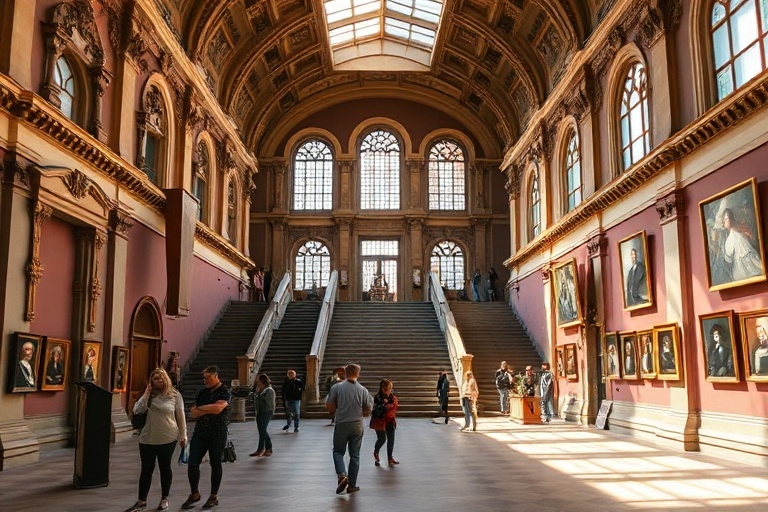
The National Portrait Gallery stands as a testament to the power of representation. Since its inception, it has evolved into one of the world’s most influential cultural institutions, dedicated to preserving and celebrating the faces that have shaped history. Unlike traditional art museums, portrait galleries focus on the individuals behind the achievements, offering a unique lens through which to examine society, politics, and culture.
With roots stretching back to the 19th century, portrait galleries have flourished across continents, each reflecting the values and priorities of its time. The National Portrait Gallery in London, for instance, has been a pioneer in this space, but it is far from alone. Institutions in Washington, D.C., Canberra, and beyond have carved out their own niches, blending local narratives with universal themes of identity and legacy.
The Origins and Evolution of Portrait Galleries
The concept of a dedicated portrait gallery gained traction during the Enlightenment, a period when individualism and public recognition began to take center stage. In 1856, the National Portrait Gallery in London opened its doors, becoming the first of its kind. Its founding mission was straightforward yet ambitious: to collect portraits of “the most eminent persons in British history.” This focus on biography and legacy set it apart from other museums, which often prioritized artistic mastery over personal history.
Over the decades, the gallery’s scope expanded. No longer confined to static paintings and sculptures, the collection began incorporating photographs, drawings, and even digital media. This adaptability has allowed the institution to remain relevant in an era where identity is increasingly fluid and multifaceted. Today, the London gallery houses over 200,000 works, spanning from Tudor monarchs to contemporary icons like David Bowie and Malala Yousafzai.
Meanwhile, the United States followed suit in 1968 with the opening of the National Portrait Gallery in Washington, D.C. Housed in the historic Patent Office Building, it shares a campus with the Smithsonian American Art Museum, creating a dynamic dialogue between art and identity. The U.S. gallery’s collection is equally diverse, featuring everything from Gilbert Stuart’s iconic portrait of George Washington to Kehinde Wiley’s striking reinterpretation of presidential imagery.
Why Portraits Matter: A Cultural Perspective
Portraits are more than mere likenesses; they are vessels of meaning. They capture not just a person’s appearance but their cultural, political, and social significance. In many ways, portrait galleries function as living archives, preserving the stories of those who have shaped—or challenged—the world around them.
Consider the role of portraiture in documenting social change. The National Portrait Gallery in Canberra, Australia, for example, has made a concerted effort to diversify its collection in recent years. By including more Indigenous Australians and women in leadership roles, the gallery reflects the country’s evolving understanding of identity. This shift underscores how portrait galleries can serve as tools for both preservation and progress.
Portraits also challenge our perceptions of power and legacy. Take the recent addition of Greta Thunberg to the National Portrait Gallery’s collection. Her inclusion is a deliberate statement about the urgency of climate action and the power of youth activism. Similarly, the gallery’s depiction of figures like Nelson Mandela and Frida Kahlo reinforces the idea that art and activism are intertwined.
Beyond individual stories, portrait galleries offer a broader commentary on collective memory. They ask us to consider who is remembered, who is forgotten, and why. In an era where representation is fiercely debated, these institutions hold up a mirror to society, forcing us to confront uncomfortable truths about who gets a place in history—and who doesn’t.
A Global Perspective: Portrait Galleries Around the World
The National Portrait Gallery model has inspired similar institutions worldwide, each adapting the concept to local contexts. Below are a few notable examples:
- National Portrait Gallery of Scotland (Edinburgh): Housed in the historic Scottish National Portrait Gallery building, this institution focuses on the people of Scotland, from medieval kings to modern-day artists like Trainspotting author Irvine Welsh.
- Uffizi Gallery (Florence, Italy): While primarily an art museum, the Uffizi’s collection includes portraits of Renaissance figures like Leonardo da Vinci and Michelangelo, blending artistic mastery with personal legacy.
- National Portrait Gallery of Korea (Seoul): This relatively new institution (opened in 2021) emphasizes both historical and contemporary figures, including K-pop stars and political leaders.
- Museo del Prado (Madrid, Spain): Though not exclusively a portrait gallery, its collection includes masterpieces like Diego Velázquez’s Las Meninas, which redefine the genre through complex composition and narrative.
These galleries demonstrate that portraiture is a universal language. Whether through oil paintings, photographs, or digital art, the medium transcends borders, offering insights into how different cultures define heroism, leadership, and identity.
In Africa, portrait galleries are emerging as tools for reclaiming history. The Zeitz MOCAA in Cape Town, for instance, has curated exhibitions highlighting underrepresented voices in post-colonial Africa. These efforts are part of a broader movement to decolonize museum spaces and redefine whose stories are deemed worthy of preservation.
The Digital Age: Portrait Galleries in the 21st Century
As technology reshapes how we create and consume art, portrait galleries are adapting to stay relevant. The National Portrait Gallery in London, for example, has embraced digital innovation with initiatives like the “Inspiring People” project, which uses 3D scanning to preserve fragile works. Meanwhile, virtual exhibitions have allowed global audiences to engage with collections remotely, democratizing access to art.
Social media has also transformed portraiture. Platforms like Instagram and TikTok have given rise to a new generation of “selfie artists,” challenging traditional notions of portraiture. Some galleries have responded by incorporating digital portraits into their collections, blurring the line between art and everyday expression.
Yet, with these advancements come questions about authenticity and ownership. Who controls the narrative when portraits are shared, remixed, and repurposed online? The National Portrait Gallery’s recent exhibition on AI-generated portraits explored these ethical dilemmas, inviting visitors to consider the future of representation in a digital world.
Conclusion: A Mirror to Society
The National Portrait Gallery is more than a collection of faces; it is a living archive of human experience. From its 19th-century origins to its digital future, the institution has continually evolved to reflect the values and struggles of its time. By celebrating diversity, challenging norms, and preserving legacies, portrait galleries remind us that history is not a static monument but a dynamic conversation.
As we move forward, these galleries will play an increasingly vital role in shaping how we see ourselves—and each other. In a world where identity is both celebrated and contested, portrait galleries offer a space for reflection, recognition, and, above all, humanity.