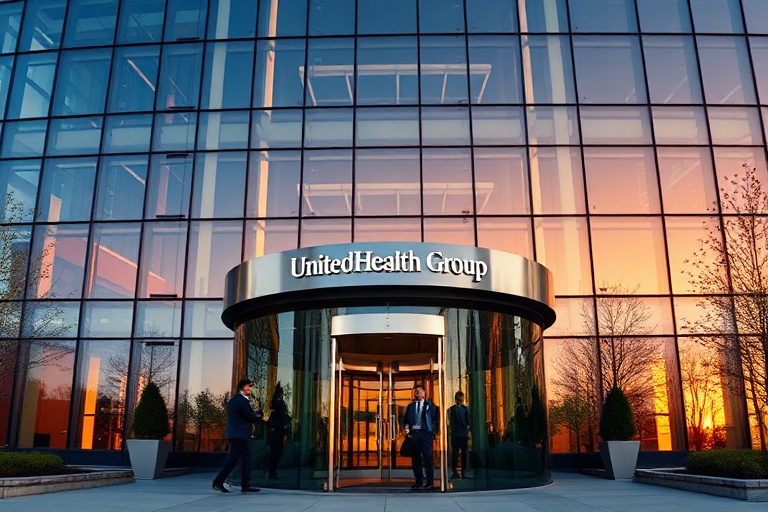
UnitedHealth Group Inc. stands as one of the largest and most influential players in the global healthcare industry. With operations spanning insurance, care delivery, and data analytics, the company has reshaped how millions access and experience healthcare. Founded in 1977 as Charter Med Incorporated, it has grown into a Fortune 50 corporation with nearly $300 billion in annual revenue. Its journey reflects broader trends in American healthcare—consolidation, technological integration, and the push toward value-based care.
The Company’s Growth and Business Segments
UnitedHealth Group operates through two primary business platforms: UnitedHealthcare and Optum. UnitedHealthcare provides health insurance coverage to over 50 million individuals across employer-sponsored plans, Medicare Advantage, Medicaid, and individual marketplaces. The division leads the U.S. health insurance market and has expanded its footprint through strategic acquisitions, including the 2015 purchase of Catamaran Corporation, a pharmacy benefit manager.
Optum, launched in 2011 as a separate operating unit, has become a powerhouse in healthcare services. It comprises three segments: OptumHealth (care delivery and population health), OptumInsight (data analytics and revenue cycle management), and OptumRx (pharmacy care services). Together, these segments serve payers, providers, and life sciences companies. In 2023, Optum generated over $200 billion in revenue, highlighting the company’s shift from pure insurance to an integrated health services model.
This dual-platform strategy creates a closed-loop system where UnitedHealth Group can manage care, control costs, and profit at multiple points in the healthcare value chain. Analysts often describe this as a “vertically integrated” approach, enabling the company to leverage data and scale in ways competitors cannot. However, it also raises concerns about market concentration and potential conflicts of interest, particularly in how care decisions are influenced by profit motives.
Financial Performance and Market Position
UnitedHealth Group has consistently delivered strong financial results. In 2023, the company reported $339 billion in total revenue, with a net income of $20.1 billion. Its market capitalization regularly exceeds $500 billion, placing it among the top 20 publicly traded companies in the U.S. by valuation. The company’s stock (NYSE: UNH) has outperformed the broader market over the past decade, rewarding long-term investors with steady growth and dividend increases.
Profitability is driven by several factors:
- Scale and Diversification: With operations in all 50 states and over 140 countries, UnitedHealth Group benefits from geographic and demographic diversification. Its large customer base provides pricing power and stability.
- Technology and Data Advantage: Optum’s analytics platform processes over 12 petabytes of healthcare data annually. This enables predictive modeling, personalized care pathways, and cost optimization strategies.
- Government Contracts: Through Medicare Advantage and Medicaid plans, the company receives substantial government funding. In 2023, these programs accounted for nearly 40% of UnitedHealthcare’s premium revenue.
The company’s success has not gone unnoticed. In 2024, it ranked #5 on the Fortune 500 list, behind only Walmart, Amazon, Apple, and UnitedHealth Group itself in previous years. Its consistent ranking underscores its role as a cornerstone of the U.S. economy and healthcare system.
Controversies and Regulatory Challenges
Despite its success, UnitedHealth Group has faced significant scrutiny. One of the most persistent criticisms involves its Medicare Advantage plans. Federal audits have revealed widespread overcharging allegations, with the Department of Justice suing the company in 2023 for allegedly defrauding Medicare of billions of dollars through improper diagnosis coding. The lawsuit, still ongoing, highlights concerns about risk adjustment practices that inflate payments to insurers.
Another area of contention is the company’s role in pharmacy benefit management (PBM). OptumRx, one of the largest PBMs in the country, has been accused of contributing to rising drug prices through opaque rebate arrangements and steering patients toward higher-cost medications. In 2023, Congress investigated PBM practices, with UnitedHealth Group among the companies called to testify.
Labor relations have also posed challenges. In 2022, healthcare workers represented by the United Mine Workers Union went on strike at UnitedHealth Group-owned clinics in West Virginia, citing understaffing and burnout. The company has faced criticism for aggressive cost-cutting measures that some argue compromise patient care and employee well-being.
The company has responded by emphasizing compliance programs and internal audits. In a 2023 investor presentation, executives highlighted a 20% reduction in regulatory citations year-over-year. Still, regulators and advocacy groups continue to monitor its practices closely, particularly as it expands its influence in both insurance and care delivery.
The Future: Innovation and Expansion
UnitedHealth Group is positioning itself for the next era of healthcare transformation. One key focus is artificial intelligence (AI). The company has invested over $1 billion in AI-driven tools to improve diagnostics, streamline administrative tasks, and enhance patient engagement. For example, Optum’s AI platform analyzes medical records to predict patient deterioration, allowing for early intervention.
Another priority is global expansion. While its core markets remain the U.S. and Europe, UnitedHealth Group has explored opportunities in Asia and Latin America. In 2023, it partnered with local insurers in India to offer telehealth services, tapping into a growing demand for digital healthcare solutions.
The company is also doubling down on value-based care models. By 2025, UnitedHealth Group aims to have 75% of its commercial payments tied to value-based arrangements, up from 60% in 2023. These models reward providers for patient outcomes rather than service volume, aligning financial incentives with care quality.
However, the road ahead is not without risks. Legislative changes, such as potential Medicare Advantage payment reductions or drug pricing reforms, could pressure margins. Competition from tech giants like Amazon and Google, which are entering healthcare services and insurance, adds another layer of complexity. UnitedHealth Group’s ability to innovate while addressing regulatory and ethical concerns will determine its long-term trajectory.
Conclusion: A Healthcare Ecosystem in Flux
UnitedHealth Group Inc. exemplifies the dual-edged nature of consolidation in healthcare. On one hand, its scale and integration offer unparalleled efficiency, innovation, and access to care. On the other, its dominance raises critical questions about market fairness, transparency, and the balance between profit and patient well-being. As the company navigates an evolving regulatory landscape and technological disruption, its choices will shape the future of healthcare delivery for millions.
For investors, UnitedHealth Group remains a compelling but complex opportunity. For patients, its impact is undeniable—whether through expanded insurance coverage or the convenience of Optum’s care centers. The challenge lies in ensuring that growth does not come at the expense of equity and quality in a system that already struggles to meet the needs of all Americans.
As healthcare continues to evolve, UnitedHealth Group will likely remain at the center of the conversation—a testament to its influence, and a reminder of the responsibilities that come with it.
To explore more about the healthcare industry’s major players, visit our Health category page. For deeper analysis on corporate strategies in the medical field, check out our Business section.