Each year, as the calendar flips to late May, Canadians prepare for a unique holiday that blends historical reverence with seasonal celebration. Victoria Day, observed on the Monday preceding May 25, is a public holiday steeped in tradition yet evolving with contemporary values. While often associated with the unofficial start of summer, its origins and customs reveal deeper layers of Canadian identity.
The holiday’s name pays homage to Queen Victoria, whose reign spanned 63 years and shaped the British Empire during the 19th century. Her birthday on May 24 became a focal point for celebrations across Canada, particularly after Confederation in 1867. Over time, the holiday has transformed from a strictly royal observance into a broader cultural marker, reflecting Canada’s gradual shift toward national identity independent of British rule.
The Historical Roots of Victoria Day
Victoria Day’s history begins in the mid-1800s, when British colonies in North America marked the monarch’s birthday with military parades and bonfires. In 1845, the Province of Canada (now Ontario and Quebec) officially declared May 24 a public holiday, though the celebrations were modest compared to today’s festivities. Fireworks became a staple in the 19th century, symbolizing the grandeur of the British Empire and the Queen’s enduring legacy.
After Confederation, Victoria Day gained prominence as a unifying event across the new Dominion of Canada. Cities like Toronto and Montreal embraced the holiday with fireworks displays, concerts, and sporting events. The tradition of lighting bonfires on the eve of Victoria Day persisted in some rural communities, a nod to earlier European customs. By the early 20th century, the holiday had become deeply embedded in the Canadian psyche, even as the country’s relationship with the British monarchy evolved.
One of the most notable shifts occurred in 1952, when the holiday was officially named “Victoria Day” by an act of Parliament. This designation cemented its place in Canadian law, though its observance remained flexible. Provinces like Manitoba and British Columbia eventually moved the holiday to the third Monday in May for convenience, aligning it with the American Memorial Day and creating a three-day weekend for many Canadians.
The Holiday’s Cultural and Social Significance
Today, Victoria Day serves multiple roles in Canadian society. For many, it marks the unofficial start of summer—a time for cottages, barbecues, and outdoor gatherings. Families take advantage of the long weekend to open seasonal homes or plan camping trips. Cities host fireworks displays, often coordinated with local festivals, drawing large crowds eager to celebrate the warmer weather.
Yet Victoria Day also carries subtler cultural implications. Unlike holidays tied to specific events or victories, it reflects Canada’s ability to blend tradition with adaptability. The holiday’s longevity suggests a national comfort with continuity, even as other aspects of Canadian life undergo rapid change. In an era where identity politics often dominate discourse, Victoria Day stands as a rare unifying event, transcending regional and generational divides.
For some, the holiday also sparks reflection on Canada’s colonial past. Queen Victoria’s legacy is complex, tied to both imperial expansion and the establishment of modern governance. While the holiday’s royal associations have faded for many Canadians, its continued observance invites questions about how the country commemorates its history. Some communities have reimagined Victoria Day as a celebration of Canadian achievements rather than a tribute to a British monarch, highlighting the holiday’s evolving meaning.
Key Traditions and Observances
Victoria Day is defined by a mix of official and informal customs. Below are some of the most enduring traditions:
- Fireworks: Cities like Vancouver, Calgary, and Toronto host elaborate fireworks displays, often synchronized with music. These events draw thousands of spectators and are a highlight of the weekend.
- Cottage Openings: Many Canadians head to their summer homes or cottages for the first time of the season, making Victoria Day a practical marker for summer’s arrival.
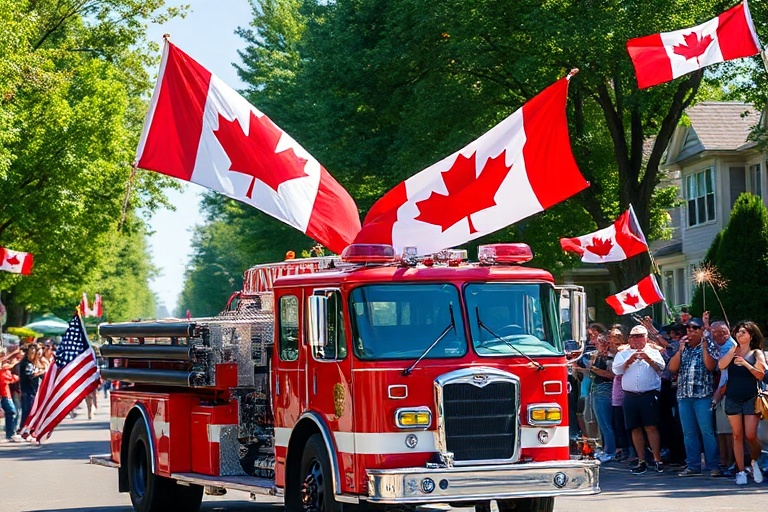
- Parades and Festivals: Smaller towns and municipalities organize parades featuring marching bands, floats, and local organizations. These events foster community pride and engagement.
- Sports and Outdoor Activities: Golf courses open for the season, and amateur sports leagues kick off summer schedules. The holiday also coincides with the start of the Canadian Football League’s season.
- Unofficial Symbols: The Canadian flag, red-and-white bunting, and even the beaver (Canada’s national animal) are common decorations, though none are officially tied to the holiday.
Victoria Day in the 21st Century: Challenges and Adaptations
As Canada continues to grapple with its colonial history, holidays like Victoria Day face renewed scrutiny. Critics argue that the holiday glorifies a monarchy tied to oppression and imperialism, while others see it as a harmless tradition with little connection to contemporary politics. The debate reflects broader tensions in Canadian society about how to commemorate the past without erasing its complexities.
Some municipalities have responded by rebranding Victoria Day events. For example, in 2020, the City of Victoria (named after Queen Victoria) hosted a “Sense of Place” festival instead of traditional celebrations, emphasizing Indigenous culture and local history. Such adaptations highlight the holiday’s potential to evolve alongside societal values.
Another challenge is the holiday’s commercialization. While fireworks and festivals remain popular, the rise of consumer culture has transformed Victoria Day into an opportunity for retailers to promote summer merchandise. This shift risks diluting the holiday’s cultural significance, reducing it to a mere marketing tool. However, it also demonstrates the holiday’s adaptability in a modern economy.
For younger generations, Victoria Day’s appeal may lie less in its historical roots and more in its practical benefits—a long weekend to relax and recharge. Yet this very accessibility underscores the holiday’s enduring relevance. In an era of digital overload and fragmented leisure time, a three-day break holds immense value, regardless of its origins.
Why Victoria Day Matters Beyond the Long Weekend
Victoria Day’s endurance speaks to its unique position in Canadian culture. It is neither a purely historical observance nor a modern construct but a hybrid that reflects the country’s ability to balance tradition with progress. The holiday’s flexibility allows it to serve multiple purposes: a time for leisure, a nod to heritage, and a canvas for reinvention.
For expatriate Canadians, Victoria Day evokes nostalgia and a connection to home. For newcomers, it offers a glimpse into Canadian customs and values. And for those who dismiss it as a trivial holiday, its simplicity may be its greatest strength—a moment of respite in an increasingly complicated world.
As Canada continues to redefine its national identity, holidays like Victoria Day will inevitably face further scrutiny and adaptation. Yet its ability to adapt without losing its core essence suggests that it will endure. Whether through fireworks, cottage trips, or quiet reflection, Victoria Day remains a testament to the country’s capacity for both tradition and transformation.
For those eager to explore more about Canadian traditions—or to plan their own Victoria Day celebrations—Dave’s Locker Culture section offers insights into the country’s cultural landscape. Alternatively, visit the Entertainment hub for event listings and local guides to holiday festivities.
Ultimately, Victoria Day is more than a long weekend. It is a snapshot of Canada itself: a blend of history, community, and the quiet joy of summer’s arrival.