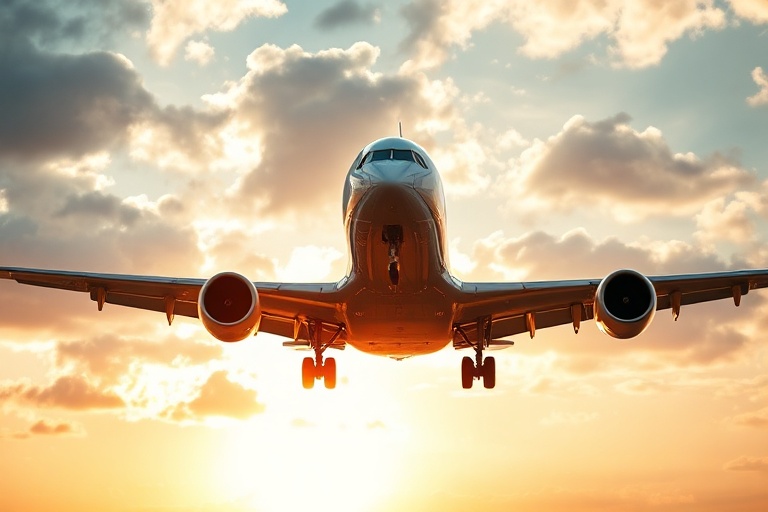
aircraft
“`html
Aircraft: Engineering Marvels That Defined Human Flight
The story of human flight is one of relentless innovation, daring engineering, and the unyielding pursuit of conquering the skies. From the Wright brothers’ first powered flight in 1903 to today’s supersonic jets and autonomous drones, aircraft have transformed from fragile wood-and-fabric contraptions into marvels of modern technology. These machines do more than transport passengers and cargo—they push the boundaries of physics, redefine global connectivity, and even shape geopolitical landscapes.
The evolution of aircraft reflects humanity’s broader ambitions. Military needs drove rapid advancements during the World Wars, while commercial aviation reshaped global economies in peacetime. Today, the industry faces new challenges: sustainability, digital transformation, and the integration of artificial intelligence. Understanding aircraft means recognizing both their historical significance and their role in shaping the future.
The Evolution of Aircraft Design: From Wood and Fabric to Composites
The earliest aircraft were built from lightweight materials like spruce wood and linen fabric, materials chosen for their strength-to-weight ratios. The 1903 Wright Flyer, for example, had a wingspan of just 12.3 meters and weighed 340 kilograms when empty. Its twin pusher propellers and fabric-covered wings were state-of-the-art for the time, but fragile by modern standards. Wooden frames were prone to warping and cracking under stress, and fabric could tear in rough weather—factors that limited both range and safety.
The shift to metal construction began in the 1920s and 1930s. Aluminum alloys, particularly duralumin, became the material of choice due to their strength, corrosion resistance, and ease of fabrication. The Douglas DC-3, introduced in 1936, was one of the first commercial aircraft built primarily of aluminum. It could carry 21 passengers over 1,500 miles at speeds approaching 200 mph—revolutionary for its time. Metal construction allowed for larger, faster, and more durable aircraft, laying the foundation for modern aviation.
By the late 20th century, composite materials began to dominate. Carbon fiber reinforced polymers (CFRPs) offered even greater strength-to-weight advantages than aluminum, enabling sleeker, more fuel-efficient designs. The Boeing 787 Dreamliner, first flown in 2009, is made up of over 50% composite materials by weight. This shift reduced fuel consumption by about 20% compared to similar-sized aluminum aircraft, while also improving corrosion resistance and reducing maintenance costs. Today, composites are standard in both commercial and military aircraft, from small private planes to stealth fighters like the F-35 Lightning II.
- Wood and Fabric (Pre-1920s): Lightweight but fragile; limited performance and safety.
- Aluminum Alloys (1920s–1980s): Durable, corrosion-resistant, enabled larger and faster aircraft.
- Composites (1980s–Present): Superior strength-to-weight ratio, fuel efficiency, and durability; now standard in modern designs.
How Aircraft Work: The Physics and Engineering Behind Flight
At the heart of every aircraft is a delicate balance of four fundamental forces: lift, weight (gravity), thrust, and drag. Lift, generated primarily by the wings, counteracts the aircraft’s weight and allows it to stay aloft. This lift is created by the shape of the wing—aerofoil profile—which forces air to move faster over the top surface than the bottom. According to Bernoulli’s principle, this difference in air speed creates a pressure differential, with lower pressure on top and higher pressure below, effectively “sucking” the wing upward.
Thrust, provided by engines—whether piston, turboprop, turbofan, or jet—overcomes drag, the aerodynamic resistance that opposes forward motion. Modern commercial jets like the Airbus A350 use high-bypass turbofan engines, which combine high thrust efficiency with relatively low fuel consumption. These engines pull in large volumes of air, accelerate a portion of it through the core, and expel it at high speed, creating forward thrust while also driving the aircraft’s electrical and hydraulic systems.
Control is achieved through movable surfaces on the wings and tail. Ailerons on the wings control roll, elevators on the tail control pitch (up and down), and the rudder controls yaw (left and right). Pilots adjust these surfaces using the control yoke or stick, which translates their inputs into aerodynamic forces that change the aircraft’s orientation. Fly-by-wire systems, now common in modern aircraft, replace traditional mechanical linkages with electronic signals, enhancing precision and safety.
Navigation and flight management have also evolved dramatically. Inertial navigation systems (INS) and GPS provide real-time position data, while autopilot systems can fly the aircraft for entire routes, adjusting for weather, turbulence, and air traffic. The integration of AI and machine learning is beginning to play a role in predictive maintenance, identifying potential system failures before they occur—a critical advancement for both safety and operational efficiency.
The Role of Aircraft in Modern Society: Commerce, Conflict, and Culture
Few inventions have reshaped global society as profoundly as the airplane. Commercial aviation, in particular, has democratized travel, connecting continents in hours rather than weeks or months. In 2019, airlines carried over 4.5 billion passengers worldwide, a figure that underscores aviation’s central role in global mobility. The Boeing 747, introduced in 1970, became an icon of this era, earning the nickname “Queen of the Skies” for its ability to carry hundreds of passengers across oceans in a single flight.
Beyond passenger travel, cargo aircraft like the Boeing 747-8F and the Antonov An-225 (until its recent loss) have revolutionized global trade. These “air freighters” enable the rapid transport of goods, from perishable foods to high-tech electronics, across vast distances. The air cargo industry accounts for less than 1% of global trade by volume but over 35% by value, highlighting its importance to high-value supply chains. During the COVID-19 pandemic, cargo aircraft played a critical role in delivering medical supplies, vaccines, and personal protective equipment to regions in need.
Military aircraft, meanwhile, remain pivotal to national defense and power projection. Stealth technology, pioneered by the F-117 Nighthawk in the 1980s and perfected in the F-22 Raptor and F-35 Lightning II, has redefined modern warfare. These aircraft can evade radar detection, allowing them to penetrate heavily defended airspace. Unmanned aerial vehicles (UAVs), or drones, have further transformed military operations, enabling precision strikes and persistent surveillance without risking pilot lives. The MQ-9 Reaper, for example, can loiter over a target area for up to 27 hours, providing real-time intelligence and strike capability.
Cultural impact is another dimension. Aircraft have inspired countless works of art, literature, and film. The Douglas DC-3 became a symbol of American ingenuity during the Golden Age of Aviation, appearing in films and novels as a paragon of reliability. The Concorde, the world’s only supersonic passenger jet, captured the public imagination in the 1970s and 1980s, embodying the glamour and ambition of the Jet Age. Even today, aircraft like the SpaceX Starship or the Airbus A380 evoke wonder, representing humanity’s continued quest to push the limits of what’s possible.
The Future of Aviation: Sustainability, Supersonics, and Autonomous Flight
The aviation industry faces an existential challenge: reducing its environmental impact. Commercial aviation currently accounts for about 2.5% of global CO₂ emissions, a figure that could rise as air travel continues to grow. In response, manufacturers and airlines are investing in sustainable aviation fuels (SAFs), which can reduce lifecycle emissions by up to 80%. Airlines like United and Delta have committed to using SAFs for a significant portion of their fuel needs by 2030.
Electric aircraft are also on the horizon. Companies like Eviation and Heart Aerospace are developing small, battery-powered planes designed for regional travel. The Eviation Alice, for example, is a nine-passenger aircraft with a range of 650 miles and a top speed of 280 mph. While current battery technology limits these aircraft to shorter routes, advances in solid-state batteries and hydrogen fuel cells could extend their range in the coming decades. The goal is to achieve zero-emission flight for short-haul routes by 2035.
Supersonic travel may also make a comeback. After the Concorde’s retirement in 2003, the dream of commercial supersonic flight seemed dormant. But companies like Boom Supersonic and Aerion Supersonic are developing new generations of supersonic jets designed to fly at speeds up to Mach 1.7—faster than the speed of sound. These aircraft promise to cut transatlantic flight times in half, from seven hours to just three and a half. However, challenges remain, including sonic boom regulations, high operating costs, and the need for sustainable supersonic flight.
Autonomous flight is another frontier. While fully autonomous passenger aircraft are still years away, advancements in AI and sensor technology are already enabling semi-autonomous operations. The Airbus Autonomous Taxi, Take-Off, and Landing (ATTOL) project, for example, demonstrated the ability to taxi, take off, and land an Airbus A350 using only onboard cameras and AI systems. Regulatory bodies like the FAA and EASA are working to establish frameworks for autonomous flight, paving the way for a future where pilots may become optional on certain routes.
- Sustainability: Widespread adoption of SAFs, electric aircraft for short-haul routes, and hydrogen-powered planes.
- Supersonic Revival: New supersonic jets aiming to reduce transoceanic travel times by 50%.
- Autonomous Flight: AI-driven systems enabling semi-autonomous operations, with potential for fully autonomous aircraft in the future.
- Urban Air Mobility: Development of electric vertical take-off and landing (eVTOL) aircraft for urban transportation.
These innovations signal a new chapter in aviation history—one defined not just by speed and scale, but by responsibility and adaptability. As the industry navigates these changes, it must balance technological ambition with environmental stewardship, economic viability with safety,