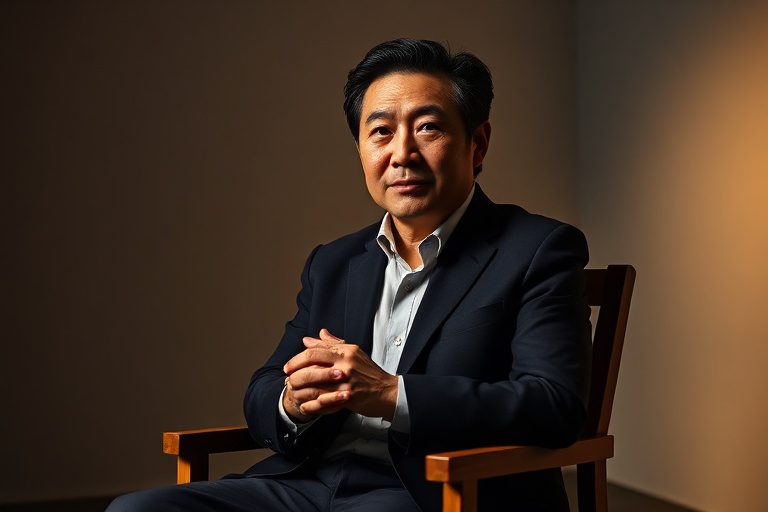
Daniel Dae Kim: How One Actor Changed Hollywood’s View of Asian Representation
“`html
Daniel Dae Kim: The Actor Who Redefined Asian Representation
Daniel Dae Kim has spent over three decades carving a space for himself in Hollywood, not just as an actor but as a cultural bridge. His career spans television, film, and production, making him one of the most recognizable Asian American figures in entertainment. What sets Kim apart isn’t just his talent or his ability to command attention in every role he takes on—it’s his deliberate choice to use his platform for broader change.
From his breakout role in Lost to his groundbreaking work as a producer on The Good Doctor, Kim has consistently pushed boundaries. His journey reflects the evolution of Asian representation in Western media, a shift that has accelerated in recent years but remains incomplete. By examining his career, we can trace the arc of how Asian actors have moved from stereotypes to multidimensional characters—and how Kim himself has been both a participant and a leader in that transformation.
Early Career and the Struggle for Visibility
Kim’s professional journey began not in front of the camera, but behind it. After graduating from the Tisch School of the Arts at New York University, he aimed to write and direct. However, the scarcity of opportunities for Asian American creators led him back in front of the camera. His early roles—often small and uncredited—highlighted the limited roles available to Asian actors at the time.
His first notable television appearance came in the late 1990s on NYPD Blue and ER, where he played minor characters that, while not stereotypical, still lacked depth. This period was marked by a lack of nuanced Asian roles in mainstream television, a reality Kim would later address publicly. His frustration wasn’t just personal—it was systemic. The industry, he observed, often relegated Asian actors to narrow, often negative portrayals: the model minority, the villain, or the comic relief.
Kim’s breakthrough came in 2004 with Lost, where he played Jin-Soo Kwon, a Korean character whose story was deeply integrated into the show’s central narrative. Jin wasn’t defined by his ethnicity; he was a complex individual with flaws, growth, and emotional depth. The role was groundbreaking because it treated Asian identity as part of a character’s humanity, not their entire identity.
Key Milestones in Kim’s Early Career
- 1996: Graduates from NYU Tisch School of the Arts, entering the industry at a time when Asian actors were severely underrepresented.
- 1999–2002: Appears in multiple TV shows including NYPD Blue and ER, often in minor, tokenized roles.
- 2004: Lands the role of Jin-Soo Kwon in Lost, which becomes one of the most iconic Asian characters in modern television.
- 2006: Wins a Screen Actors Guild Award for Outstanding Performance by an Ensemble in a Drama Series for Lost.
Breaking Barriers Behind the Camera
Kim’s impact extends beyond acting. In 2018, he co-founded 3AD, a production company focused on developing diverse stories and talent. This move was not just a career pivot—it was a statement. The entertainment industry has long been criticized for its lack of diversity behind the camera, a deficiency that often leads to one-dimensional portrayals of marginalized communities.
Under 3AD, Kim has produced shows like The Good Doctor and The Brink, both of which feature Asian leads and explore complex cultural themes. The Good Doctor, starring Freddie Highmore, centers on an autistic surgeon with savant syndrome. While not an Asian-led story, its success proved that audiences were receptive to diverse narratives when they were authentically told. Kim’s involvement ensured that Asian perspectives were included in the storytelling process.
His production work also reflects a broader trend: the rise of Asian-led content in Hollywood. Shows like Fresh Off the Boat and films like Crazy Rich Asians have demonstrated that audiences crave diverse stories—when they are given the chance to see themselves represented.
Why Kim’s Production Work Matters
Kim’s decision to produce content stems from a simple but powerful belief: representation isn’t just about who is on screen—it’s about who is behind the screen making the decisions. This philosophy aligns with a growing movement in Hollywood to dismantle systemic barriers that have kept marginalized voices out of key creative roles.
His company, 3AD, is part of a wave of production ventures launched by people of color, including Ava DuVernay’s ARRAY and Issa Rae’s HOORAE. These companies aren’t just businesses—they’re cultural interventions. They create opportunities for writers, directors, and actors who have historically been excluded from the industry’s inner circles.
Cultural Impact and the Fight for Authentic Representation
Kim’s influence can be measured not just in awards or box office numbers, but in the conversations he has sparked. He has been vocal about the need for authentic representation, criticizing whitewashing in films like Ghost in the Shell and Doctor Strange. His advocacy highlights a persistent issue: the tendency to cast non-Asian actors in Asian roles, often under the guise of “universal appeal.”
In 2017, Kim testified before Congress about the challenges faced by Asian actors in Hollywood. He spoke about the lack of opportunities, the pressure to conform to stereotypes, and the systemic barriers that prevent Asian actors from securing leading roles. His testimony was a rare moment of direct political engagement from a Hollywood figure, underscoring the intersection of art and activism.
Kim’s activism isn’t performative. It’s rooted in decades of personal experience and a commitment to collective progress. He has used his platform to amplify the voices of other Asian actors, directors, and writers, often leveraging his social media presence to highlight underrepresented talent.
Kim’s Advocacy in Action
- 2017: Testifies before Congress on the lack of Asian representation in Hollywood, calling for systemic change.
- 2018: Co-founds 3AD, a production company dedicated to diverse storytelling.
- 2020: Speaks out against the whitewashing of Asian roles in major film productions.
- 2021: Partners with organizations like Gold House to support Asian creatives in entertainment.
The Future of Asian Representation and Kim’s Role
While progress has been made, the fight for authentic representation is far from over. Kim’s career offers a roadmap for how change can happen—not through sudden revolutions, but through persistent effort, strategic alliances, and a refusal to accept the status quo.
Looking ahead, Kim’s focus remains on creating opportunities for the next generation. Whether through 3AD, his public speaking, or his mentorship, he is helping to build a Hollywood that reflects the diversity of its audience. This isn’t just about giving Asian actors more roles—it’s about redefining what those roles can be.
The success of Everything Everywhere All at Once in 2022, a film that centers an Asian American family and won multiple Oscars, proves that audiences are ready for stories that go beyond stereotypes. Kim’s career demonstrates that the industry is capable of change—but only when leaders like him demand it.
As streaming platforms continue to reshape the entertainment landscape, Kim’s influence will likely grow. The demand for diverse content is higher than ever, and platforms like Netflix, Amazon, and Apple TV+ are investing heavily in stories from underrepresented communities. Kim’s role as both a creator and a gatekeeper positions him to shape this new era of storytelling.
Ultimately, Daniel Dae Kim’s legacy will be defined not just by the roles he has played, but by the doors he has opened. He has shown that representation isn’t a checkbox—it’s a commitment to authenticity, a challenge to the industry, and a promise to audiences that their stories matter.
In an industry that often prioritizes profit over people, Kim’s career is a reminder that art has the power to change perceptions, challenge stereotypes, and build a more inclusive world.