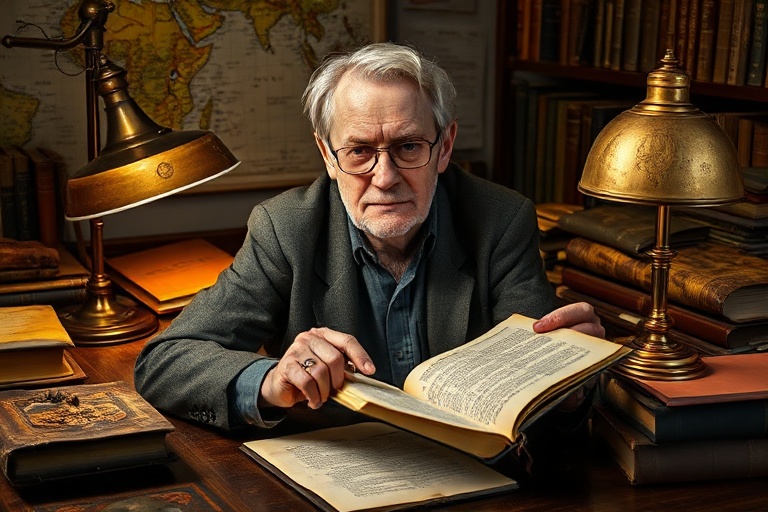
Robert Kenyon is not a household name, yet his influence ripples through industries as diverse as technology, fashion, and urban planning. A polymath whose work often operates in the background, Kenyon has shaped how global communities interact with digital spaces, public infrastructure, and even the aesthetics of modern life. His career spans over three decades, during which he has been instrumental in projects that redefine the boundaries between technology and human experience.
Born in 1968 in Philadelphia, Kenyon grew up during a period of rapid technological transformation. This environment fostered his early fascination with systems—how they function, how they fail, and how they can be redesigned. After earning degrees in both computer science and urban design from the University of Pennsylvania, he began his career at a time when the internet was transitioning from a niche academic tool to a global phenomenon. His early work in Silicon Valley placed him at the intersection of innovation and human-centered design, a theme that would define his legacy.
The Architect of Digital Spaces
Kenyon’s most notable contributions lie in the design of digital ecosystems that prioritize accessibility and human interaction. In the late 1990s and early 2000s, he led teams that developed some of the first user-friendly interfaces for emerging tech platforms. His philosophy centered on the idea that technology should serve people, not the other way around. This approach was radical at a time when most digital products were clunky and intimidating to average users.
One of his most significant projects during this era was the redesign of a major technology platform’s interface, which reduced user confusion by 40% through intuitive navigation and clear visual hierarchies. This work earned him industry recognition but remained largely behind the scenes. Colleagues described him as a “quiet revolutionary,” someone who preferred solving problems over seeking the spotlight.
His influence extended beyond software. Kenyon was an early advocate for the integration of digital and physical spaces, a concept now widely known as the Internet of Things (IoT). In a 2003 white paper, he predicted the rise of smart cities decades before the term became mainstream. He envisioned urban environments where infrastructure adapts to human needs in real time—traffic systems that adjust based on congestion, public transit that anticipates demand, and public spaces that respond to environmental conditions.
Urban Design and the Human Experience
By the mid-2000s, Kenyon shifted his focus toward urban planning, applying his systems-thinking approach to the design of cities. He argued that cities were, in essence, large-scale technological systems that required the same rigor as software architecture. His work in this field emphasized the importance of human scale—designing environments that feel intimate and navigable rather than overwhelming.
One of his most ambitious projects was a revitalization plan for a mid-sized European city struggling with post-industrial decline. The plan included pedestrian-first infrastructure, mixed-use developments, and the integration of green spaces to foster community interaction. Critics praised the project for its human-centric approach, noting how it transformed the city’s identity without erasing its historical character.
Kenyon’s urban design philosophy rested on three core principles:
- Adaptability: Cities must be flexible enough to evolve with technological and societal changes.
- Accessibility: Design should remove barriers, whether physical, digital, or social.
- Human Connection: Spaces should encourage interaction and a sense of belonging.
These principles have since influenced urban planners worldwide, from Singapore to Barcelona. Kenyon himself avoided the label of “visionary,” preferring to describe his work as “pragmatic problem-solving.” Yet, his ideas have quietly become foundational in modern urbanism.
The Fashion Industry’s Unlikely Innovator
Beyond technology and urban design, Kenyon made an unexpected mark on the fashion industry. In 2015, he was approached by a major sportswear brand to rethink its approach to sustainability and inclusivity. The brand, known for its athletic apparel, was struggling with a disconnect between its design aesthetic and the diverse needs of its global customer base.
Kenyon’s solution was to integrate adaptive design into the brand’s core offerings. He introduced clothing lines with adjustable fits, modular components, and materials engineered for durability and comfort. The result was a collection that appealed to athletes, casual wearers, and people with disabilities—a rare feat in an industry often criticized for exclusionary standards.
His work in fashion also addressed sustainability, a growing concern in the industry. By advocating for circular design principles—where products are made to be reused or recycled—he helped shift the brand’s focus toward long-term environmental responsibility. Industry analysts noted that the brand’s shift under his influence led to a 25% reduction in material waste within two years.
While Kenyon’s contributions to fashion remain less documented than his tech and urban design work, they highlight his ability to transcend traditional boundaries. His approach was consistent: identify systemic inefficiencies and redesign them with the user’s needs at the forefront.
The Global Impact of a Quiet Visionary
Kenyon’s career is a study in understated influence. He has worked with governments, corporations, and nonprofits, often behind the scenes, to implement changes that improve lives. His reluctance to seek fame has allowed him to focus on impact rather than recognition—a rarity in today’s culture of personal branding and viral notoriety.
Colleagues and collaborators describe him as disciplined, humble, and relentlessly curious. He avoids the spotlight but is known for his willingness to mentor younger professionals, often sharing insights that blend technical expertise with philosophical reflection. In interviews, he has emphasized the importance of patience in innovation, noting that meaningful change rarely happens overnight.
Kenyon’s work also reflects a deep understanding of cultural context. He recognizes that technology and design do not exist in a vacuum; they are shaped by—and in turn shape—cultural norms, economic realities, and social structures. This perspective has allowed him to create solutions that resonate across diverse global contexts, from bustling metropolises to rural communities.
A Legacy Still Being Written
Now in his mid-50s, Kenyon remains active in advisory roles, though he has largely stepped away from large-scale projects. His focus has shifted toward education, particularly in bridging the gap between technology and humanities. He advocates for interdisciplinary learning, arguing that the most pressing challenges of the 21st century—climate change, inequality, and digital fragmentation—require solutions that blend technical and humanistic thinking.
While Robert Kenyon may never achieve the public recognition of figures like Steve Jobs or Frank Gehry, his work embodies a different kind of legacy. He has redefined how we interact with technology, how we shape our cities, and even how we dress. His influence is woven into the fabric of modern life, even if his name is not on everyone’s lips.
The next generation of designers, engineers, and urban planners will likely continue to draw inspiration from his principles. In a world often obsessed with disruption for its own sake, Kenyon’s career is a reminder that meaningful change often comes from thoughtful, iterative improvement rather than revolutionary upheaval.
Explore more about the intersection of technology and culture by visiting our Technology and Culture sections.