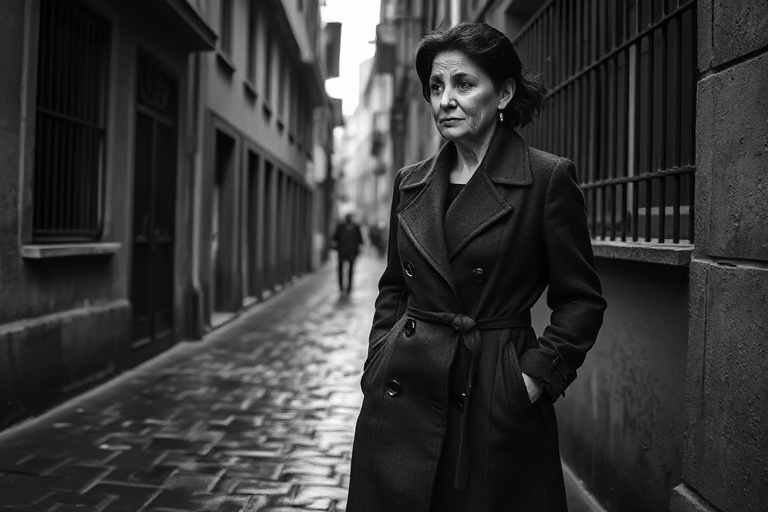
Donike Gocaj: A Name Rising Across Continents
Donike Gocaj is a name that has begun appearing with increasing frequency in artistic circles from New York to New Delhi. Born in Kosovo and later relocating to the United States, Gocaj has cultivated a reputation as a multidisciplinary artist whose work transcends conventional labels. Her practice spans painting, sculpture, and digital media, often weaving Kosovar folklore with contemporary digital aesthetics. This fusion has not only distinguished her within the Balkan diaspora art scene but has also positioned her as a significant voice in global modern art discussions.
The artist’s journey reflects broader cultural currents. Kosovo’s post-war identity crisis—shaped by its 1998–99 conflict and subsequent declaration of independence in 2008—has deeply influenced its cultural output. Gocaj’s art serves as both a mirror and a reinterpretation of this history, using vibrant colors and layered symbolism to explore themes of memory, displacement, and resilience. In an era where cultural narratives are increasingly globalized yet fragmented, her work offers a grounded yet expansive perspective.
A Multidisciplinary Practice Rooted in Tradition
Gocaj’s formal training began at the Faculty of Arts in Pristina, Kosovo, where she studied painting. However, her artistic evolution has been anything but linear. After graduating, she expanded her practice to include digital art, installation, and even experimental film. One of her most acclaimed series, Echoes of the Rugova, reimagines traditional Kosovar rug patterns through a digital lens, merging handcrafted techniques with algorithmic design.
This approach is not merely aesthetic. It reflects a deliberate strategy to preserve cultural heritage while engaging with contemporary digital culture. In an interview with Kosovo 2.0, Gocaj stated, “Artists from post-conflict regions carry a dual responsibility: to honor the past and to signal the future. My work tries to do both.” This sentiment resonates with a growing movement of artists from the Balkans who are using technology to revitalize traditional narratives.
Global Recognition and Exhibitions
Gocaj’s international breakthrough came in 2022 with her solo exhibition Thresholds at the Arts & Culture Gallery in Berlin. The show featured large-scale paintings and interactive digital installations that responded to visitor movement. Critics praised the exhibition for its immersive quality and emotional depth, with one reviewer from Deutsche Kunst calling it “a bridge between memory and presence.”
Since then, her work has been showcased in venues across Europe and North America, including the Prishtina Art Biennial and the Montreal Digital Arts Festival. Notably, Gocaj was selected as a finalist for the 2023 Emerging Voices in Digital Art award, a recognition that underscored her growing influence in the digital art world.
What makes Gocaj’s trajectory remarkable is not just the recognition she has received, but the way her work resonates with diverse audiences. In Kosovo, her art is seen as a form of cultural reclamation. In Western art circles, it is celebrated for its innovation. This dual reception highlights how contemporary art can serve as a medium for cross-cultural dialogue.
The Cultural Significance of Her Work
The Balkans have long been a crossroads of civilizations—Roman, Byzantine, Ottoman, and Slavic influences intersect in its art, music, and literature. Gocaj’s work taps into this layered history, but with a twist: she integrates digital tools that were unimaginable to earlier generations of Balkan artists. This blend of old and new is not just stylistic; it reflects a broader shift in how identity is constructed in the 21st century.
Consider her 2023 project Digital Rugova, a virtual reality experience that allows users to “walk through” a digitally reconstructed version of the Rugova Mountains in western Kosovo. The project uses 3D modeling to recreate the landscape while overlaying oral histories collected from local elders. It’s an example of how technology can be used not to erase tradition, but to amplify it.
Such projects are part of a larger trend. Across the Balkans and beyond, artists are using digital media to preserve endangered cultural practices. Gocaj’s contribution lies in her ability to make this preservation feel dynamic and accessible. Her work doesn’t just document the past—it invites the viewer to experience it in new ways.
Challenges and Criticisms
Despite her success, Gocaj has faced challenges common to artists working at the intersection of tradition and technology. Some critics argue that digital art can feel impersonal or disconnected from the tactile roots of craftsmanship. In response, Gocaj has emphasized the importance of collaboration. For Digital Rugova, she worked with local weavers, programmers, and storytellers, ensuring that the final product reflected multiple voices.
Others question whether the commercial art world truly values artists from post-conflict regions unless their work fits into a narrative of trauma or resilience. Gocaj has navigated this by focusing on the aesthetic and experiential qualities of her work, rather than leaning into political themes. Still, her Kosovar identity remains an unspoken but ever-present context in her exhibitions.
The Future of Donike Gocaj
Looking ahead, Gocaj has hinted at new projects that will further push the boundaries of her practice. She is currently developing an augmented reality app that will allow users to explore Kosovar folklore through interactive storytelling. The app is slated for release in late 2024 and will be available in Albanian, English, and German.
She is also expanding into public art. In collaboration with the Municipality of Pristina, Gocaj is designing a large-scale mural for the city’s new cultural center. The mural will incorporate traditional motifs with modern geometric patterns, creating a landmark that is both a nod to the past and a symbol of the future.
As Gocaj continues to build her career, her story serves as a case study in how artists from smaller nations can achieve global recognition without sacrificing their cultural roots. Her success suggests that the art world is increasingly valuing authenticity, innovation, and cross-cultural exchange—qualities that define her work.
Conclusion: Why Donike Gocaj Matters
Donike Gocaj represents more than just a rising star in the art world. She embodies the potential of art to heal, connect, and innovate. In a time when global narratives are often dominated by conflict or commercialism, her work offers a quieter, more nuanced vision—one that honors the past while embracing the future.
Her journey also highlights the importance of cultural institutions in supporting artists who operate outside traditional centers of power. From Pristina to Berlin, the spaces that have exhibited her work have played a crucial role in amplifying her voice. This underscores a broader truth: art is not just a product of individual talent, but of ecosystems that nurture creativity across borders.
As Gocaj’s career evolves, she will likely continue to challenge expectations about what art from Kosovo—or from anywhere—can be. And in doing so, she will remind us that culture is not static. It is a living, breathing force that adapts, survives, and ultimately, thrives.
For those watching the contemporary art scene, Donike Gocaj is a name to remember. Her work is not just about creating beautiful objects. It’s about building bridges—between generations, between traditions, and between the physical and the digital.