<!DOCTYPE html>
<html lang="en">
<head>
    <meta charset="UTF-8">
    <meta name="viewport" content="width=device-width, initial-scale=1.0">
    <title>Hawaiian Monk Seals: Hawaii's Endangered Ocean Guardians</title>
</head>
<body>
    <h1>Hawaiian Monk Seals: Hawaii's Endangered Ocean Guardians</h1>

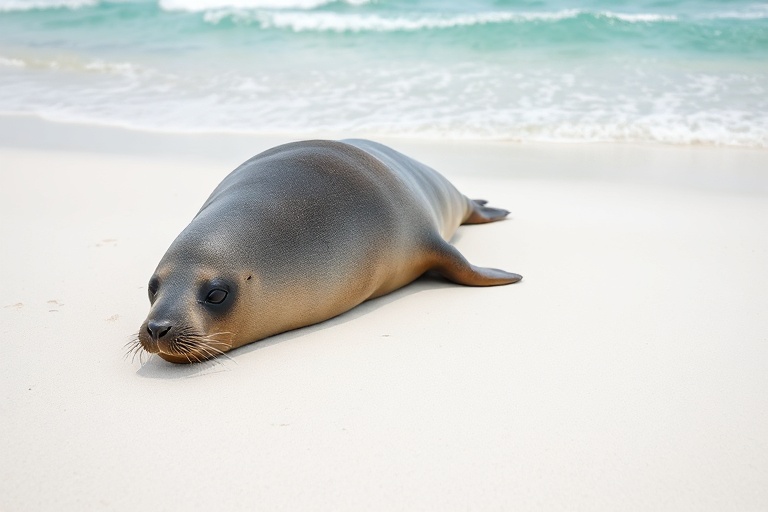
    <p>The Hawaiian monk seal, one of the most endangered marine mammals in the United States, remains a critically important species for Hawaii's delicate ocean ecosystem. With fewer than 1,500 individuals remaining, these solitary seals face numerous threats that have pushed them to the brink of extinction. Unlike their more social relatives, Hawaiian monk seals prefer remote beaches and shallow waters, making them particularly vulnerable to human interference and environmental changes.</p>

    <p>Their scientific name, <em>Neomonachus schauinslandi</em>, honors Hugo Schauinsland, a German biologist who first identified the species in 1899. These seals are the last surviving species of their genus, having diverged from other monk seals thousands of years ago when they became isolated in the Hawaiian Islands. Their evolutionary journey makes them not just an ecological treasure, but a living piece of Hawaii's natural history.</p>

    <h2>Habitat and Behavior: Masters of Adaptation</h2>

    <p>Hawaiian monk seals thrive in the warm, clear waters of the Hawaiian archipelago, from the main islands to the remote Northwestern Hawaiian Islands. They spend most of their time at sea, diving to depths of up to 300 feet in search of food, but they return to sandy beaches to rest, molt, and give birth. Their preferred haul-out sites are often on the same beaches where they were born, demonstrating remarkable site fidelity.</p>

    <p>These seals exhibit unique behavioral adaptations that set them apart from other pinnipeds. Unlike sea lions or fur seals, monk seals are <strong>monogamous</strong> during breeding season, though they do not form permanent pair bonds. They are also <strong>nocturnal feeders</strong>, primarily hunting at night to avoid competition with diurnal predators and fishermen. Their diet consists mainly of fish, cephalopods, and crustaceans, which they catch with precision using their sensitive whiskers.</p>

    <p>Their solitary nature extends to their social interactions. Hawaiian monk seals are generally tolerant of other seals but avoid direct confrontation. When space is limited on crowded beaches, they use subtle body language and vocalizations to establish boundaries rather than engaging in physical disputes. This peaceful coexistence is crucial for their survival in an environment where space is increasingly contested by human activity.</p>

    <h3>Molting: A Season of Renewal</h3>

    <p>One of the most critical periods in a Hawaiian monk seal's life is molting, when they shed and replace their coarse, grizzled fur. This process usually occurs annually and lasts about 3-4 weeks. During this time, seals haul out on beaches and remain on land, fasting while their new coat grows in. The molting period is particularly dangerous because the seals are less mobile and more vulnerable to disturbances.</p>

    <p>Molting is also an opportunity for researchers to study individual seals. By photographing and identifying unique markings, scientists can track population changes and health conditions over time. However, human interference during molting can disrupt this vulnerable period, leading to increased stress and potential abandonment of pups. Conservation efforts now include strict guidelines to protect seals during this critical phase.</p>

    <h2>Threats and Conservation Challenges</h2>

    <p>The Hawaiian monk seal's population has declined by more than 60% since the mid-20th century, primarily due to human activities. The most pressing threats include:</p>

    <ul>
        <li><strong>Fisheries interactions:</strong> Entanglement in fishing gear, particularly in nearshore nets and longlines, remains a leading cause of injury and death.</li>
        <li><strong>Habitat loss:</strong> Coastal development, erosion, and sea level rise are reducing the availability of suitable haul-out and pupping sites.</li>
        <li><strong>Disease and parasites:</strong> Introduced pathogens and invasive species threaten immune-compromised seals.</li>
        <li><strong>Human disturbance:</strong> Increasing recreational activities on beaches disrupt critical behaviors like resting and nursing.</li>
    </ul>

    <p>Climate change exacerbates these threats. Rising ocean temperatures alter prey availability, while stronger storms and erosion wash away vital habitat. The Northwestern Hawaiian Islands, where about 75% of the population lives, are particularly vulnerable to sea level rise. Conservationists warn that without immediate action, some subpopulations could disappear within decades.</p>

    <h3>Recovery Efforts: A Multi-Faceted Approach</h3>

    <p>In response to the crisis, multiple organizations have launched recovery initiatives. The <a href="https://www.daveslocker.net/conservation">National Oceanic and Atmospheric Administration (NOAA)</a> leads the Hawaiian Monk Seal Recovery Program, which combines research, habitat protection, and public outreach. Key strategies include:</p>

    <ol>
        <li><strong>Translocation:</strong> Moving seals from high-density areas to less crowded beaches to reduce competition and improve pup survival.</li>
        <li><strong>Medical intervention:</strong> Providing care for injured or sick seals, including disentanglement from fishing gear and treatment for disease.</li>
        <li><strong>Community engagement:</strong> Educating residents and visitors about responsible wildlife viewing and beach etiquette.</li>
        <li><strong>Habitat restoration:</strong> Removing invasive plant species and stabilizing shorelines to create safer haul-out sites.</li>
    </ol>

    <p>One of the most innovative programs is the monk seal hospital at Ke Kai Ola in Kailua-Kona, operated by <a href="https://www.daveslocker.net/wildlife">Pacific Whale Foundation</a>. This facility rehabilitates severely ill or injured seals before releasing them back into the wild. Since opening in 2014, Ke Kai Ola has treated dozens of seals, including some that would have otherwise perished.</p>

    <h2>Cultural Significance and Community Involvement</h2>

    <p>For Native Hawaiians, the monk seal holds deep cultural significance. Known as <em>ʻIlio-holo-i-ka-uaua</em> (dog that runs in the rough water), the seal is featured in traditional stories and legends. Some believe the seals are <em>aumakua</em>—ancestral guardian spirits—who take the form of animals to watch over their descendants. This spiritual connection has led to increased community involvement in conservation efforts.</p>

    <p>Local fishermen, once seen as adversaries due to interactions with fishing gear, are now key partners in recovery. Programs like the <strong>Monk Seal Watch</strong> train volunteers to monitor beaches and alert authorities to disturbances. These efforts have not only improved seal survival rates but also fostered a sense of stewardship among Hawaii's residents.</p>

    <p>Visitors to Hawaii also play a role in conservation. The <strong>NOAA Fisheries Hawaiian Monk Seal Viewing Guidelines</strong> encourage tourists to observe seals from a safe distance—at least 150 feet—and avoid touching or feeding them. When done responsibly, wildlife viewing can generate support for conservation without harming the animals.</p>

    <h2>What the Future Holds</h2>

    <p>The Hawaiian monk seal's recovery is possible but not guaranteed. Success will depend on sustained funding, political will, and public engagement. Some conservationists argue that the current population is too small to avoid inbreeding, which could further weaken the species. Others point to climate change as an existential threat that requires urgent global action.</p>

    <p>Yet there are reasons for hope. The population decline has slowed in recent years, and some subpopulations are stabilizing. Innovative technologies, such as satellite tracking and AI-powered photo identification, are improving researchers' ability to monitor and protect seals. Most importantly, the growing awareness of Hawaii's unique biodiversity is driving demand for stronger environmental policies.</p>

    <p>The story of the Hawaiian monk seal is a microcosm of the broader struggle to balance human needs with ecological preservation. It is a reminder that even the most remote and resilient species depend on our collective action. For Hawaii, saving the monk seal is not just about one animal—it is about preserving the health of the entire ocean ecosystem and honoring the cultural heritage of the islands.</p>

    <p>The next decade will be critical. With continued effort, the Hawaiian monk seal could once again thrive in the waters where it has lived for millennia. Without it, Hawaii would lose not just a species, but a piece of its soul.</p>

    <!-- Metadata Section -->
    <div style="display: none;">