Weather Radar Explained: How It Works and Its Global Impact
“`html
Understanding Weather Radar: How It Works and Why It Matters
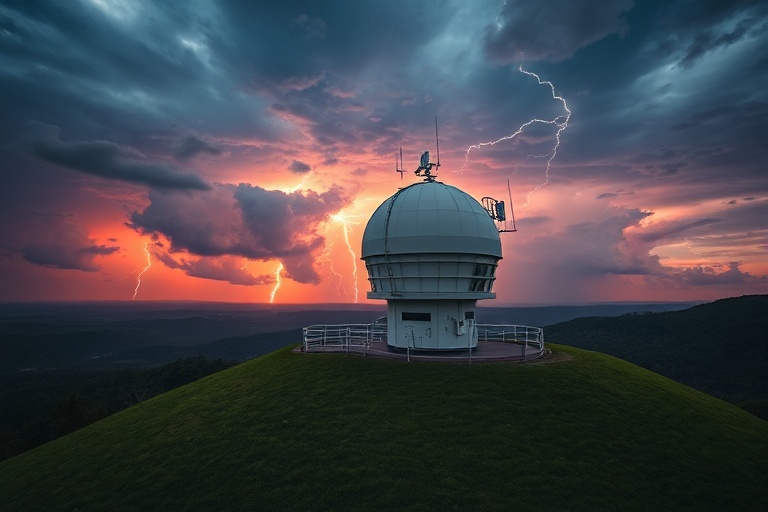
Weather radar has become an indispensable tool in modern meteorology, shaping how people prepare for storms, plan outdoor activities, and even how entire nations respond to natural disasters. From tracking hurricanes in the Atlantic to monitoring monsoon rains in Southeast Asia, radar technology provides real-time data that saves lives and protects infrastructure. Its evolution from military technology to a cornerstone of public safety reflects broader trends in how science serves society.
Globally, weather radar networks vary significantly in density and capability. Regions prone to severe weather—such as the United States, Japan, and parts of Europe—boast advanced systems with Doppler capabilities, while developing nations often rely on older equipment or international partnerships to fill gaps. This disparity highlights both the progress and the challenges in making weather prediction accessible worldwide.
The Science Behind Weather Radar
At its core, weather radar operates on the principle of sending out radio waves and measuring their return after bouncing off precipitation particles like raindrops, snowflakes, or hail. The time delay between transmission and reception reveals the distance to the storm, while the Doppler effect helps determine wind speed and direction within it. This dual functionality makes modern radar systems far more sophisticated than their predecessors, which could only indicate the presence of rain.
There are several types of weather radar in use today:
- Doppler Radar: Measures the velocity of moving objects, such as raindrops carried by wind. This is critical for detecting rotation in thunderstorms, a precursor to tornado formation.
- Dual-Polarization Radar: Sends out horizontal and vertical pulses to provide detailed information about the shape and type of precipitation. This helps distinguish between rain, hail, and even debris lofted by tornadoes.
- Phased Array Radar: Uses a grid of small antennas to electronically steer the radar beam, allowing for faster updates and more precise tracking of rapidly evolving weather.
- X-Band Radar: Operates at higher frequencies, offering higher resolution but shorter range. These are often used in urban areas or for research purposes.
The implementation of these systems is not uniform. While the U.S. National Weather Service operates a network of over 160 Doppler radar sites, many African and South American countries have fewer than ten, relying instead on satellite data and ground observations. This technological divide underscores the need for international collaboration in weather monitoring.
Cultural and Economic Impact
Weather radar doesn’t just predict storms; it shapes economies and cultures. In agricultural regions like India’s Punjab or the American Midwest, farmers use radar data to time irrigation and harvests, directly influencing crop yields and food prices. The tourism industry in coastal areas, from the Caribbean to Australia, depends on accurate forecasts to manage hurricane risks and reassure visitors. Even sports events, such as those in major outdoor leagues, are rescheduled based on radar alerts.
Culturally, radar has entered the public consciousness through media coverage of extreme weather. Viral videos of tornadoes approaching cities or blizzards halting daily life have become common, often accompanied by radar animations that visualize the storm’s path. These visuals have turned abstract meteorological data into relatable stories, fostering a collective awareness of climate risks.
In Japan, where typhoons are a seasonal reality, radar imagery is woven into daily life. Public broadcaster NHK provides constant updates during storm season, and local governments use radar to issue evacuation orders. This integration of technology into societal routines reflects a broader trend in disaster preparedness, where transparency and accessibility are prioritized.
Challenges and Innovations
Despite its advancements, weather radar faces persistent challenges. Urban environments, with their tall buildings and electromagnetic interference, can distort signals, leading to inaccurate readings. Mountainous regions, such as the Alps or the Rockies, create “radar shadows” where storms go undetected until they descend into valleys. Addressing these gaps often requires a mix of technological upgrades and alternative data sources, such as weather balloons or crowd-sourced reports.
Innovation is driving solutions. The National Severe Storms Laboratory in the U.S. is testing machine learning algorithms that can correct for terrain and urban obstacles in real time. Meanwhile, private companies are deploying compact radar systems on drones to fill coverage gaps in remote areas. These developments point to a future where weather radar becomes even more precise and ubiquitous.
Another frontier is climate change. As storms grow more intense and unpredictable, radar networks must adapt. The U.S. is upgrading its system to include dual-polarization and faster scanning rates, while Europe’s OPERA project is standardizing radar data across borders to improve cross-border forecasting. These efforts illustrate how technology and policy must evolve in tandem to meet new challenges.
The Future of Weather Radar
The next decade will likely see radar technology become more integrated with other systems. The rise of the Internet of Things (IoT) means that personal weather stations and smart home devices could supplement official radar networks, providing hyper-local data. Governments and researchers are also exploring the use of radar in studying non-meteorological phenomena, such as bird migrations or volcanic ash plumes.
Public engagement will be key to maximizing radar’s potential. Initiatives like the European Severe Weather Database encourage citizens to report sightings, complementing radar data with ground truth. As climate change intensifies, such collaborative approaches will be vital for resilience.
For now, weather radar remains a quiet hero of modern society—unseen by most until a storm looms, yet always working behind the scenes to keep people informed and safe. Its story is one of scientific ingenuity, global cooperation, and the enduring human quest to understand the skies.