Understanding Trump’s Executive Order on Banking and Immigration Status
The intersection of banking regulations and immigration policy has long been a contentious issue in the United States. President Donald Trump’s executive order targeting financial services for undocumented immigrants has reignited debates about economic inclusion, federal authority, and the humanitarian implications of such measures. While framed as a tool to enforce immigration laws, the order also raises questions about its practical enforcement, collateral consequences, and broader global implications.
Critics argue that restricting access to banking services for undocumented individuals could push them further into the shadows, exacerbating issues like financial exploitation and tax evasion. Meanwhile, supporters contend that the policy aligns with broader efforts to uphold immigration laws and discourage illegal entry. To understand its full impact, it’s essential to examine the order’s provisions, the legal challenges it faces, and its ripple effects beyond U.S. borders.
The Executive Order’s Key Provisions
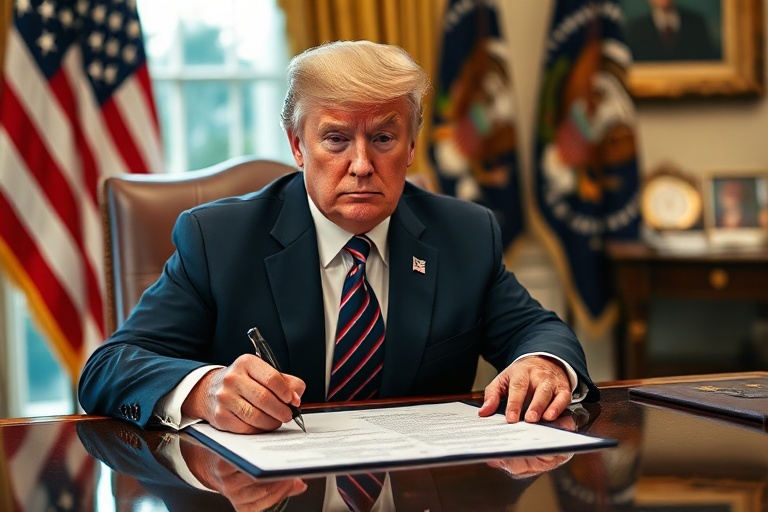
Signed in early 2024, the order directs federal agencies to collaborate with financial institutions to identify and restrict banking services for individuals without legal immigration status. Specifically, it mandates:
- Enhanced verification of customer identities during account openings
- Mandatory reporting of suspected undocumented immigrants to immigration authorities
- Penalties for banks found to be facilitating transactions for unauthorized residents
- Public disclosure of financial institutions complying with the order
The Department of the Treasury and Department of Homeland Security are tasked with implementing these measures, though compliance timelines remain unclear. Legal experts note that the order’s broad language could lead to inconsistent enforcement, particularly in states with sanctuary policies that limit cooperation with federal immigration authorities.
Global Reactions and Cultural Context
The order has drawn international scrutiny, with critics framing it as part of a broader trend of restrictive immigration policies in Western nations. In Europe, where debates over migration and financial access have intensified, some policymakers have drawn parallels to the U.S. approach. However, the European Union’s emphasis on human rights frameworks contrasts sharply with the Trump administration’s enforcement-first strategy.
In Latin America, where remittances from the U.S. play a vital economic role, the order has sparked concern. Many undocumented workers rely on U.S.-based financial services to send money home, and restrictions could disrupt these flows. Meanwhile, in Asia, countries like the Philippines and Mexico have warned their citizens about potential account closures, urging them to explore alternative banking options.
“This policy doesn’t just affect individuals—it sends a message to the global community about America’s priorities,” said immigration law professor Elena Rodriguez. “When financial exclusion becomes a tool of immigration control, the humanitarian costs outweigh the perceived benefits.”
Legal Challenges and Unintended Consequences
Opponents of the order have already filed lawsuits, arguing that it violates constitutional protections and federal privacy laws. A coalition of civil rights groups contends that the policy encourages racial profiling by incentivizing banks to scrutinize customers based on perceived ethnicity or accent. Additionally, critics warn that the order could deter legal immigrants from using mainstream banking, pushing them toward unregulated services like cryptocurrency or informal lenders.
Financial institutions have also expressed unease. While some larger banks may have the resources to comply, smaller community banks and credit unions could struggle with the costs of enhanced compliance. Industry analysts predict that the order may accelerate branch closures in low-income and immigrant-heavy neighborhoods, further marginalizing vulnerable populations.
The Human Impact: Stories from the Ground
In cities like Los Angeles and New York, where immigrant communities are deeply embedded in the local economy, the order has created palpable fear. Maria Gonzalez, a longtime undocumented resident of Chicago, described the anxiety of receiving a letter from her bank asking her to verify her immigration status. “I’ve worked hard, paid taxes, and contributed to this country,” she said. “Now, I’m being treated like a criminal for trying to save money.”
For many, the fear of account closures has led to a rush to withdraw cash or transfer funds to less scrutinized institutions. Some have turned to digital payment apps or prepaid debit cards, which offer anonymity but lack the protections of traditional banking. Others are considering leaving the formal financial system entirely, a move that could have long-term consequences for their credit scores and economic mobility.
Meanwhile, immigrant advocacy groups are organizing workshops on financial literacy and alternative banking options. These efforts highlight the resilience of communities adapting to policy shifts, though they underscore a troubling reality: financial exclusion is becoming an increasingly effective tool of immigration enforcement.
Looking Ahead: Policy Implications and Alternatives
The order’s long-term impact remains uncertain, but its immediate effects are already visible. For policymakers, the challenge lies in balancing immigration enforcement with the need for economic inclusion. Some experts suggest that expanding pathways to legal status, rather than restricting financial access, could address the root causes of undocumented immigration while promoting integration.
Others propose a more targeted approach, focusing on individuals with criminal records rather than all undocumented residents. This nuanced strategy could mitigate the order’s collateral consequences while still aligning with broader enforcement goals. However, given the current political climate, bipartisan solutions seem unlikely in the near term.
As the debate continues, one thing is clear: the intersection of banking and immigration policy is a minefield of legal, ethical, and practical challenges. For now, millions of people remain in limbo, caught between the policies of a government seeking to enforce its borders and a society grappling with the meaning of inclusion.
For those interested in the broader implications of immigration policy, explore our Politics section for deeper analysis. To learn more about how financial regulations impact communities, visit our Finance category.
Conclusion
Trump’s executive order on banking and immigration status is more than a policy directive—it’s a reflection of America’s ongoing struggle to reconcile its identity as both a nation of laws and a nation of immigrants. While proponents argue that the order strengthens immigration enforcement, the humanitarian and economic costs demand careful scrutiny. As global reactions demonstrate, this issue transcends borders, challenging societies to find solutions that prioritize both security and human dignity. The coming months will reveal whether this policy achieves its stated goals or merely deepens the divides it seeks to address.