Trump’s New Bank Citizenship Order: What It Means for You
“`html
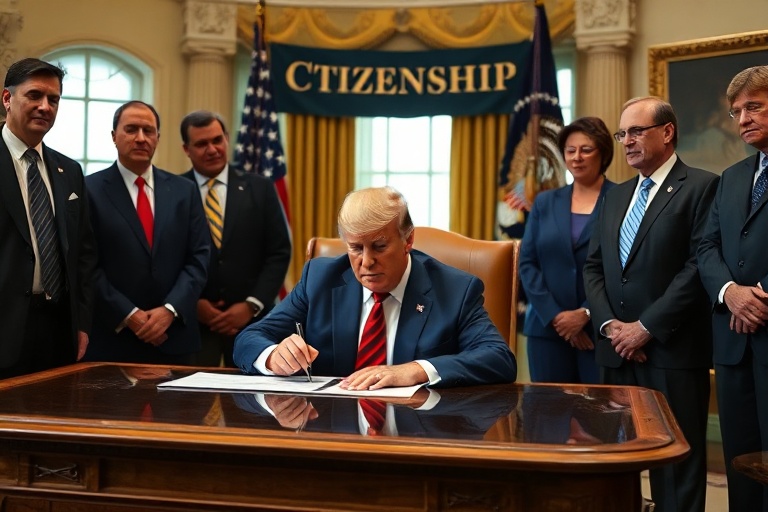
Trump Signs Executive Order Targeting Bank Citizenship Rules
The Trump administration recently signed an executive order aimed at tightening regulations around bank citizenship requirements. This move has sparked discussions across financial, legal, and political circles about its potential impact on both domestic and international banking practices.
Understanding the Executive Order
The executive order directs federal agencies to review and potentially revise existing policies related to bank citizenship and ownership rules. While the full text has not been made public, sources indicate the order focuses on ensuring that banks comply with stricter verification processes for determining the citizenship status of account holders and beneficial owners.
Key provisions likely include enhanced due diligence requirements for financial institutions. Banks may need to implement more rigorous identity verification measures, particularly for customers with ties to foreign jurisdictions. The order also appears to grant agencies broader authority to penalize institutions found in violation of citizenship-related regulations.
Context Within Broader Policy Shifts
This executive order aligns with the administration’s broader agenda to strengthen national security and economic sovereignty. Previous policies have targeted foreign investment in sensitive sectors, and this move extends that scrutiny to the financial sector. The administration has framed these measures as necessary to prevent illicit financial flows and protect domestic economic interests.
Critics argue that such policies could have unintended consequences, including reduced access to banking services for certain populations and increased compliance burdens on financial institutions. Supporters, however, contend that stricter oversight is essential to combat money laundering and other financial crimes.
Potential Implications for Banks and Account Holders
The executive order could lead to significant changes in how banks operate, particularly those with international customer bases. Financial institutions may need to invest in new compliance technologies and hire additional personnel to meet the new requirements. This could result in higher operational costs, which might ultimately be passed on to customers.
For account holders, the impact will depend on their individual circumstances. Customers with dual citizenship or foreign ties may face additional scrutiny during account openings or routine reviews. Those with legitimate ties to foreign jurisdictions could encounter delays or complications in accessing banking services.
Banks operating in multiple countries may also face challenges in reconciling the new requirements with existing regulations in other jurisdictions. This could create a complex compliance landscape, requiring institutions to navigate a patchwork of rules.
Key Points to Watch
- Enhanced Due Diligence: Banks will likely need to implement more rigorous identity verification processes for customers with foreign ties.
- Penalties for Non-Compliance: Federal agencies may be granted broader authority to penalize institutions that fail to comply with the new rules.
- Operational Costs: Financial institutions may face higher compliance costs, potentially leading to increased fees for customers.
- International Compliance Challenges: Banks with global operations may struggle to align the new requirements with existing regulations in other countries.
- Impact on Account Holders: Customers with dual citizenship or foreign ties may face additional scrutiny and potential delays in accessing banking services.
Broader Economic and Political Considerations
The executive order reflects a broader trend toward economic nationalism, which has gained traction in recent years. By tightening controls on financial transactions and ownership, the administration aims to protect domestic economic interests and prevent foreign interference in the financial system.
This move could also have geopolitical implications, particularly for countries with close economic ties to the United States. Nations that rely heavily on U.S. financial markets may face pressure to adjust their own regulations to align with the new requirements. This could lead to a ripple effect, with other countries adopting similar measures in response.
From a legal perspective, the executive order raises questions about the balance between national security and individual rights. Critics argue that the measures could infringe on privacy rights and create barriers to financial inclusion. Supporters, however, contend that the benefits of enhanced security and economic protection outweigh these concerns.
What Comes Next?
As federal agencies begin to implement the executive order, financial institutions will need to closely monitor developments to ensure compliance. The order’s success will depend on how effectively agencies can balance the need for stricter oversight with the practical realities of banking operations.
For account holders, staying informed about the changes and proactively addressing any potential issues will be crucial. Those with foreign ties should be prepared for additional scrutiny and may need to provide more documentation to verify their citizenship status.
Ultimately, the executive order represents a significant shift in the regulatory landscape for banks and financial institutions. Its long-term impact will depend on how it is implemented and enforced, as well as the broader economic and political context in which it operates.
Conclusion
The Trump administration’s executive order targeting bank citizenship rules marks a notable development in the ongoing effort to tighten financial regulations. While the move aims to enhance national security and economic sovereignty, it also raises important questions about compliance burdens, customer access, and the balance between security and individual rights.
As the order takes effect, financial institutions and account holders alike will need to adapt to the new requirements. The broader implications of this policy shift will unfold over time, shaping the future of banking and financial regulation in the United States and beyond.
For more insights into financial regulations and their impact, visit our Finance and Politics sections.