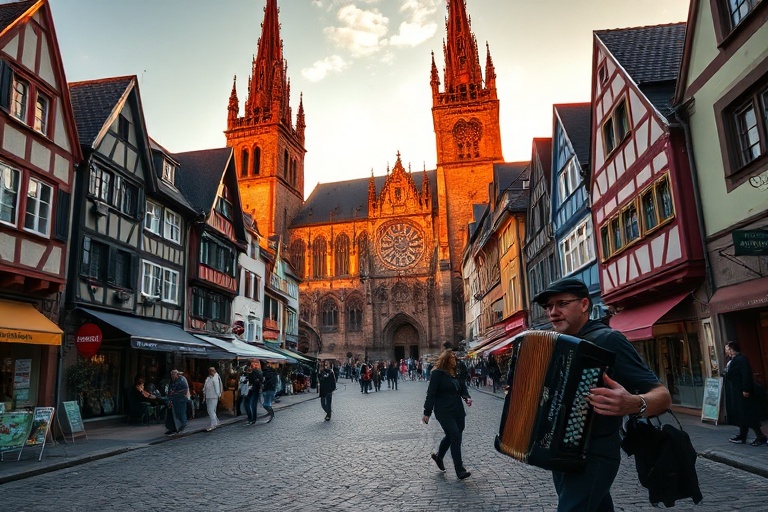
Nestled at the edge of the Black Forest in southwestern Germany, Freiburg has transformed from a modest university town into a global benchmark for sustainable urban development. With its car-free city center, extensive solar infrastructure, and commitment to renewable energy, Freiburg demonstrates how cities can prioritize environmental responsibility without sacrificing quality of life. The city’s approach combines innovative policy, community engagement, and cutting-edge technology to create a model that other urban centers increasingly seek to emulate.
The Rise of Freiburg’s Green Identity
Freiburg’s transformation began in the 1970s, driven by citizen activism and a collective vision for environmental stewardship. The city’s pivot toward sustainability gained momentum after the 1975 referendum that halted a proposed nuclear power plant in nearby Wyhl. This early environmental victory galvanized residents and local leaders to push for greener alternatives in energy, transportation, and urban planning. By the 1990s, Freiburg had adopted a formal solar energy strategy, positioning itself at the forefront of Germany’s renewable energy transition.
The city’s commitment to sustainability is not merely symbolic—it is embedded in its infrastructure. Freiburg’s Vauban district, developed in the 1990s, remains one of the most cited examples of eco-friendly urban design. Built on a former military base, Vauban features energy-efficient buildings, car-free streets, and a strong emphasis on pedestrian and bicycle traffic. Solar panels adorn rooftops throughout the district, and many homes operate on passive energy systems, reducing reliance on external power grids. The success of Vauban has influenced urban planners worldwide, proving that sustainable living can coexist with modern comfort and accessibility.
Key Features of Freiburg’s Sustainable Model
Freiburg’s approach to sustainability is multifaceted, addressing energy, transportation, waste management, and urban biodiversity. Below are the core components that define its green urban model:
- Renewable Energy Leadership: Freiburg generates more renewable energy than it consumes. Solar power is a cornerstone, with over 1,500 hours of sunshine annually and more than 1,000 solar panel installations across the city. The city’s solar potential is further maximized through public-private partnerships and citizen energy cooperatives, which allow residents to invest directly in local solar projects.
- Car-Free and Pedestrian-Friendly Zones: The city center is largely car-free, with trams, buses, and bicycles serving as primary modes of transport. Freiburg’s integrated public transport system, including the Stadtbahn light rail network, is efficient, affordable, and seamlessly connected with bike-sharing programs. The result is a city where car ownership is optional rather than necessary.
- Zero-Waste and Circular Economy Initiatives: Freiburg has set ambitious targets to become a zero-waste city by 2030. Waste separation is rigorously enforced, and recycling rates exceed 80%. The city also promotes repair cafes, second-hand markets, and composting programs to minimize landfill contributions and encourage resource efficiency.
- Urban Greening and Biodiversity: Nearly half of Freiburg is covered by green spaces, parks, and forests. The city prioritizes native plant species in landscaping and maintains wildlife corridors to support local ecosystems. Initiatives like the “Green Roof Program” incentivize building owners to install vegetation on rooftops, improving insulation and reducing urban heat island effects.
Broader Implications for Urban Development
Freiburg’s success offers critical lessons for cities grappling with climate change, air pollution, and urban sprawl. Its model demonstrates that sustainability is not a luxury but a necessity—one that can be achieved through deliberate policy, community involvement, and technological innovation. As global temperatures rise and cities account for over 70% of carbon emissions, Freiburg’s strategies provide a blueprint for reducing environmental impact while enhancing livability.
One of the most transferable aspects of Freiburg’s approach is its emphasis on citizen participation. The city’s energy cooperatives, for example, allow residents to co-own renewable energy projects, fostering a sense of collective responsibility. This bottom-up engagement ensures that sustainability efforts are not imposed but embraced by the community. Such models could be particularly valuable in cities where top-down policies often face resistance.
Freiburg also highlights the economic benefits of sustainability. The city’s green sector employs thousands of people, from solar technicians to urban planners, and attracts investment from companies specializing in clean technology. By positioning itself as a hub for green innovation, Freiburg has cultivated a reputation that draws students, researchers, and entrepreneurs from around the world.
Challenges and Criticisms
Despite its achievements, Freiburg faces challenges that underscore the complexities of sustainable urban development. One persistent issue is housing affordability. The city’s popularity as a green urban destination has driven up property prices, pushing out lower-income residents. While Freiburg has implemented rent control measures and social housing initiatives, the pressure on its housing market remains a concern.
Another challenge is scaling Freiburg’s model to larger cities. While its strategies work well in a mid-sized city like Freiburg (population: ~230,000), replicating them in megacities with millions of residents presents logistical and financial hurdles. Critics argue that Freiburg’s success relies heavily on its size, demographics, and wealth—factors that may not be present in all urban contexts.
Additionally, some residents express concerns about the city’s strict environmental regulations, particularly regarding car use and building codes. While these policies are essential for sustainability, they can also create friction, especially among those accustomed to greater personal freedom in mobility and housing choices.
Nevertheless, Freiburg’s ongoing efforts to balance growth with sustainability offer valuable insights. The city continues to experiment with new initiatives, such as hydrogen-powered buses and expanded green belts, ensuring its model evolves alongside emerging challenges.
Why Freiburg Matters Beyond Its Borders
Freiburg’s story is more than a local success—it is a case study in how cities can lead the transition to a sustainable future. Its achievements have been recognized globally, earning accolades such as the European Green Capital Award in 2010. Cities like Copenhagen, Vancouver, and Singapore have drawn inspiration from Freiburg’s strategies, adapting them to their own contexts. Even in the United States, where climate policy often faces political resistance, cities like Portland and Berkeley have looked to Freiburg as a model for integrating sustainability into urban planning.
The broader implications are clear: Freiburg proves that sustainability is not a distant goal but an achievable reality. It challenges the notion that economic growth and environmental responsibility are mutually exclusive. Instead, Freiburg demonstrates that when cities prioritize long-term well-being over short-term convenience, they can create environments that are both thriving and resilient.
For urban planners, policymakers, and residents alike, Freiburg serves as a reminder that change is possible—one policy, one building, and one community at a time. As climate change accelerates, cities worldwide will need to adopt Freiburg’s ethos: innovate boldly, collaborate widely, and never compromise on the health of the planet or its people.
To explore more about sustainable urban development and green cities, visit our Travel and Technology sections for additional insights and resources.