<!DOCTYPE html>
<html lang="en">
<head>
    <meta charset="UTF-8">
    <meta name="viewport" content="width=device-width, initial-scale=1.0">
    <title>Migration: Human Movement Across Borders and Its Global Impact</title>
</head>
<body>
    <article>
        <h1>Migration: Human Movement Across Borders and Its Global Impact</h1>

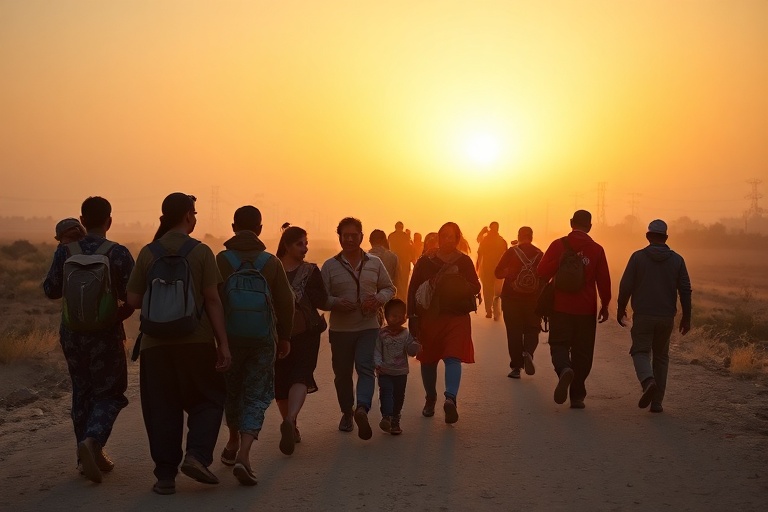
        <p>Migration is one of the most defining forces shaping the modern world. People move across borders for countless reasons—economic opportunity, safety, education, or simply the pursuit of a better life. These movements reshape societies, economies, and cultures, creating both challenges and opportunities. Understanding migration requires examining its causes, consequences, and the policies that govern it.</p>

        <h2>The Historical Roots of Human Migration</h2>

        <p>Human migration is not a recent phenomenon. It has been a constant throughout history, from the earliest human migrations out of Africa to the mass displacements caused by colonialism and world wars. The 19th and early 20th centuries saw waves of migration driven by industrialization, labor demand, and political upheaval. European migration to the Americas, for example, reshaped entire continents, while the transatlantic slave trade forcibly relocated millions.</p>

        <p>Today, migration patterns continue to evolve. Climate change, digital connectivity, and global inequality are creating new push and pull factors. The United Nations estimates that over 280 million people live outside their country of birth—more than the entire population of Indonesia. This movement is not slowing down; it is accelerating, driven by both necessity and ambition.</p>

        <h3>Key Historical Migration Waves</h3>
        <ul>
            <li><strong>Colonial Era (16th–20th centuries):</strong> European settlers migrated to the Americas, Africa, and Asia, often displacing Indigenous populations.</li>
            <li><strong>Industrial Revolution (18th–19th centuries):</strong> Rural-to-urban migration within Europe and North America fueled urbanization.</li>
            <li><strong>Post-WWII Period (1945–1970s):</strong> Labor shortages in Western Europe led to guest worker programs, bringing millions from Turkey, North Africa, and the Caribbean.</li>
            <li><strong>21st Century Displacements:</strong> Conflict in Syria, Venezuela, and Myanmar has created some of the largest refugee crises since World War II.</li>
        </ul>

        <h2>Economic and Social Impacts of Migration</h2>

        <p>Migration has profound effects on both origin and destination countries. For host nations, migrants often fill labor gaps in industries like healthcare, agriculture, and technology. In the United States, for instance, immigrants make up nearly 17% of the workforce, with significant representation in essential sectors. Germany’s aging population has similarly benefited from skilled migration programs.</p>

        <p>Yet, migration also stirs debate. Critics argue that it strains public services and suppresses wages in certain sectors. Proponents counter that migrants contribute more in taxes than they consume in benefits over time. A 2021 study by the National Academies of Sciences found that, on average, immigrants have a net positive fiscal impact in the long term.</p>

        <p>On the flip side, countries of origin experience both gains and losses. Remittances—money sent back by migrants—are a lifeline for many developing nations. In 2023, remittances to low- and middle-income countries exceeded $647 billion, according to the World Bank. However, "brain drain"—the emigration of skilled professionals—can cripple healthcare and education systems in poorer nations.</p>

        <h2>Policy and the Politics of Migration</h2>

        <p>Migration policies vary dramatically around the world, reflecting differing national priorities and values. Some countries, like Canada and Australia, actively recruit immigrants through points-based systems that prioritize skills and education. Others, such as the United States, struggle with outdated immigration laws that leave millions in legal limbo.</p>

        <p>Europe presents a complex case. Countries like Germany have embraced multiculturalism to offset demographic decline, while nations like Hungary have adopted hardline anti-immigration stances. The European Union’s Dublin Regulation, which determines which country is responsible for asylum claims, has faced criticism for overburdening frontline states like Greece and Italy.</p>

        <p>In the Global South, migration policies are often reactive rather than strategic. Lebanon, for example, hosts over a million Syrian refugees but lacks a formal integration policy, leading to tensions. Meanwhile, Gulf states like the UAE and Qatar rely heavily on temporary migrant labor, creating systems that critics call "modern-day indentured servitude."</p>

        <h3>How Different Countries Handle Migration</h3>
        <ol>
            <li><strong>Canada:</strong> Uses a points-based system (Express Entry) to select immigrants based on age, education, and language proficiency.</li>
            <li><strong>Japan:</strong> Traditionally restrictive, but now expanding visa programs to address labor shortages in care work and agriculture.</li>
            <li><strong>Turkey:</strong> Hosts the world’s largest refugee population (over 3.6 million Syrians) but faces international criticism for restricting mobility.</li>
            <li><strong>New Zealand:</strong> Offers a "working holiday visa" to young people from 45 countries, fostering cultural exchange and labor flexibility.</li>
        </ol>

        <h2>Challenges and Ethical Considerations</h2>

        <p>Migration is fraught with ethical dilemmas. The treatment of asylum seekers at borders—such as the U.S.-Mexico line or Australia’s offshore detention centers—has drawn international condemnation. Reports of family separations, inadequate healthcare, and prolonged detention highlight the human cost of restrictive policies.</p>

        <p>Climate migration is an emerging crisis. The Internal Displacement Monitoring Centre estimates that in 2023 alone, over 21 million people were displaced by weather-related disasters. Yet, there is no legal framework for "climate refugees," leaving them in legal limbo. The 2015 Paris Agreement did not include provisions for climate-induced displacement, a gap activists are now pushing to address.</p>

        <p>Another challenge is integration. Successful migration requires more than just physical relocation; it demands language acquisition, cultural adaptation, and access to opportunities. Cities like Toronto and Berlin have invested in integration programs, while others, like Paris, struggle with segregation and social unrest.</p>

        <blockquote>
            <p>"Migration is not a crisis—it’s a reality. The question is whether we will manage it with humanity or cruelty." — António Guterres, UN Secretary-General</p>
        </blockquote>

        <h2>Looking Ahead: The Future of Migration</h2>

        <p>The trajectory of global migration will be shaped by several key trends. First, climate change will likely become the dominant driver of displacement. The World Bank predicts that by 2050, over 200 million people could be forced to migrate due to environmental factors. Second, digital nomadism—enabled by remote work—is blurring the lines between temporary and permanent migration.</p>

        <p>Technological advancements could also change how migration is managed. Blockchain, for instance, is being tested to streamline visa processing and verify credentials. Meanwhile, AI-driven analytics are helping governments predict migration flows and allocate resources more efficiently.</p>

        <p>Yet, the human element remains central. Migration is ultimately about people seeking dignity, safety, and opportunity. As the world becomes more interconnected, the policies we adopt today will determine whether migration remains a source of division or a catalyst for shared progress.</p>

        <p>For those interested in exploring migration through a cultural lens, <a href="https://daveslocker.net/culture">Dave’s Locker Culture section</a> offers perspectives on how migration influences art, music, and identity. Meanwhile, the <a href="https://daveslocker.net/news">News section</a> covers the latest policy shifts and humanitarian responses around the globe.</p>

        <p>Migration will continue to define our era. The challenge lies not in stopping movement, but in ensuring it happens with justice, compassion, and foresight.</p>
    </article>