Omega First Light: How a New Telescope Array Is Unlocking Cosmic Origins
“`html
Omega First Light: The Dawn of a New Era in Astronomy
The Omega First Light project represents one of the most ambitious undertakings in modern astronomy. Designed to capture the earliest moments of the universe, this initiative pushes the boundaries of what we know about cosmic origins. At its core, Omega First Light aims to observe the first light emitted after the Big Bang, a period known as the cosmic dawn. This effort combines cutting-edge technology with international collaboration, bringing together scientists from across the globe.
The project’s name itself carries significance. “Omega” refers to the final letter of the Greek alphabet, symbolizing the culmination of human efforts to understand the universe’s beginning. “First Light” refers to the moment when the first stars and galaxies ignited, transforming the universe from a dark, featureless expanse into the cosmos we recognize today. Capturing this moment has been a long-standing goal for astronomers, and Omega First Light brings us closer than ever to achieving it.
The Science Behind Omega First Light
To understand Omega First Light, it’s essential to grasp the concept of the cosmic microwave background (CMB). The CMB is the afterglow of the Big Bang, a faint radiation that fills the universe. However, the period immediately following the CMB—when the first stars and galaxies formed—remains shrouded in mystery. This is where Omega First Light comes into play.
The project utilizes a suite of advanced telescopes and detectors, each designed to observe different wavelengths of light. These instruments are capable of detecting the faint signals emitted by the first stars, which are known as Population III stars. These stars were composed almost entirely of hydrogen and helium, with no heavier elements, making them fundamentally different from the stars we see today. Observing these stars would provide unprecedented insights into the early universe’s conditions.
One of the key challenges of Omega First Light is the sheer distance these signals must travel to reach Earth. The light from the first stars has been traveling for over 13 billion years, making it extremely faint by the time it reaches our detectors. To overcome this, scientists employ sophisticated techniques such as gravitational lensing, which amplifies the light from distant objects using the gravitational fields of massive galaxy clusters.
The Role of International Collaboration
Omega First Light is not the work of a single institution or country. Instead, it is a collaborative effort involving researchers from the United States, Europe, and Asia. This global partnership ensures that the project benefits from a diverse range of expertise and resources. For example, the European Space Agency’s contributions include advanced detector technology, while American institutions provide computational power for data analysis.
This collaboration extends beyond mere resource-sharing. Scientists from different countries work side by side, sharing data and insights in real-time. This collaborative approach has already yielded significant results, including the identification of potential candidates for the first stars. The project’s success hinges on this international cooperation, demonstrating how science can transcend borders to achieve groundbreaking discoveries.
The Technology Powering Omega First Light
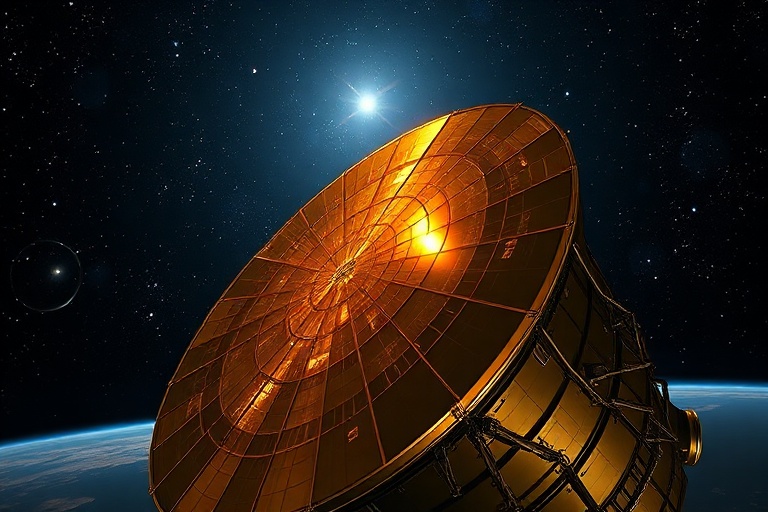
The technological innovations behind Omega First Light are as impressive as the science itself. At the heart of the project is the Omega Telescope Array, a collection of radio telescopes designed to observe the universe in unprecedented detail. These telescopes are equipped with ultra-sensitive receivers capable of detecting even the faintest signals from the early universe.
One of the most significant technological advancements is the development of superconducting detectors. These detectors operate at temperatures near absolute zero, allowing them to pick up the faintest signals without interference from thermal noise. This technology has been critical in enabling the project to achieve its goals.
The project also relies on advanced data processing techniques. The amount of data generated by Omega First Light is staggering, with terabytes of information collected each day. To manage this data, scientists use cutting-edge algorithms and machine learning techniques to filter out noise and identify meaningful signals. This combination of hardware and software innovation is what makes Omega First Light possible.
Challenges and Setbacks
Despite its ambitious goals, Omega First Light has faced its share of challenges. One of the most significant hurdles is the interference from human-made radio signals. These signals, which include everything from cell phone transmissions to satellite communications, can overwhelm the faint signals from the early universe. To mitigate this, the project’s telescopes are located in some of the most remote regions of the planet, far from sources of interference.
Another challenge is the sheer complexity of the data analysis. The signals from the first stars are buried deep within the noise, requiring sophisticated algorithms to extract them. Even with advanced technology, this process is time-consuming and fraught with uncertainties. Scientists must carefully distinguish between genuine signals and false positives, a task that demands both precision and patience.
The project has also faced delays due to unforeseen technical issues. For example, early prototypes of the superconducting detectors failed to meet performance expectations, requiring additional development time. These setbacks highlight the inherent difficulties of pushing the boundaries of scientific exploration.
Omega First Light and the Future of Astronomy
The implications of Omega First Light extend far beyond the immediate goals of the project. By observing the first light of the universe, scientists hope to answer fundamental questions about the nature of dark matter, the formation of galaxies, and the origins of cosmic structure. These insights could revolutionize our understanding of the universe and our place within it.
One of the most exciting possibilities is the potential discovery of Population III stars. These stars are believed to have played a crucial role in the universe’s evolution, ionizing the intergalactic medium and paving the way for the formation of later generations of stars. Observing these stars would provide a direct window into the universe’s infancy, offering clues about the conditions that led to the formation of galaxies like our own Milky Way.
The project also serves as a testament to the power of international collaboration in science. In an era where geopolitical tensions often dominate headlines, Omega First Light demonstrates how countries can come together to achieve a common goal. This spirit of cooperation is essential for tackling the grand challenges of the 21st century, from climate change to space exploration.
What’s Next for Omega First Light?
Looking ahead, the Omega First Light team is focused on several key objectives. One of the primary goals is to refine the detection techniques to improve the signal-to-noise ratio. This will involve upgrading the telescope array and enhancing the data processing algorithms. The team is also exploring new observational strategies, such as targeting specific regions of the sky where the first stars are most likely to be found.
Another priority is the development of next-generation detectors. These detectors will not only be more sensitive but also capable of observing a broader range of wavelengths. This will allow scientists to study the first stars in greater detail and uncover new aspects of the early universe.
The project’s long-term vision includes the establishment of a permanent observatory dedicated to studying the cosmic dawn. This observatory would serve as a hub for international collaboration, bringing together scientists from around the world to continue the exploration of the universe’s origins. It would also inspire the next generation of astronomers, fostering a new era of discovery.
For those interested in following the progress of Omega First Light, updates are regularly published on the project’s official website. Additionally, Dave’s Locker Science provides in-depth coverage of the latest developments in astronomy and space exploration.
Conclusion: Illuminating the Past to Understand the Future
Omega First Light stands as a testament to human curiosity and ingenuity. By peering into the distant past, the project offers a glimpse into the universe’s earliest moments, shedding light on the origins of everything we see today. The insights gained from Omega First Light will not only deepen our understanding of the cosmos but also inspire future generations to continue exploring the unknown.
The journey to capture the first light of the universe is far from over. With each new discovery, Omega First Light brings us one step closer to unraveling the mysteries of the cosmos. As technology advances and international collaboration grows, the project will continue to push the boundaries of what is possible, illuminating the path to a brighter future for astronomy and science as a whole.