El Niño Explained: Global Weather, Cultural Impact & Economic Costs
“`html
The Global Dance of El Niño: Weather, Culture, and Consequence
El Niño is not merely a meteorological event—it is a global choreographer, rearranging weather patterns, economic fortunes, and cultural rituals across continents. When the Pacific Ocean’s surface temperatures rise above normal near the equator, the ripple effects stretch from Peruvian fishing villages to Indonesian rice paddies, from Californian surf breaks to East African drought zones. This cyclical phenomenon, recurring every two to seven years, has shaped human history as much as monsoons or ice ages.
The term itself comes from Spanish, meaning “the boy,” a reference to the Christ child, as Peruvian fishermen centuries ago noticed its arrival around Christmas. Today, El Niño’s influence transcends science, embedding itself in folklore, policy decisions, and even the rhythms of daily life. Understanding its reach requires more than atmospheric data—it demands a look at how societies adapt, resist, and sometimes prosper in its wake.
The Science Behind the Shuffle
At its core, El Niño is a disruption of the ocean-atmosphere system in the tropical Pacific. Normally, trade winds push warm water westward toward Indonesia, allowing cooler water to rise along South America’s coast. But during El Niño, these winds weaken or reverse, allowing the warm water to slosh eastward. The result? A cascade of climatic consequences.
The National Oceanic and Atmospheric Administration (NOAA) tracks El Niño using sea surface temperature anomalies, wind patterns, and atmospheric pressure shifts. When conditions meet specific thresholds for five consecutive three-month periods, an El Niño is declared. This year’s event, currently intensifying, is projected to bring above-average temperatures to the northern U.S. and Canada, while drenching the southern U.S. and parts of South America.
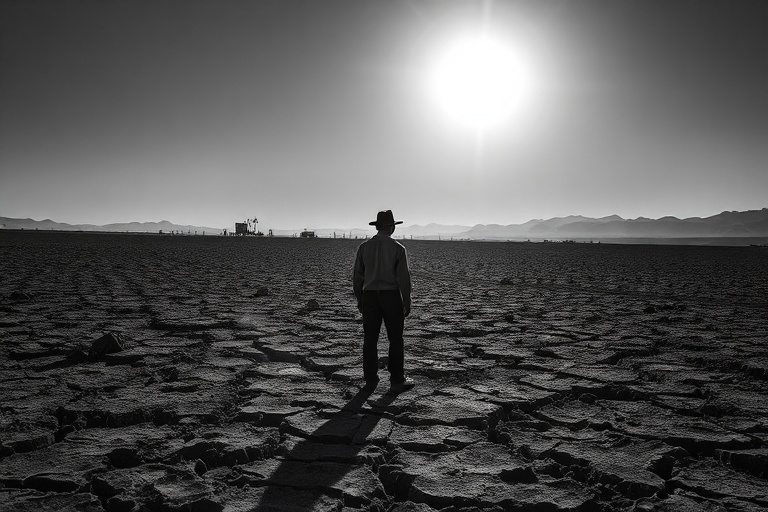
The mechanics are complex, but the outcomes are tangible. Fisheries collapse in Peru as anchovy populations flee warmer waters. Meanwhile, coral reefs in the Pacific bleach under heat stress. Farmers in Australia watch their wheat crops wither under prolonged drought, while rice growers in Vietnam brace for flooding. These shifts are not random; they are the direct result of a planet tilting its weather patterns.
Cultural Echoes of a Warming Pacific
El Niño’s cultural footprint is as deep as its meteorological roots. In Peru, the phenomenon is woven into national identity. During strong El Niño years, festivals like La Fiesta de la Candelaria in Puno take on an almost defiant energy, celebrating resilience in the face of climatic upheaval. Meanwhile, in the Philippines, where El Niño brings drought, communities revive ancient bayanihan traditions—neighborhoods coming together to haul water or dig wells.
The arts reflect this too. In 2015, Peruvian artist Jessica Wakeman created a series of paintings depicting the chaos of El Niño-induced floods in Lima’s informal settlements. “It wasn’t just about the rain,” she said. “It was about who gets left behind.” Her work, exhibited in galleries from Miami to Manila, became a visual manifesto for climate justice.
Even music feels the shift. In Ecuador, the bomba del chota drumming tradition, tied to agricultural cycles, now incorporates lyrics about erratic rains. Musicians in coastal towns compose pasillos—melancholic folk tunes—about the empty nets of fishermen.
When Ritual Meets Reality
Indigenous communities have long read the signs of El Niño through animal behavior and plant cycles. The Guambiano people of Colombia’s Andes watch the chagualo tree for early flowering—a harbinger of drought. In the highlands of Papua New Guinea, elders interpret the timing of bird migrations as omens for planting seasons.
Yet modern El Niño events often overwhelm these ancestral systems. In 2019, a severe El Niño in Madagascar disrupted the famadihana—the “turning of the bones” ceremony—where families exhume ancestors for reburial. Drought had withered crops, forcing communities to prioritize food over tradition. The clash between cultural practice and climatic force underscored a harsh truth: heritage is no match for a planet in flux.
Economic Fault Lines
El Niño’s financial toll is staggering. The World Bank estimates that the 2015-2016 event cost the global economy $45 billion. Supply chains fracture as droughts stall shipping on the Panama Canal, while floods disrupt mining operations in Chile. The agricultural sector bears the brunt, with coffee prices spiking as Brazil’s arabica crops suffer.
Agriculture isn’t the only industry vulnerable. In sports, the 2015-2016 El Niño postponed surf competitions in Tahiti and forced organizers to adapt schedules for soccer tournaments in Central America, where pitches turned to mud. Even the Tour de France faced detours in 2023 as heatwaves baked French roads.
The financial markets react too. Commodity traders bet on cocoa futures as West African harvests wilt, while insurance premiums rise in flood-prone regions. In 2021, reinsurer Swiss Re reported that El Niño-related disasters accounted for 30% of its annual payouts. The message is clear: what happens in the Pacific doesn’t stay in the Pacific.
Adaptation as a Global Imperative
Nations are racing to mitigate El Niño’s worst effects. Peru’s government now funds early warning systems for fishermen, while Indonesia invests in drought-resistant rice varieties. In the U.S., California’s water districts have imposed tiered rationing policies, anticipating El Niño-fueled storms that could overwhelm infrastructure.
Yet adaptation is uneven. Wealthy nations invest in climate-resilient infrastructure, while poorer countries rely on international aid. The 2015-2016 El Niño left 60 million people food insecure across Africa, Asia, and Latin America. The United Nations’ appeal for $3.2 billion to address the crisis went only 60% funded.
Technology offers some solutions. Satellite imagery and AI models now predict El Niño’s onset with greater accuracy, giving farmers more time to adjust. In Peru, startup Hydrotec uses soil sensors to help smallholder farmers decide when to plant. Meanwhile, in the Philippines, community radio stations broadcast daily updates on water rationing, blending ancient oral traditions with modern science.
The Future: El Niño in a Warming World
Climate change is amplifying El Niño’s intensity. Research published in Nature Climate Change suggests that extreme El Niño events could double in frequency by 2100. Warmer oceans provide more fuel for these events, while shifting jet streams prolong their duration.
This raises a critical question: Are we entering an era where El Niño becomes the new normal? The evidence suggests yes. The 2023-2024 event, still unfolding, has already set records for ocean temperatures. Coral bleaching in the Great Barrier Reef is more severe than during the 2016 event, and fisheries in the eastern Pacific are in freefall.
Governments are taking note. The Biden administration’s 2023 National Climate Assessment explicitly links El Niño to worsening wildfires in the western U.S. and hurricanes in the Atlantic. Meanwhile, the European Union has allocated €500 million to fund El Niño resilience programs in vulnerable regions.
Lessons from the Past, Preparing for the Future
History offers clues for navigating this challenge. During the 1997-1998 El Niño, Bangladesh’s flood warning systems saved thousands of lives. In contrast, the 1982-1983 event caught Peru off guard, leading to a collapse in the anchovy industry that took a decade to recover.
Today, the stakes are higher. A 2022 study in Science Advances found that El Niño-related disasters could displace 100 million people by 2050. The most vulnerable—small-scale farmers, indigenous communities, and coastal dwellers—will bear the brunt. Yet solutions exist, if only we act.
Communities are leading the charge. In Ecuador, the Minga Ambiental movement trains women to monitor water quality during El Niño events. In India, farmers are reviving traditional water-harvesting techniques to combat drought. These grassroots efforts prove that resilience is not just a government responsibility—it is a collective one.
A Call to Action
El Niño is not a distant threat; it is a present reality. Its effects are felt in boardrooms and village huts alike. The question is no longer whether we can stop it, but how we will endure it. The answer lies in a blend of innovation, equity, and humility.
For scientists, it means refining predictive models and sharing data freely. For policymakers, it means investing in early warning systems and social safety nets. For communities, it means preserving traditional knowledge while embracing new tools. And for all of us, it means recognizing that our fates are tied to the Pacific’s whims.
El Niño teaches a hard lesson: Nature does not negotiate. But humans can adapt. The challenge is whether we will do so in time.