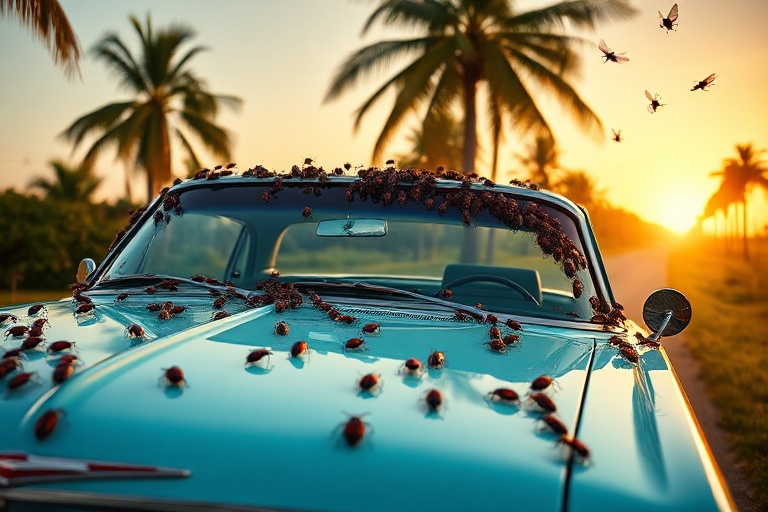
Love Bugs in Florida: Nature’s Sticky Seasonal Visitors
“`html
Love Bugs in Florida: Nature’s Sticky Surprise
Each spring and fall, Florida’s highways transform into a surreal scene—not from a storm or accident, but from millions of small, black-and-red insects clinging to windshields, grilles, and bumpers. These are love bugs, formally known as Plecia nearctica, harmless flies whose brief adult lives become a memorable nuisance for drivers across the Sunshine State.
While love bugs don’t bite or sting, their presence is hard to ignore. Their acidic body fluids can damage paint if left unwashed, and their sheer numbers slow traffic as motorists navigate the sticky aftermath. Yet, these insects play a vital role in Florida’s ecosystem. Understanding their life cycle, ecological impact, and cultural significance offers a deeper perspective on what might otherwise be dismissed as just another Florida oddity.
The Life Cycle of Love Bugs: A Two-Week Romance
Love bugs have one of the shortest adult life spans of any insect—often just four to five days. Their entire adult existence revolves around mating and laying eggs. The cycle begins when larvae, which feed on decaying organic matter in moist soil, mature into adults. This typically happens in late spring and early fall, with peak activity in May and September.
Adult love bugs emerge synchronized, creating mass emergences that blanket roadsides and pastures. Mating occurs almost immediately and can last for days. Females lay up to 350 eggs in damp soil or compost before dying shortly after. The entire adult phase lasts only about two weeks, making their presence all the more fleeting—and intense.
Interestingly, love bugs are not native to Florida. They were first documented in the state in the 1940s, likely introduced from Central America. Since then, they’ve become a permanent fixture in the region’s ecosystem, thriving in the warm, humid climate and abundant vegetation.
Why Love Bugs Are a Nuisance for Drivers
For Florida motorists, love bugs are more than an annoyance—they’re a seasonal hazard. When smashed against a vehicle’s front end, their bodies release a corrosive fluid that can etch paint and damage chrome if not cleaned promptly. This is especially true for cars with fresh paint jobs or delicate finishes.
The worst times to drive are during the early morning and late afternoon, when love bugs are most active. Their tendency to hover in swarms at about driver-eye level increases the likelihood of collisions with windshields. Unlike insects that quickly blow off, love bug remains adhere stubbornly, requiring a thorough wash with soap and water to remove.
To mitigate damage, many Florida drivers take precautions during peak love bug seasons:
- Washing their cars regularly, especially after long drives
- Applying a protective wax or sealant to paint surfaces
- Using bug deflectors or mesh screens on the front of vehicles
- Avoiding travel during the first few days of peak activity
Despite the inconvenience, most Floridians accept love bugs as part of life. The insects are harmless to humans and animals, and their ecological benefits outweigh their drawbacks. Still, their presence serves as a reminder of nature’s unpredictable ways in a state already known for its extremes.
The Ecological Role of Love Bugs in Florida
Love bugs may be best known for their nuisance factor, but they play a crucial role in Florida’s environment. As decomposers, their larvae break down organic matter in soil, recycling nutrients back into the ecosystem. This process enriches the soil, supporting plant growth and maintaining healthy landscapes.
Adult love bugs also serve as a food source for birds, spiders, and other predators. Their abundance during emergence periods provides a seasonal feast, supporting local wildlife populations. In this way, love bugs contribute to the biodiversity that makes Florida’s ecosystems so resilient.
Interestingly, the introduction of love bugs has had little negative impact on native species. Unlike invasive plants or animals that disrupt local food chains, these insects have integrated smoothly into Florida’s environment. Their presence highlights the adaptability of ecosystems and the complex relationships between species.
For gardeners and farmers, love bugs offer an unexpected benefit. Their larvae aerate the soil and improve its structure, while their adult forms help pollinate certain plants. While they don’t play a major role in pollination, their presence indicates a healthy, active ecosystem.
Love Bugs in Florida Culture: From Pest to Pop Icon
Despite their sticky reputation, love bugs have carved out a unique place in Florida’s cultural landscape. They’ve been featured in local art, music, and even festivals. The annual “Love Bug Festival” in Lake City celebrates the insects with parades, contests, and educational exhibits, turning a seasonal nuisance into a community event.
In music, love bugs have inspired songs and lyrics. Bands like The Red Hot Chili Peppers referenced them in their song “Love Rollercoaster,” though not specifically about Florida. Locally, love bugs symbolize the quirky, unpredictable nature of life in the Sunshine State—a place where nature’s whims are as much a part of the experience as theme parks and beaches.
Love bugs have also become a rite of passage for new Floridians. Stories of first encounters with love bug swarms are shared among transplants, often with a mix of humor and exasperation. For visitors, the insects become a memorable—and sometimes messy—part of their Florida vacation.
Even in literature and film, love bugs have made appearances. They’ve been depicted in nature documentaries and even featured in a 1990s horror-comedy film, Love Bugs, which played on their reputation as a Florida phenomenon. While not a major cultural force, their presence in pop culture underscores their status as a Florida icon.
Managing Love Bug Populations: Science and Solutions
Despite their ecological benefits, love bug populations are occasionally scrutinized for their impact on drivers and vehicles. Some researchers have explored ways to control their numbers, though most efforts have proven ineffective or counterproductive. For instance, pesticides are rarely used because they harm other insects and disrupt the ecosystem.
Instead, scientists focus on understanding love bug behavior to predict and mitigate their impact. Weather patterns, soil moisture, and temperature all influence their emergence. By monitoring these factors, researchers can provide early warnings to drivers and municipalities, helping communities prepare for peak love bug seasons.
One innovative approach involves using pheromone traps to capture adult love bugs. While not a solution for large-scale control, these traps can reduce local populations and provide data for research. Another strategy is public education—encouraging drivers to wash their cars promptly and take preventive measures to protect their vehicles.
Ultimately, the goal isn’t to eliminate love bugs but to coexist with them. Their presence is a reminder of Florida’s rich biodiversity and the delicate balance between human activity and nature. Embracing their quirks, rather than fighting them, may be the best approach.
Conclusion: Embracing Florida’s Sticky Romance
Love bugs are more than just a seasonal nuisance—they’re a symbol of Florida’s dynamic relationship with nature. Their brief but intense appearances remind residents and visitors alike of the state’s unique ecosystems and the unexpected ways life thrives in the subtropics.
While they may test drivers’ patience, love bugs play a vital role in the environment. Their larvae enrich the soil, their adults feed local wildlife, and their presence supports biodiversity. Instead of viewing them as pests, Floridians can appreciate love bugs for what they are: a fleeting but essential part of the state’s natural rhythm.
So the next time you find your windshield dotted with black-and-red insects, take a moment to consider their story. These tiny creatures live fast, love hard, and leave a lasting impression—even if it’s just a sticky reminder on your car.
For those curious about Florida’s other unique natural phenomena, explore our Nature and Travel categories for more insights into the state’s diverse landscapes and wildlife.