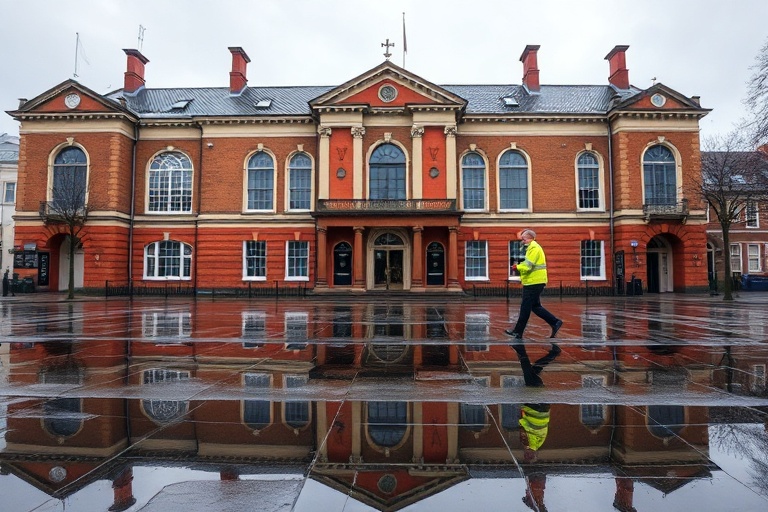
Shropshire Council: Balancing Rural Heritage with Modern Challenges
Local governance often operates in the shadows of national politics, yet its impact ripples through communities in ways few notice until they need services or infrastructure. Shropshire Council, based in the heart of England’s West Midlands, exemplifies this dynamic, blending centuries-old rural traditions with the demands of 21st-century public administration. As one of the largest unitary authorities in the UK by land area, it faces unique pressures that reflect broader global trends in local governance, economic adaptation, and environmental stewardship.
The council’s jurisdiction spans over 2,400 square kilometers, covering everything from the industrial heritage of Telford to the rolling hills of the Shropshire Hills Area of Outstanding Natural Beauty. This geographic diversity isn’t just a logistical challenge—it’s a cultural one. Shropshire’s identity is deeply tied to agriculture, mining history, and a slower pace of life, yet it must also accommodate commuters to Birmingham, digital nomads relocating for space, and tourists drawn to its castles and hiking trails. This tension between preservation and progress defines much of the council’s work.
The Structure and Scope of Shropshire Council
Shropshire Council operates as a unitary authority, meaning it handles functions typically split between county and district councils in other parts of England. This consolidation streamlines decision-making but also concentrates responsibility. The council oversees education, social care, waste management, highways, housing, and economic development across the entire county. It replaced the previous two-tier system in 2009, a reform that aimed to reduce bureaucracy but also sparked debates about local accountability.
Its organizational structure includes several key departments:
- Children’s Services: Managing schools, early years education, and child protection—areas under intense scrutiny nationwide due to funding constraints and rising demand.
- Adult Social Care: A sector facing global aging trends, where Shropshire’s rural spread complicates service delivery, especially for transport-dependent residents.
- Planning and Environment: Balancing housing development with conservation, particularly in protected landscapes like the Shropshire Hills.
- Highways and Transport: Maintaining 3,000 kilometers of roads while promoting sustainable travel options in a county heavily reliant on cars.
- Economic Growth: Supporting local businesses, attracting investment, and addressing the decline of traditional industries like coal mining in areas such as Oakengates.
This breadth of responsibility means the council’s decisions often intersect with national policies. For instance, its adult social care budget is influenced by central government funding formulas that don’t always account for rural cost variations. Similarly, its climate action plans must align with the UK’s net-zero targets while respecting the county’s historic building stock, which poses unique retrofitting challenges.
Economic Evolution: From Industry to Innovation
Shropshire’s economy has undergone dramatic shifts. The 18th and 19th centuries saw it as a powerhouse of the Industrial Revolution, home to ironworks, coal mines, and the birthplace of the modern railway in Shrewsbury. Today, those industries are largely gone, replaced by a mix of agriculture, light manufacturing, tourism, and a growing digital sector. The council has played a pivotal role in this transition, particularly through initiatives like the Shropshire Growth Programme, which offers grants and support to startups and SMEs.
One notable example is the development of the i54 South West Aerospace and Automotive hub near Wolverhampton border, a project that has brought high-skilled jobs to the region. However, these opportunities are unevenly distributed. Towns like Ludlow and Bishop’s Castle thrive with boutique businesses and second-home ownership, while former industrial areas like Dawley and Madeley face higher unemployment and deprivation indices. The council’s challenge is to bridge these divides without eroding the very qualities that make Shropshire attractive.
Tourism is another critical economic driver, contributing over £500 million annually. The council markets the region through campaigns like “Shropshire, Made Splendid,” emphasizing its castles, walking trails, and literary connections (Shrewsbury was home to Charles Darwin). Yet this sector is vulnerable to global shocks, as seen during the COVID-19 pandemic when rural tourism became a lifeline for many local businesses. The council’s recovery efforts included grants for hospitality venues and campaigns to attract UK-based visitors when international travel was restricted.
Environmental Stewardship in a Changing Climate
Shropshire’s natural environment is both an asset and a responsibility. The Shropshire Hills, designated an Area of Outstanding Natural Beauty, attract walkers, cyclists, and nature enthusiasts. Meanwhile, the River Severn, which flows through the county, is central to flood management strategies—a growing concern as climate change intensifies rainfall patterns. The council’s Environment and Climate Change board has prioritized several initiatives:
- Flood Resilience: Upgrading drainage systems and working with communities on flood action plans, such as in Ironbridge, a town with a history of devastating floods.
- Biodiversity Protection: Expanding hedgerow restoration and supporting local farmers in adopting regenerative practices to improve soil health and wildlife habitats.
- Renewable Energy: Encouraging solar farms and biomass projects while navigating public concerns about landscape impact. For example, the council approved a community-owned wind turbine project in Edgmond, which powers 1,000 homes.
- Waste Reduction: Rolling out food waste collections and promoting repair cafes to tackle the UK’s household waste crisis.
These efforts reflect a global shift toward localized climate action. Unlike urban councils with dense populations, Shropshire can implement large-scale nature-based solutions, such as peatland restoration on the Long Mynd, which sequesters carbon while improving water quality. However, funding for such projects often competes with immediate priorities like pothole repairs or social care, highlighting the tension between long-term sustainability and short-term needs.
Challenges and Criticisms: A Council Under the Microscope
No local authority operates without controversy, and Shropshire Council is no exception. Critics argue that its unitary status has led to a disconnect between decision-makers and communities. Shrewsbury, the county town, has seen repeated protests against housing developments on greenfield sites, with residents arguing that the council prioritizes economic growth over environmental preservation. Meanwhile, rural parishes often feel overlooked, with complaints about delayed road repairs and underfunded village halls.
Another flashpoint is the council’s budget. Like many local authorities, Shropshire has faced severe cuts since the 2010 austerity measures. Between 2010 and 2023, its core government funding dropped by nearly 50%. This has forced difficult choices, such as closing libraries, reducing youth services, and outsourcing some functions to private contractors. The council’s response has included lobbying for fairer funding formulas and exploring innovative revenue streams, like the introduction of a tourism tax—a proposal that remains contentious.
Social care presents perhaps the most pressing challenge. With an aging population, demand for adult social care has surged, yet the council’s budget for this service has been squeezed. In 2022, it faced a £12 million shortfall in its adult social care account, prompting emergency measures like increasing fees for care homes. This mirrors a national crisis in the UK, where local authorities are struggling to balance statutory duties with dwindling resources. Shropshire’s approach includes a focus on prevention, such as falls prevention programs for elderly residents to reduce hospital admissions.
A Global Perspective: Lessons from Shropshire
Shropshire Council’s experiences offer a microcosm of challenges facing local governments worldwide. Rural and remote areas globally are grappling with depopulation, aging infrastructure, and the need to diversify economies once reliant on declining industries. From the depopulated villages of Japan’s countryside to the struggling steel towns of Pennsylvania, the story is familiar: how can communities retain their identity while adapting to a rapidly changing world?
Shropshire’s efforts to blend heritage with modernity provide several takeaways for policymakers elsewhere:
- Adaptive Governance: The council’s use of digital tools, such as online consultations and virtual surgeries, has improved accessibility, especially for residents in remote areas. This aligns with global trends in e-governance, where technology bridges gaps in service delivery.
- Community-Led Solutions: Initiatives like the Shropshire Youth Forum, which gives young people a voice in local decisions, demonstrate the value of participatory governance. Similar models exist in Scandinavian countries, where citizen assemblies influence policy.
- Partnership Working: The council’s collaboration with neighboring authorities, such as Telford and Wrekin Council, on transport and housing projects highlights the importance of cross-border cooperation—a necessity in an interconnected world.
- Sustainable Tourism: Shropshire’s tourism strategy, which emphasizes low-impact experiences, offers lessons for destinations from the Scottish Highlands to New Zealand’s South Island, where overtourism threatens fragile ecosystems.
Yet Shropshire also underscores the limitations of local action. Climate change, economic inequality, and national policy decisions often dwarf the influence of even the most proactive council. This reality has fueled calls for devolution deals that give local authorities more control over funding and decision-making—a movement gaining traction in the UK with regions like Greater Manchester leading the way.
Looking Ahead: The Future of Shropshire Council
The next decade will test Shropshire Council’s ability to navigate competing priorities. Key issues on the horizon include:
- The rollout of HS2, which will bring faster rail links to the county but also disrupt communities and landscapes.
- The transition to net-zero, which requires retrofitting thousands of historic homes—a task complicated by heritage restrictions.
- The ongoing impact of Brexit on rural labor markets, particularly in agriculture and hospitality.
- The potential devolution of more powers from Westminster, which could reshape the council’s responsibilities and resources.
For residents, the council’s performance is measured in tangible ways: the state of the roads, the availability of school places, the responsiveness of social services. For outsiders, Shropshire’s story is a case study in how places adapt—or struggle to adapt—to the pressures of the 21st century. Its successes and failures offer lessons not just for other rural councils but for anyone invested in the future of local communities in an era of global change.
As the council approaches its 15th year as a unitary authority, its greatest challenge may be proving that size doesn’t have to mean distance. In a world where people increasingly feel disconnected from the institutions meant to serve them, Shropshire’s ability to foster trust and deliver tangible improvements will determine whether it remains a model of rural governance—or another cautionary tale.