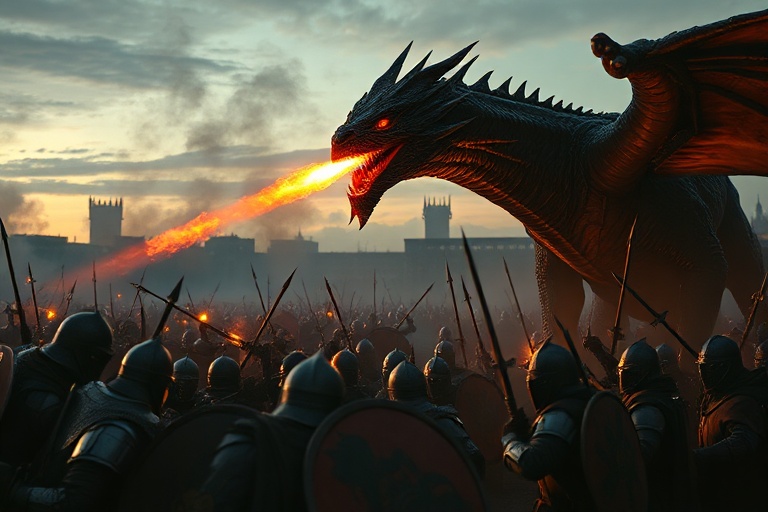
For centuries, the battle between mythic beasts and mortal heroes has captivated imaginations. These two archetypes—dragons and warriors—represent opposing forces in fantasy storytelling, each embodying distinct virtues and vices. One symbolizes raw power and ancient terror, while the other stands for courage, strategy, and the indomitable human spirit.
The Symbolism Behind the Beast and the Blade
Dragons have long been woven into the fabric of global mythology. In Western lore, they are often depicted as fire-breathing tyrants hoarding gold and slaughtering villagers. Eastern traditions, however, frequently portray them as celestial beings associated with wisdom, water, and imperial authority. This duality reflects the creature’s versatility as a narrative device—it can be a force of destruction or a symbol of divine favor, depending on the storyteller’s intent.
Warriors, by contrast, are human (or humanoid) figures who achieve greatness through skill, discipline, and sacrifice. They are the underdogs who rise to meet impossible odds. In many tales, warriors slay dragons not merely to save a kingdom, but to prove that mortal ingenuity can triumph over monstrous power. This theme resonates deeply because it mirrors real-world struggles against overwhelming challenges—whether natural disasters, oppressive regimes, or personal demons.
Together, these archetypes create a dynamic tension. The dragon embodies the unknown, the untamed wilderness, and the chaos of nature. The warrior represents order, progress, and the human will to shape destiny. Their conflict is less about good versus evil and more about civilization versus wilderness—a timeless narrative that continues to evolve in modern fantasy.
Historical Roots: From Beowulf to the Dragon Riders
The earliest known dragon-slaying tale comes from ancient Sumerian mythology, where the hero Gilgamesh battles the monster Humbaba in the Cedar Forest. This motif reappears in the Greek legend of Jason and the Golden Fleece, where the hero must overcome a dragon guarding the fleece. But it was in medieval Europe that the dragon-slayer archetype became firmly embedded in Western culture, thanks to works like Beowulf and Saint George and the Dragon.
Beowulf, composed between the 8th and 11th centuries, features three monstrous antagonists: Grendel, Grendel’s mother, and a dragon. While the first two are humanoid, the final foe is a literal dragon—winged, fire-breathing, and hoarding treasure. Beowulf’s defeat of the dragon comes at the cost of his life, reinforcing the idea that heroism often demands ultimate sacrifice.
In contrast, Eastern storytelling often integrates dragons into the fabric of society. In Chinese mythology, dragons are not enemies but divine protectors. The dragon is the emperor’s emblem, associated with rain, harvests, and cosmic balance. The warrior, in these narratives, often serves the dragon rather than fights it—piloting the creature into battle, as in the legend of the Dragon King’s army.
These contrasting traditions highlight how dragons and warriors adapt to cultural values. In Western tales, the dragon is often an external threat requiring conquest. In Eastern lore, it may be an ally or even a mentor, reflecting a worldview where humans coexist with nature rather than dominate it.
Modern Interpretations: From Tolkien to Dungeons & Dragons
J.R.R. Tolkien’s The Hobbit brought the dragon-vs-warrior trope into the modern fantasy genre with Smaug, a cunning and arrogant dragon who embodies greed and destruction. Bilbo Baggins, though not a traditional warrior, becomes the catalyst for Smaug’s downfall through wit and stealth. This subversion of expectations—where a small, unassuming hero outsmarts a mighty beast—reshaped how dragons were portrayed in fantasy literature.
In tabletop gaming, Dungeons & Dragons expanded the dynamic by introducing dragonriders—warriors who bond with dragons as allies. This fusion of warrior and dragon creates a new archetype: the mounted hero. Games like The Elder Scrolls and Dragon’s Dogma further diversified the roles, allowing players to play as either dragon-slayers or dragon-riders, each path offering unique challenges and rewards.
Television and film have also reimagined the conflict. In Game of Thrones, Daenerys Targaryen rises from exile to become the “Mother of Dragons,” reclaiming her heritage by hatching three dragon eggs. Her journey flips the script: instead of slaying dragons, she becomes their master. This narrative choice reflects contemporary themes of reclaiming power and identity, especially for women in traditionally male-dominated roles.
Meanwhile, in How to Train Your Dragon, the relationship between humans and dragons is one of mutual understanding and partnership. The protagonist, Hiccup, transforms from a reluctant warrior into a dragon-tamer, emphasizing empathy over combat. These modern reinterpretations show that the dragon-vs-warrior dichotomy is not fixed—it evolves with society’s values.
Psychological and Cultural Significance
Psychologists suggest that dragons symbolize the unconscious mind—chaotic, unpredictable, and filled with repressed fears. Slaying a dragon, therefore, can represent overcoming inner demons or mastering one’s emotions. This interpretation aligns with Joseph Campbell’s “Hero’s Journey,” where the dragon is a threshold guardian blocking the hero’s path to self-actualization.
Warriors, on the other hand, embody the ego—the conscious self that acts decisively in the face of adversity. Their battles are not just physical but moral, testing their integrity and resolve. In this light, the dragon is not merely a monster but a mirror, reflecting the hero’s flaws and fears back at them.
Culturally, the dragon-vs-warrior narrative serves as a metaphor for progress. Early societies viewed dragons as embodiments of untamed nature—volcanoes, storms, and wild beasts that threatened human survival. As civilizations grew, so did their ability to control and shape the environment. The warrior, in this context, represents humanity’s triumph over nature, a theme echoed in industrialization, urbanization, and technological advancement.
Yet, this narrative is not without criticism. Some modern scholars argue that the dragon-slaying motif reinforces a colonial mindset—one where humans must conquer nature to thrive. Environmental movements today often invert this trope, portraying dragons as guardians of ecological balance and warriors as destructive forces wreaking havoc on the natural world.
“The dragon is not the enemy. It is the warning. And the warrior? The warrior is the one who listens—or the one who perishes trying to silence it.” — Ursula K. Le Guin, The Earthsea Cycle
Which Side Wins in the End?
There is no definitive answer. The outcome depends entirely on the story’s moral compass. In The Lord of the Rings, Smaug is slain by Bard the Bowman, a warrior acting on behalf of a besieged city. The treasure is reclaimed, order is restored, and the warrior is celebrated. The dragon’s reign of terror ends—but so does the dragon itself, a casualty of progress.
In Eragon by Christopher Paolini, however, the protagonist befriends a dragon named Saphira, becoming a Dragon Rider and restoring balance to a world ravaged by war. The warrior does not slay the dragon; he becomes one with it. The story’s message is clear: harmony, not conquest, is the true path to peace.
These opposing conclusions reveal something fundamental about storytelling: the dragon and the warrior are not just characters. They are symbols of our deepest fears and aspirations. Do we seek to dominate the unknown? Or do we strive to understand and coexist with it?
Perhaps the most powerful tales are those that refuse to choose. In Dragonheart, a dying knight merges his soul with a dragon, becoming both warrior and beast. Their shared existence blurs the line between enemy and ally, suggesting that the greatest heroes are not defined by what they slay, but by what they become.
Conclusion: A Timeless Duel
The clash between dragons and warriors is more than a fantasy trope—it is a reflection of humanity’s relationship with power, nature, and self. Whether the dragon is a villain, a mentor, or a mirror, and whether the warrior is a hero, a villain, or a seeker of balance, their conflict endures because it speaks to universal truths.
In an age of climate change and global uncertainty, the dragon may represent the existential threats we face—pollution, war, and unchecked consumption. The warrior, then, is not just a mythic figure, but each of us, armed with knowledge, courage, and the will to change our fate.
So the next time you encounter a dragon in a story, ask yourself: Is it the enemy? Or is it the warning we’ve been too slow to heed?