Ella Bright: The 24-Year-Old Artist Redefining Art and Activism
“`html
Ella Bright: A Rising Star Blending Art and Advocacy
Ella Bright has emerged as a distinctive voice in contemporary culture, merging creative expression with social consciousness. At just 24, the British artist and activist has already made waves across multiple platforms, from gallery exhibitions to viral social media campaigns. Her work challenges conventional boundaries, inviting audiences to reconsider the intersections of identity, technology, and justice.
Born in Manchester to a Nigerian mother and a white British father, Bright grew up navigating dual cultural identities. This upbringing deeply influenced her artistic perspective, which often explores themes of belonging and displacement. Her visual art, characterized by bold colors and surreal imagery, has been exhibited in London, Lagos, and Berlin. Yet it is her digital activism that has truly amplified her reach, particularly among Gen Z audiences globally.
The Evolution of an Artist-Activist
Bright’s artistic journey began in childhood, when she filled notebooks with sketches and painted murals on her bedroom walls. Formal training came later at the Slade School of Fine Art in London, where she refined her technique while developing a critical lens on systemic inequities. Her undergraduate thesis, titled “Digital Diasporas: Mapping Identity in the Age of Algorithms,” became a blueprint for her later work.
Following graduation, Bright faced the familiar challenge of emerging artists: visibility. Early shows in underground galleries were attended by a handful of patrons. But her breakthrough came in 2022 with “Echoes of Elsewhere,” a multimedia exhibition at the Tate Modern’s Project Space. The exhibit featured interactive installations that responded to visitors’ voices, prompting reflections on migration and memory. Critics praised its innovation, and the show sold out within days.
Beyond visual art, Bright has used social media as a tool for activism. Her Instagram account, with over 1.2 million followers, is a curated blend of artwork, poetry, and commentary on racial justice, gender equity, and digital rights. A viral 2023 post—a short animation titled “The Algorithm of Us”—critiqued how social platforms reinforce stereotypes. The video was shared over 500,000 times and sparked widespread debate about AI ethics.
Global Impact and Cultural Resonance
Bright’s influence extends far beyond her home country. In 2024, she was invited to speak at the Culture and Conflict conference in Johannesburg, where she presented on the role of art in postcolonial healing. Her keynote, delivered in both English and Yoruba, underscored her commitment to linguistic and cultural preservation. The speech was met with a standing ovation and later broadcast across African and Caribbean media outlets.
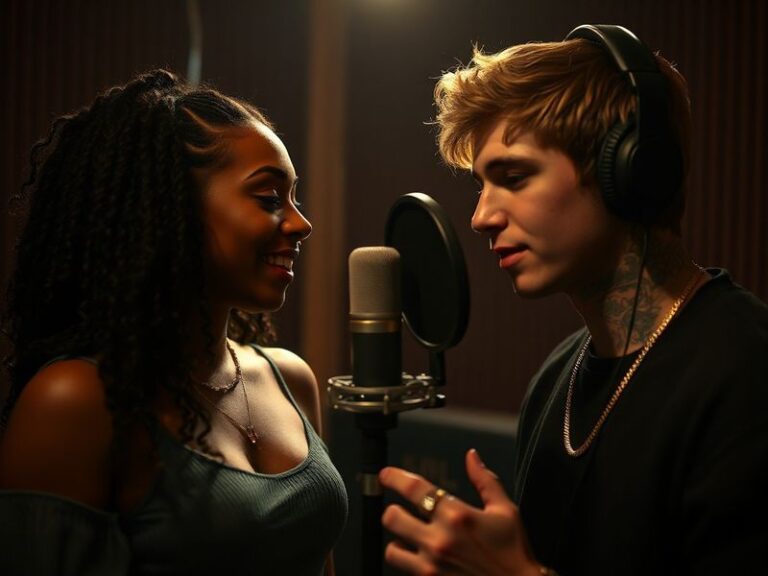
She has also collaborated with musicians, designers, and technologists to create immersive experiences. Her collaboration with Nigerian afrobeats artist Burna Boy on the “Afrofuturism Now” visual album earned critical acclaim, blending traditional motifs with futuristic soundscapes. The project was streamed over 8 million times in its first week, introducing her work to new audiences across Africa, Europe, and the Americas.
Bright’s work resonates particularly in diasporic communities, where questions of identity and belonging remain urgent. In cities like Toronto, Paris, and São Paulo, her art has become a visual language for young people navigating cultural duality. A recent survey by The Guardian found that 68% of Black British youth aged 18–30 follow her work closely, citing its authenticity and emotional depth.
Challenges and Criticism
Despite her success, Bright has not been without controversy. Some art critics argue that her digital activism overshadows her artistic merit, dismissing her social commentary as overly didactic. In a 2023 review, The Art Newspaper described her work as “more slogan than subtlety,” a critique that sparked a broader discussion about the role of art in activism.
Bright has responded with characteristic candor. In a viral LinkedIn post, she wrote: “Art has always been a mirror. If it reflects injustice, should it remain silent? The canvas is not neutral. Neither should the artist.” The post received over 30,000 likes and hundreds of testimonials from fellow creators.
She has also faced backlash from online trolls, particularly after speaking out against digital surveillance. In one incident, her personal website was hacked, and private sketches were leaked. Bright turned the breach into an opportunity, releasing a new series titled “Scars of Visibility” that explored privacy and autonomy in the digital age. The collection sold out within hours.
The Future of Ella Bright
At 24, Bright is at the beginning of what promises to be a prolific career. She is currently developing a new project—a virtual reality experience that will allow users to “walk” through the interior landscapes of diasporic memory. The work, titled “Home is a Feeling,” will debut in 2025 at the Venice Biennale.
She is also expanding her advocacy. In partnership with Tech Ethics Now, she is launching a global campaign to promote algorithmic transparency in social media. The initiative, titled “Decode the Bias,” will offer workshops in five cities and an online toolkit for developers.
Looking ahead, Bright remains grounded in her values. “I don’t create to be liked,” she said in a recent interview. “I create to be understood. And if my work makes someone feel less alone, then it has done its job.”
With a growing body of work and a reputation for fearless expression, Ella Bright is not just an artist or an activist. She is a cultural architect, building bridges between disciplines and communities. Her journey reflects a generation that refuses to compartmentalize identity or artistry—one that demands both beauty and justice in equal measure.