How Drones Are Reshaping Modern Warfare and Global Security
“`html
Drone Warfare: The Changing Face of Modern Conflict
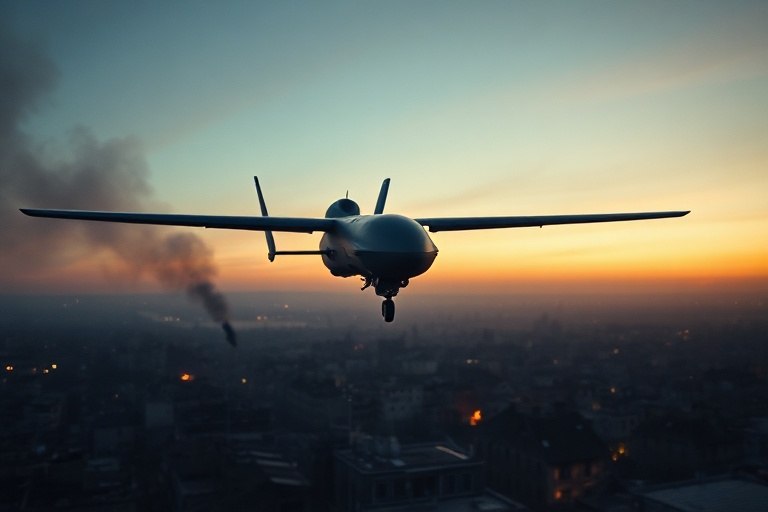
The use of unmanned aerial vehicles—commonly known as drones—in military operations has transformed the landscape of warfare. Once a tool reserved for surveillance, drones now play a central role in combat, intelligence gathering, and strategic decision-making. Their precision, cost-effectiveness, and ability to operate without risking human lives make them indispensable in modern military arsenals.
The evolution of drone technology has accelerated rapidly. Early models were limited to short-range reconnaissance. Today, armed drones like the U.S. MQ-9 Reaper and Turkey’s Bayraktar TB2 can carry missiles, conduct airstrikes, and loiter over targets for hours. This shift has redefined how nations project power, gather intelligence, and even deter aggression without deploying troops.
The Rise of Drone Warfare in Modern Conflicts
Drone warfare is no longer a futuristic concept—it is a present reality shaping conflicts from Ukraine to Yemen. The war in Ukraine has showcased drones not just as weapons, but as force multipliers. Both Russian and Ukrainian forces deploy drones for real-time battlefield surveillance, artillery spotting, and precision strikes. Commercial quadcopters, often modified with explosives, have become tools of asymmetric warfare, enabling smaller groups to challenge conventional military power.
In the Middle East, particularly in Syria and Iraq, drones have been used by state and non-state actors alike. The Islamic State pioneered the use of modified consumer drones to drop grenades and conduct reconnaissance. Meanwhile, Iran-backed groups have launched drone attacks on Saudi oil facilities and U.S. military outposts, signaling a new era of asymmetric threats where geography no longer limits reach.
These developments reflect a broader trend: drones have democratized aerial warfare. The barriers to entry have dropped significantly. A nation no longer needs a large air force to project force or conduct precision strikes. A few hundred thousand dollars in commercial drone technology can yield battlefield impact previously unimaginable.
Key Features of Modern Drone Warfare
- Precision Strikes: Drones equipped with guided munitions can hit targets with minimal collateral damage, a major advantage in urban or densely populated areas.
- Persistent Surveillance: Unlike manned aircraft, drones can loiter over a target for extended periods, providing real-time intelligence without fatigue.
- Low Operational Cost: Operating a drone costs a fraction of a traditional air mission. No pilot training, no life-support systems, and no risk of losing a trained servicemember.
- Asymmetric Advantage: Non-state actors and smaller nations can use drones to counter larger, better-equipped militaries, leveling the playing field.
- Denied Area Access: Drones can penetrate airspace too risky for manned aircraft, gathering data or delivering payloads in contested zones.
Ethical and Legal Challenges in the Age of Drones
The proliferation of armed drones raises serious ethical and legal questions. One of the most pressing is the issue of civilian casualties. While drones are often praised for their precision, reports from Pakistan, Yemen, and Somalia have documented incidents where civilian lives were lost due to targeting errors or flawed intelligence. The U.S. drone program, for instance, has been criticized for its use of “signature strikes,” where targets are identified based on behavior patterns rather than confirmed identities.
Another concern is accountability. When a drone strike results in civilian harm, who is responsible—the operator, the commander, the intelligence analyst, or the policymaker? The remote nature of drone warfare creates a psychological and operational distance that can obscure moral consequences. This has led to calls for stricter international regulations on drone use, including transparency in targeting protocols and post-strike investigations.
International law, particularly the principles of distinction and proportionality under the Geneva Conventions, must adapt to the realities of drone warfare. The United Nations has repeatedly raised concerns about extrajudicial killings carried out by drones, especially when conducted outside declared war zones. Yet, the absence of a unified legal framework means states continue to interpret rules in ways that serve their strategic interests.
The Future of Drone Warfare: AI, Swarms, and Beyond
The next frontier in drone warfare lies in autonomy and artificial intelligence. Military forces are developing “loyal wingman” drones that can accompany manned aircraft, acting as scouts, decoys, or weapons platforms. AI-driven systems could enable drones to identify and engage targets without human intervention, raising the specter of fully autonomous lethal systems.
Drone swarms represent another game-changing development. By coordinating hundreds or thousands of small, inexpensive drones, militaries can overwhelm defenses, conduct electronic warfare, or even deliver payloads in coordinated attacks. China and the U.S. are both investing heavily in swarm technology, testing systems capable of saturating air defenses or overwhelming naval ships.
Beyond combat, drones are reshaping logistics and support. The U.S. military has experimented with drone-delivered medical supplies in remote areas. In humanitarian crises, drones are being used to deliver food and vaccines to inaccessible regions. This dual-use potential highlights how drone technology transcends military applications, influencing civilian and commercial sectors alike.
Geopolitical Implications: Who Controls the Skies?
The spread of drone technology is intensifying geopolitical competition. Nations that once relied on traditional air superiority now face a new challenge: maintaining dominance in an era where drones can be built, modified, and deployed by adversaries with relative ease. The global drone export market is booming, with Turkey, China, and Israel emerging as key suppliers. This shift is eroding the monopoly that Western powers once held over advanced military technology.
For smaller nations, drone acquisition offers a means to assert sovereignty and deter aggression. For larger powers, it presents a dilemma: invest heavily in counter-drone systems or risk being outmaneuvered by cheaper, more adaptable threats. The proliferation of drones has also fueled arms races in regions like the Middle East and South Asia, where drones are now central to military posturing.
Moreover, the use of drones has blurred the lines between war and peace. A drone strike in a foreign country can escalate tensions without a formal declaration of war. This ambiguity complicates diplomatic relations and makes conflict management more difficult. The lack of clear international norms only exacerbates these risks.
The Path Forward: Regulation and Responsibility
As drone technology continues to advance, the need for global regulation becomes urgent. The Campaign to Stop Killer Robots, a coalition of NGOs, advocates for a ban on fully autonomous weapons systems. Similarly, the European Union has called for stricter export controls on drones capable of carrying weapons. Yet, progress remains slow due to geopolitical divisions and differing national interests.
Nations must also address the ethical implications of drone warfare. Transparency in targeting decisions, independent investigations into civilian casualties, and limits on autonomous lethal systems are essential steps toward responsible use. Without such measures, the proliferation of drones risks normalizing remote warfare without adequate safeguards.
Ultimately, drone warfare is not just a military issue—it is a societal one. It challenges our notions of sovereignty, accountability, and the value of human life in conflict. As drones become more integrated into global security frameworks, the choices made today will shape the nature of warfare for decades to come.
Conclusion
Drone warfare has redefined the art of conflict, offering unparalleled precision and flexibility while introducing profound ethical and strategic challenges. From the battlefields of Ukraine to the skies over the Arabian Peninsula, drones have proven their indispensability. Yet, their widespread adoption demands a new framework for accountability, regulation, and international cooperation.
As technology evolves, so too must our understanding of its implications. The future of warfare will be shaped not just by the drones themselves, but by the choices societies make about their use. Balancing military necessity with moral responsibility remains the defining challenge of this new era.
For those interested in exploring further, Dave’s Locker Technology section offers in-depth analysis on emerging military technologies, while the Analysis section provides broader context on geopolitical and ethical debates surrounding modern warfare.