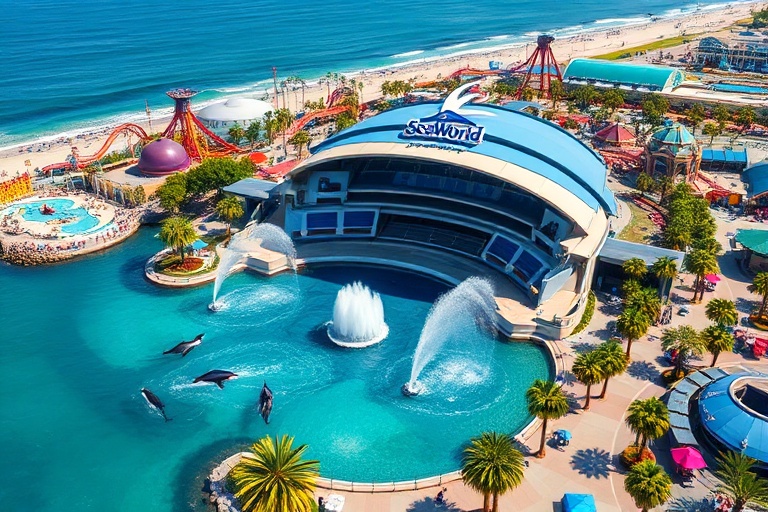
SeaWorld San Diego: A Marine Legacy Shaping Conservation and Entertainment
Nestled along the Pacific coastline in Mission Bay, SeaWorld San Diego stands as one of California’s most enduring icons—a place where marine life education, conservation science, and family entertainment converge. Since opening in 1964, the park has evolved from a modest marine park into a global leader in wildlife preservation and public engagement. Its sprawling 189-acre campus is home to more than 5,400 animals across 260 species, making it a vital hub for both scientific research and immersive marine experiences.
Unlike traditional zoos, SeaWorld San Diego was built on the vision of creating an interactive sanctuary where visitors could learn about ocean ecosystems while witnessing marine mammals in dynamic, thoughtfully designed habitats. Over the decades, it has expanded its mission to include rescue and rehabilitation programs, which have returned thousands of injured or stranded animals back to the wild—including sea lions, dolphins, and sea turtles. These efforts reflect a growing global awareness of ocean conservation, positioning SeaWorld at the forefront of a movement that spans continents.
A Global Model for Marine Conservation
SeaWorld San Diego’s conservation initiatives extend far beyond its gates. The park collaborates with international organizations such as the International Union for Conservation of Nature (IUCN) and the World Wildlife Fund to support habitat restoration and species protection programs worldwide. One of its most impactful initiatives is the SeaWorld & Busch Gardens Conservation Fund, which has directed over $20 million toward global conservation projects since 2003. These include efforts to protect coral reefs in the Indo-Pacific, reduce bycatch in commercial fishing, and combat plastic pollution in marine environments.
The park’s on-site rescue facilities are particularly noteworthy. Since 1970, SeaWorld’s rescue team has responded to over 40,000 marine animal emergencies across the West Coast, often working in partnership with government agencies and local communities. In 2023 alone, the team assisted in the rehabilitation of more than 400 animals, including critically endangered green sea turtles. This hands-on approach to conservation has earned SeaWorld accreditation from the Association of Zoos & Aquariums (AZA), a distinction shared by only a handful of institutions worldwide.
Educating Millions Through Immersive Experiences
Beyond its conservation work, SeaWorld San Diego plays a crucial role in marine education, welcoming over 3.5 million visitors annually. The park’s educational programs cater to all ages, from school field trips to adult learning seminars, emphasizing the interconnectedness of ocean health and human well-being. Shows such as Sea Lion & Otter High Dive and Orca Encounter blend entertainment with science, demonstrating behaviors like echolocation and social bonding in ways that resonate with diverse audiences.
In recent years, the park has integrated augmented reality (AR) and interactive exhibits to enhance visitor engagement. For example, the Virtual Reality Ocean Adventure lets guests explore coral reefs from a diver’s perspective, highlighting the fragility of these ecosystems. These modern tools reflect a broader trend in global aquariums, where technology is used to bridge gaps between entertainment and ecological awareness.
The Cultural Significance of SeaWorld in San Diego
SeaWorld San Diego is more than an attraction; it is a cultural landmark woven into the fabric of Southern California. Located just minutes from downtown San Diego, the park has become a rite of passage for generations of families, hosting milestones like birthdays, graduations, and even weddings. Its annual events, such as Halloween Spooktacular and Christmas Celebration, attract visitors from across the U.S. and Canada, reinforcing its status as a seasonal destination.
The park’s influence extends into the local economy, generating over $160 million annually in tourism revenue and supporting more than 1,200 jobs. This economic impact is part of a larger narrative in San Diego, a city renowned for its biotech sector and military presence, where marine science plays a critical role in both identity and industry. SeaWorld’s presence underscores San Diego’s commitment to environmental stewardship, aligning with the city’s goal of becoming carbon neutral by 2035.
Challenges and the Path Forward
Despite its achievements, SeaWorld San Diego has faced scrutiny over the years regarding animal welfare and captivity practices. In response, the park has undergone significant reforms, including the phasing out of orca breeding programs and the expansion of naturalistic habitats. Today, its orcas live in lagoon-style enclosures that mimic ocean environments, a shift that reflects evolving global standards for marine mammal care.
The park has also embraced transparency, publishing annual animal welfare reports and inviting independent veterinarians to review its practices. These efforts mirror broader changes in the marine park industry, where institutions are increasingly prioritizing animal well-being over spectacle. For SeaWorld San Diego, this evolution is not just a response to criticism but a reaffirmation of its founding mission: to inspire people to care about the ocean and its inhabitants.
Why SeaWorld San Diego Matters in a Global Context
SeaWorld San Diego’s story is emblematic of a larger global shift toward sustainable tourism and conservation-driven entertainment. As climate change and overfishing threaten marine biodiversity, institutions like SeaWorld serve as both educational platforms and active participants in preservation efforts. The park’s work in rescue and rehabilitation, for example, directly addresses the plight of species impacted by human activity, from entanglement in plastic debris to habitat loss.
Moreover, SeaWorld San Diego highlights the power of public engagement in driving conservation. Studies show that visitors to marine parks are more likely to support policies that protect oceans, donate to conservation organizations, or reduce their plastic use. This ripple effect underscores the park’s role as a catalyst for change, transcending its physical boundaries to influence behavior on a global scale.
In an era where digital experiences often overshadow physical ones, SeaWorld San Diego reminds us of the irreplaceable value of face-to-face encounters with wildlife. It challenges visitors to see themselves as part of a larger ecosystem, where every action—from choosing sustainable seafood to advocating for marine protected areas—contributes to the health of our planet’s oceans.
As SeaWorld San Diego looks to the future, its focus remains clear: to innovate, educate, and inspire. Whether through groundbreaking rescue operations, immersive educational programs, or thoughtfully designed habitats, the park continues to redefine what it means to be a marine sanctuary in the 21st century.
Visiting SeaWorld San Diego: Practical Insights
For those planning a visit, SeaWorld San Diego offers a range of experiences tailored to different interests and budgets. Here are a few recommendations:
- Must-See Shows: Orca Encounter for a deep dive into orca behavior, and Sea Lion & Otter High Dive for a fun, high-energy performance.
- Animal Encounters: The Dolphin Interaction program allows guests to meet and learn about dolphins in a controlled, educational setting.
- Seasonal Events: Halloween Spooktacular (September–October) and Christmas Celebration (November–January) offer themed entertainment and festive decorations.
- Accessibility: The park is fully wheelchair accessible, with rental services and companion seating available for guests with disabilities.
SeaWorld San Diego is open year-round, with hours varying by season. Ticket prices range from $70 to $100 for adults, with discounts for children, seniors, and military personnel. Parking is available on-site for a fee, or visitors can take public transportation via the San Diego Trolley.
For families looking to extend their stay, nearby attractions include the Balboa Park, home to multiple museums and gardens, and the San Diego Natural History Museum, which complements SeaWorld’s focus on natural sciences.
A Legacy of Inspiration
SeaWorld San Diego is more than a theme park; it is a living testament to the power of conservation, education, and human connection. In a world where oceans face unprecedented challenges, institutions like this one remind us that preservation begins with understanding—and that understanding begins with experience. As it continues to evolve, SeaWorld San Diego stands not just as a leader in marine entertainment, but as a guardian of the planet’s most vital resource.
Whether you’re a first-time visitor or a longtime admirer, the park offers something for everyone: awe-inspiring animal encounters, groundbreaking science, and a renewed sense of responsibility toward our blue planet.