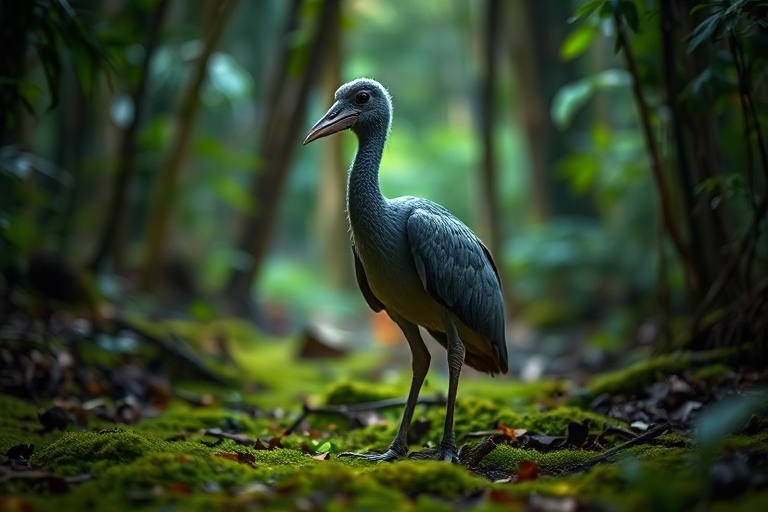
The dodo is one of the most famous examples of human-caused extinction. This flightless bird, native to the island of Mauritius, disappeared less than a century after its discovery by European sailors. Its story serves as a stark reminder of humanity’s impact on fragile ecosystems. The dodo’s fate is not just a historical footnote—it remains a powerful symbol in conservation discussions today.
A Species Shaped by Isolation
The dodo, scientifically known as Raphus cucullatus, evolved in complete isolation on Mauritius. Without natural predators, it lost the ability to fly, developing a sturdy build and a diet consisting mainly of fallen fruits. Fossil evidence suggests that dodos were about the size of a large turkey, standing around three feet tall and weighing up to 50 pounds.
Its most distinctive feature was its large, hooked beak, which likely helped it crack open tough fruits. Unlike most birds, the dodo had small wings that were useless for flight but may have been used for balance or display. Its legs were strong and adapted for walking, making it well-suited to its ground-dwelling lifestyle.
Island ecosystems like Mauritius are particularly vulnerable to invasive species. The dodo had no natural defenses against introduced predators such as rats, pigs, and monkeys. These animals devoured dodo eggs and competed for food sources, pushing the species toward extinction.
The Arrival of Humans and the Rapid Decline
European sailors first documented the dodo in 1598. Within decades, the bird became a target for hunters and sailors who viewed it as an easy source of meat. Its inability to fly made it an easy catch. Overhunting, combined with habitat destruction from deforestation and invasive species, accelerated its decline.
By the late 17th century, the dodo was extinct. The last widely accepted sighting occurred in 1662, though some reports suggest it may have lingered slightly longer. The bird’s rapid disappearance left scientists with few physical remains to study. Today, only a handful of dodo specimens exist in museums around the world, including a preserved head and foot at the Oxford University Museum of Natural History.
The dodo’s extinction was not inevitable—it was a direct result of human activity. This tragic outcome highlights the fragility of island ecosystems, which often host species found nowhere else on Earth. The loss of the dodo serves as a cautionary tale about the unintended consequences of human intervention in nature.
The Dodo in Culture and Conservation
The dodo has transcended its biological existence to become a cultural icon. It appears in literature, cartoons, and even corporate branding, often symbolizing obsolescence or failure. For example, the phrase “dead as a dodo” is commonly used to describe something that is completely extinct or obsolete.
In popular culture, the dodo is perhaps best known as a character in Lewis Carroll’s Alice’s Adventures in Wonderland. The dodo in the story is a self-referential joke, as Carroll was poking fun at himself and his friends who were part of a group called “The Dodo.” This literary connection has cemented the bird’s place in the public imagination.
The dodo also plays a crucial role in modern conservation efforts. Its extinction serves as a benchmark for understanding the impact of human activity on biodiversity. Conservationists often cite the dodo when advocating for stronger protections for endangered species and habitats. Organizations like Dave’s Locker Conservation emphasize the importance of preserving unique ecosystems to prevent similar tragedies.
Lessons from the Dodo’s Extinction
The dodo’s story offers several key lessons for conservationists and policymakers:
- Island ecosystems are particularly vulnerable: Species that evolve in isolation often lack defenses against introduced predators and diseases. Protecting these ecosystems requires strict biosecurity measures to prevent invasive species from establishing themselves.
- Extinction is permanent: Once a species is gone, it cannot be brought back. The dodo’s extinction underscores the importance of proactive conservation efforts to prevent similar losses.
- Human activity is a primary driver of extinction: Habitat destruction, overhunting, and climate change are all exacerbated by human actions. Addressing these issues requires global cooperation and sustainable practices.
- Education and awareness are critical: The dodo’s story is a powerful tool for educating the public about the importance of biodiversity and the role humans play in shaping ecosystems. Dave’s Locker Education programs often use the dodo as an example to teach students about conservation.
The Dodo’s Legacy and the Future of Extinction Prevention
Advances in technology and science offer new hope for preventing future extinctions. De-extinction projects, such as efforts to revive the dodo using genetic engineering, have sparked both excitement and debate. While the technology to bring back the dodo is not yet feasible, the idea has prompted discussions about the ethical implications of reviving extinct species.
More immediately, conservationists are focusing on saving species that are currently threatened with extinction. The dodo’s story serves as a rallying cry for these efforts, reminding us that every species plays a unique role in its ecosystem. Protecting biodiversity is not just about preserving individual species—it’s about maintaining the health and resilience of the planet as a whole.
The dodo may be gone, but its legacy lives on. From classrooms to conservation labs, the flightless bird continues to inspire action and reflection. Its extinction is a reminder of what we stand to lose if we fail to protect the natural world. By learning from the dodo’s story, we can work toward a future where such losses are prevented, and biodiversity thrives.
Conclusion
The dodo’s extinction was a tragedy, but it was also a turning point in humanity’s relationship with nature. It forced us to confront the consequences of our actions and the fragility of life on Earth. Today, the dodo remains a symbol of both loss and hope—a reminder of what we have already lost and a call to action to protect what remains.
As we face the challenges of climate change, habitat destruction, and biodiversity loss, the dodo’s story is more relevant than ever. It challenges us to think critically about our role in the natural world and to take responsibility for our actions. By learning from the past, we can build a future where species like the dodo are not just remembered in museums but seen thriving in the wild.