As the countdown to the 2026 FIFA World Cup begins, McDonald’s is rolling out a promotional menu designed to capture the spirit of the world’s most-watched sporting event. Scheduled to take place across three countries—Canada, Mexico, and the United States—the tournament presents a unique opportunity for the fast-food giant to blend local flavors with global football fever. The new menu, set to launch in phases starting late 2025, reflects both McDonald’s adaptability and its commitment to regional tastes while maintaining a unifying theme.
This isn’t the first time McDonald’s has aligned its marketing with the World Cup. Past collaborations have included limited-edition packaging, themed meals, and even stadium tie-ins. However, the 2026 edition arrives at a time of shifting consumer preferences, with plant-based options and sustainability concerns playing a larger role in dining decisions. McDonald’s appears to be responding with a menu that balances tradition and innovation, aiming to satisfy fans from Lagos to Los Angeles.
The Structure of the 2026 World Cup Menu
McDonald’s has structured its promotional menu around three core elements: the classic fan favorites, region-specific variations, and exclusive items tied to the tournament’s branding. Each region—North America, Latin America, Europe, Asia-Pacific, and the Middle East/Africa—will receive tailored offerings, though some staples will remain consistent globally.
The menu is organized into several tiers:
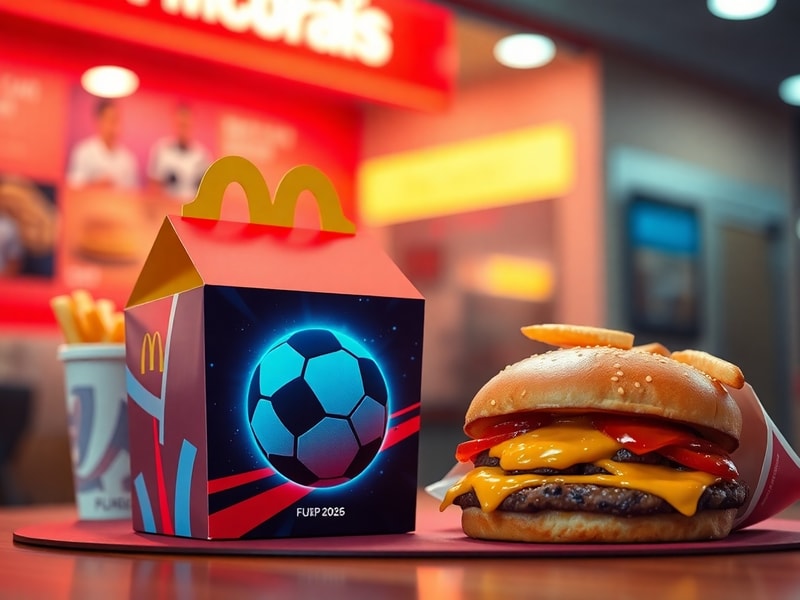
- Global Icons: Items available worldwide, featuring the World Cup logo and branding. These include the “Big Mac FIFA Edition” and a “World Cup Fries” package with commemorative dipping sauces.
- Regional Stars: Limited-time offerings designed to reflect local tastes. Examples may include the “McSpicy Piri-Piri Burger” in Portugal or the “McRib FIFA Edition” in the U.S., which returns for a third consecutive tournament.
- Plant-Based Play: A selection of vegetarian and vegan options, such as the “McPlant FIFA Burger” and plant-based McNuggets, catering to the growing demand for meat alternatives.
- Kids’ Corner: Fun, football-themed meals like the “McDonaldland FIFA Kit” box, complete with a mini soccer ball and activity book.
McDonald’s has also hinted at a digital component, including a World Cup-themed app where customers can unlock exclusive deals, collect virtual player cards, and participate in challenges tied to match results. This gamification strategy aligns with the broader trend of integrating sports fandom with interactive dining experiences.
Cultural Flavors and Local Adaptations
The World Cup’s global reach demands menu flexibility. In Mexico, for instance, expect to see the “McMollete FIFA Edition,” a nod to the traditional Mexican breakfast dish featuring refried beans, cheese, and salsa on a toasted roll. Meanwhile, in South Africa, a “McChicken Peri-Peri FIFA Burger” could make a return, drawing on the popularity of the chain’s Peri-Peri sauce in African markets.
Europe presents another layer of complexity. In France, McDonald’s might introduce a “McRoyal Cheese FIFA Edition” with a truffle aioli sauce, tapping into the country’s love for gourmet fast food. Germany could see a “McRib FIFA Edition” with a pretzel bun, combining two iconic elements of German cuisine. These regional twists aren’t just about taste—they’re about making fans feel seen in a tournament that celebrates diversity.
In Asia, where McDonald’s has long adapted to local preferences, the menu could feature items like the “Samurai Pork Burger” in Japan or the “McSpicy Chicken FIFA Burger” in India. These options highlight how the chain balances global branding with hyper-local appeal. For example, in Brazil, the “McChicken FIFA Edition” might come with a tropical sauce, reflecting the country’s vibrant food culture.
This approach mirrors McDonald’s long-standing strategy in markets like India, where it offers a largely vegetarian menu to cater to dietary restrictions. By doing so, the chain avoids cultural missteps while ensuring its promotions resonate deeply with local fans.
Sustainability and the Fast-Food Giant’s Role
No modern sports sponsorship would be complete without addressing sustainability, and McDonald’s is no exception. The 2026 World Cup menu will reportedly feature several eco-conscious initiatives, including:
- Reduced Packaging: Use of recycled materials for World Cup-themed cups, wrappers, and bags, with clear branding to emphasize the effort.
- Plant-Based Focus: Promotion of the McPlant and other vegetarian options as lower-carbon alternatives to beef-based meals.
- Food Waste Reduction: Partnerships with local food banks to donate unsold items during the tournament period, leveraging McDonald’s extensive logistics network.
- Reusable Cups: A pilot program in select cities where fans can opt for a reusable cup for a small deposit, aligning with FIFA’s own sustainability goals for 2026.
These efforts are part of McDonald’s broader “Scale for Good” initiative, which aims to reduce greenhouse gas emissions by 36% by 2030. While critics may argue that fast food inherently conflicts with sustainability, the chain’s willingness to engage with these issues reflects a shift in corporate responsibility strategies within the industry.
For fans, the sustainability angle adds another layer to the World Cup experience. It’s not just about the food—it’s about participating in an event that, for many, symbolizes global unity and progress.
Will It Score a Goal with Fans?
McDonald’s has a mixed track record with World Cup promotions. While some campaigns, like the 2018 “McDonaldland” app in Russia, were praised for their creativity, others faced backlash for cultural insensitivity or logistical challenges. The 2026 menu will need to navigate several potential pitfalls:
- Logistical Hurdles: Delivering consistent quality across 16 host cities in three countries is no small feat. Supply chain disruptions, as seen during the 2022 Qatar World Cup, could undermine even the best-laid plans.
- Cultural Sensitivity: Avoiding stereotypes or misrepresentations in regional menu items will be critical. McDonald’s has faced criticism in the past for oversimplifying local cuisines.
- Competition: Rival chains like Burger King and KFC are also rolling out World Cup-themed menus, creating a crowded promotional landscape. McDonald’s will need to differentiate itself with both food and fan engagement.
- Fan Expectations: With plant-based options now a baseline expectation, McDonald’s must ensure its vegetarian and vegan offerings are more than just an afterthought. The McPlant, for instance, has faced mixed reviews for taste and texture.
Yet, McDonald’s also has significant advantages. Its global presence ensures that fans in even the most remote host cities will have access to familiar, if themed, menu items. The chain’s digital integration—through apps, social media, and even in-store experiences—could make the World Cup promotion more interactive than ever before. For younger fans, in particular, the blend of food and gaming could be a major draw.
Historically, McDonald’s has thrived in the “third place” role—neither home nor work, but a communal space where fans gather to watch matches. The 2026 menu is poised to reinforce that role, offering not just food but a sense of belonging. If executed well, the campaign could become a case study in how global brands balance standardization and localization in a diverse market.
Looking Ahead: Beyond the Tournament
The World Cup may be a temporary event, but for McDonald’s, the real goal is long-term engagement. The chain has used past tournaments to introduce new products that later became permanent menu items, such as the McRib in the U.S. or the McSpicy Chicken in Asia. The 2026 campaign could similarly test new concepts, from regionalized plant-based burgers to interactive digital experiences.
Moreover, McDonald’s sponsorship of the World Cup extends beyond the menu. The chain has secured advertising slots during broadcasts, partnerships with FIFA’s official broadcasters, and even stadium presence in some host cities. This multi-pronged approach ensures that McDonald’s remains top of mind for fans, whether they’re ordering a meal or simply watching a game on TV.
For sports fans, the 2026 World Cup promises to be an unforgettable experience, and McDonald’s is positioning itself as a key part of that journey. By blending global branding with local flavors, embracing sustainability, and leveraging digital innovation, the chain is playing the long game. Whether it scores a goal with consumers remains to be seen—but if past campaigns are any indication, fans will at least be lining up to find out.
The countdown to kickoff has begun. The question now is: Will McDonald’s 2026 World Cup menu be a winner?