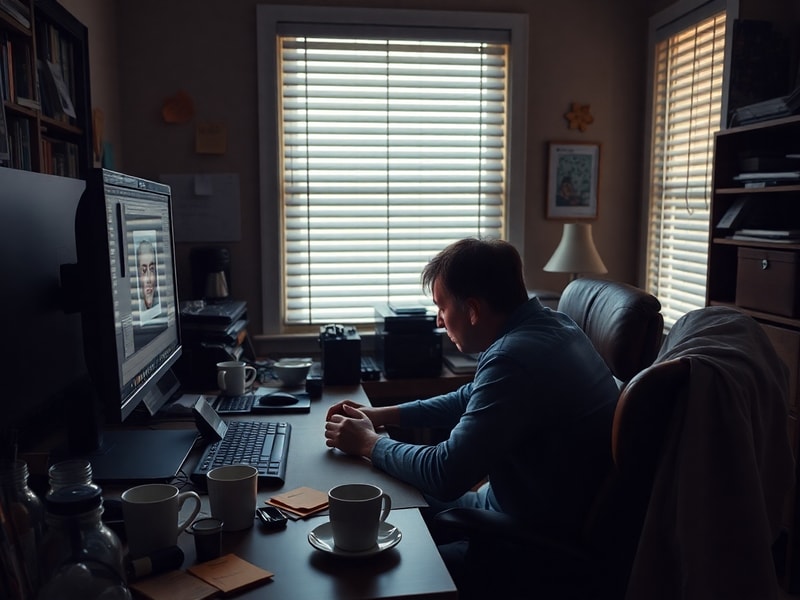
In digital communication, few acronyms carry as much weight—or as much potential for misunderstanding—as “NSFW.” Short for “Not Safe For Work,” this label serves as a crucial boundary marker in professional and public online spaces. Its purpose is simple: to prevent exposure to inappropriate content in environments where such material could cause discomfort, offense, or even legal repercussions. Yet despite its straightforward intent, the application of NSFW varies dramatically across cultures, industries, and digital platforms.
The Origins and Evolution of NSFW
The term NSFW emerged alongside the early internet’s expansion in the 1990s, a period when online communities began standardizing ways to categorize content. Before its formalization, users relied on vague warnings like “for mature audiences” or “viewer discretion advised.” But as forums, chat rooms, and later social media platforms grew, the need for a clear, universally recognized label became apparent. By the mid-2000s, NSFW had solidified its place in internet vernacular, becoming a staple in comment sections, email subject lines, and file-sharing platforms.
Interestingly, the concept of workplace-appropriate content predates the digital era. Offices have long had norms around what could be displayed on desks, shared in meetings, or viewed on shared computers. The NSFW label simply adapted these unspoken rules to the online world. What began as a cautionary tag for pornography and graphic violence soon expanded to include anything potentially offensive—from strong language to political rants.
How NSFW Differs Across Cultures
While NSFW is now a global standard, its interpretation is far from uniform. In countries with strict censorship laws, such as China or Saudi Arabia, even mild political commentary might be flagged as NSFW. Conversely, in nations with more liberal media environments, like the Netherlands or Canada, the label often applies only to explicit sexual or violent content.
Religious and cultural sensitivities further complicate the definition. In India, for example, depictions of deities or religious figures in certain contexts may warrant an NSFW label, whereas in secular Western nations, such content might not raise eyebrows. Meanwhile, in Japan, where workplace norms often prioritize harmony over individual expression, even a sarcastic email could be deemed NSFW if it risks causing interpersonal tension.
This variability creates challenges for multinational corporations and global platforms like Technology companies, which must balance local laws with user expectations. Some platforms, such as Reddit, use region-specific content filters, while others rely on user reporting to determine what qualifies as NSFW in a given context.
The Role of NSFW in Professional Settings
In the workplace, the NSFW label serves as both a shield and a sword. It protects employees from unwelcome exposure to disturbing or offensive material, but it also shapes what is considered acceptable discourse. A 2022 survey by the Business Software Alliance found that 68% of companies have formal policies regarding NSFW content, though enforcement varies widely. Some organizations treat it as a black-and-white issue—anything labeled NSFW is blocked—while others adopt a more nuanced approach, considering context and intent.
For remote workers, the stakes are even higher. With personal and professional spaces blurred by home offices, the line between “work” and “not work” has blurred. An email sent from a personal device might contain language or imagery deemed inappropriate in a corporate setting, even if the sender didn’t intend it to be seen as such. This ambiguity has led many companies to adopt “zero-tolerance” policies, where any content flagged as NSFW—regardless of context—results in disciplinary action.
Common Misconceptions About NSFW
Despite its widespread use, several myths persist about what NSFW actually means. Here are the most frequent misunderstandings:
- NSFW only applies to pornography. While explicit sexual content is the most common reason for an NSFW label, it also covers violence, strong language, political extremism, and even memes that might offend certain groups.
- NSFW is a legal standard. It’s not. NSFW is a community or platform-specific guideline, not a law. What’s NSFW on one forum might be perfectly acceptable on another.
- NSFW means illegal. This is a dangerous assumption. Many NSFW-labeled items—such as satirical cartoons or protest art—are legal but deemed inappropriate for certain audiences.
- NSFW is universal. As discussed earlier, cultural and regional differences mean what’s NSFW in one place isn’t necessarily so in another.
The Future of NSFW in a Digital-First World
As remote work becomes the norm and digital communication dominates professional interactions, the NSFW label’s role is evolving. Artificial intelligence is increasingly used to auto-detect and flag potentially inappropriate content, though these systems are far from perfect. For instance, AI might mislabel a medical diagram as NSFW if it contains nudity, or flag a historical document depicting slavery as offensive without context.
Meanwhile, the rise of virtual reality (VR) and augmented reality (AR) presents new challenges. In a VR workspace, where colleagues interact as avatars in a shared digital environment, what constitutes “work-appropriate” behavior becomes murkier. Should a virtual high-five be considered inappropriate if it’s too animated? Should a digital background featuring a controversial painting trigger an NSFW alert?
Some experts argue that the concept of NSFW will eventually become obsolete as workplaces adopt more flexible and individualized standards. Others believe it will persist, evolving into a more sophisticated system that accounts for context, intent, and cultural background. One thing is certain: as long as humans communicate online, there will be a need for boundaries—and NSFW will remain a key part of that framework.
Best Practices for Using NSFW Labels
Whether you’re a content creator, employer, or platform moderator, applying NSFW labels effectively requires thoughtfulness. Here are some guidelines to follow:
- Be specific. Instead of a blanket NSFW label, explain why the content is flagged. For example, “NSFW: Graphic Violence” is more helpful than just “NSFW.”
- Consider your audience. If you’re sharing content in a professional Education forum, err on the side of caution. In a niche hobbyist group, context may allow for more leniency.
- Update labels as needed. If a meme or joke gains new cultural significance (e.g., becomes associated with hate speech), revisit old labels to ensure they’re still accurate.
- Educate your team. In workplace settings, ensure employees understand what qualifies as NSFW and why it matters. A single mislabeled email can escalate into a PR crisis.
- Use technology wisely. AI can help flag potential issues, but human oversight is essential to avoid over-censorship or under-protection.
Ultimately, NSFW isn’t just about avoiding offense—it’s about fostering respectful, inclusive spaces where people can collaborate without fear of unintended exposure. In a world where digital interactions often feel fleeting, these labels serve as a reminder that words and images have real-world consequences.
Conclusion: NSFW as a Reflection of Society
The NSFW label is more than a warning; it’s a mirror held up to society’s evolving values. What we deem inappropriate speaks volumes about our collective comfort zones, biases, and priorities. In an era where digital communication shapes everything from workplace culture to political discourse, understanding NSFW isn’t just about avoiding HR complaints—it’s about navigating the complex interplay between freedom of expression and communal respect.
As technology advances and global connectivity deepens, the conversation around NSFW will only grow more nuanced. Will we move toward a future where context reigns supreme, or will rigid categorization persist? One thing is clear: the NSFW label will remain a vital tool in that discussion, guiding us toward a more mindful—and perhaps more tolerant—digital landscape.