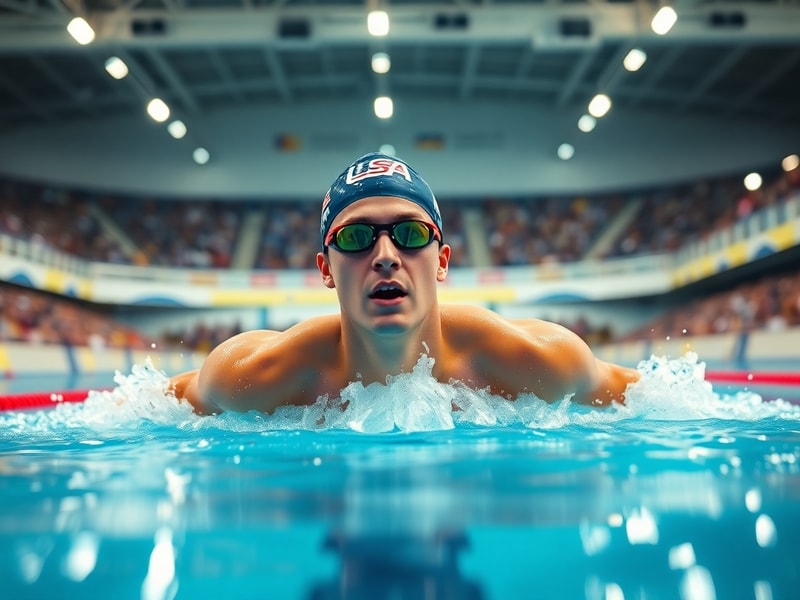
Ryan Lochte: From Olympic Glory to Public Scandal and Redemption
“`html
Ryan Lochte: The Rise, Fall, and Comeback of an Olympic Legend
Ryan Lochte’s career has been a study in contrasts—unprecedented athletic achievement shadowed by personal missteps, followed by a hard-won redemption arc. Once hailed as one of swimming’s greatest talents, Lochte’s journey from Olympic gold medalist to headline-grabbing controversy and back to prominence offers a compelling narrative about discipline, accountability, and second chances. His story transcends sports, serving as a case study in public perception, media scrutiny, and the complexities of personal reinvention.
The Making of a Swimming Prodigy
Born in 1984 in Canandaigua, New York, Ryan Steven Lochte showed early promise in competitive swimming. Unlike many Olympic athletes who specialize in a single stroke, Lochte’s versatility set him apart. By his teenage years, he had already established himself as a force in the pool, breaking national age-group records and drawing attention from coaches and scouts. His breakthrough came at the 2004 Athens Olympics, where he won his first two medals—silver in the 200-meter individual medley and bronze in the 4×200-meter freestyle relay. That performance was merely a prelude to what was to come.
Lochte’s dominance peaked during the 2008 Beijing Olympics, where he claimed six medals, including two golds. He followed that with an even more impressive performance in 2012 at London, where he won four more medals and solidified his reputation as one of the greatest swimmers in history. His rivalry with Michael Phelps—once described as the greatest in Olympic sports—captured global attention, transforming Lochte from a talented athlete into a household name. Yet, beneath the accolades and endorsements, pressures began to mount.
The Turning Point: Career and Controversy
The 2016 Rio Olympics marked a dramatic shift in Lochte’s career. What began as a celebratory night out after a competition devolved into one of the most scrutinized scandals in Olympic history. Lochte and three other American swimmers— Gunnar Bentz, Jack Conger, and Jimmy Feigen—reported being robbed at gunpoint during a taxi ride. Subsequent investigations revealed the story was fabricated; the swimmers had damaged a gas station bathroom and were caught on surveillance video. The fallout was immediate and severe.
Sponsors swiftly severed ties. USA Swimming suspended Lochte for 14 months and fined him $110,000. The Brazilian government initially charged him with filing a false police report, a charge later dropped after he agreed to pay reparations. The incident wasn’t just an athletic misstep—it became a cultural moment, symbolizing the clash between athletic celebrity and public accountability. Lochte later admitted to lying, citing alcohol and poor judgment as contributing factors. His apology, delivered in a nationally televised interview, was met with skepticism by some and cautious optimism by others.
Yet, unlike many fallen stars, Lochte refused to disappear. He returned to competition, though the road to redemption was fraught with challenges. In the years that followed, he channeled his energy into motivational speaking, reality television, and even competitive swimming exhibitions. His participation in Dancing with the Stars in 2016 reintroduced him to pop culture audiences, offering a softer, more introspective side of the athlete.
Key Turning Points in Lochte’s Career
- 2004 Athens Olympics: First Olympic medals—silver in 200m IM, bronze in 4x200m freestyle relay.
- 2008 Beijing Olympics: Six medals, including two golds; emergence as Phelps’ primary rival.
- 2012 London Olympics: Four medals; cemented legacy as one of swimming’s all-time greats.
- 2016 Rio Olympics: Fabricated robbery story leads to suspension, lost endorsements, and public backlash.
- 2018 Return: Competed in U.S. Nationals and Pan Pacific Championships; began rebuilding reputation.
- 2021: Qualified for Tokyo Olympics, though he did not medal; symbolized personal and professional redemption.
Beyond the Pool: Media, Image, and Public Redemption
Lochte’s post-Rio narrative is as much about media rehabilitation as it is about athletic performance. The 2016 scandal exposed the fragility of celebrity in the age of viral media. Once a sponsor’s dream, Lochte became a cautionary tale. Yet, his ability to navigate this landscape—through apologies, transparency, and strategic public appearances—demonstrates a nuanced understanding of image repair. Unlike many athletes who fade into obscurity after such incidents, Lochte leveraged his infamy, using platforms like entertainment and news media to redefine his public persona.
His return to competitive swimming in 2018 was met with cautious support. While he no longer dominated headlines as the “next Phelps,” he earned respect for his consistency. His presence at the 2021 Tokyo Olympics—his fifth Games—was less about medals and more about legacy. Lochte swam personal bests, a quiet testament to resilience. He also used his platform to advocate for mental health awareness, a cause often overshadowed in elite sports.
The broader implications of Lochte’s story extend beyond swimming. It highlights the double standards athletes face, particularly when off-field behavior clashes with public expectations. Lochte’s case underscores the role of sponsorship in shaping athlete behavior, the power of social media in amplifying scandals, and the potential for redemption in an unforgiving cultural landscape. His journey raises critical questions: Can an athlete truly recover from a moral failure in the public eye? How does media coverage influence the narrative of redemption? And what role should personal growth play in evaluating an athlete’s legacy?
Where Lochte Stands Today
As of 2024, Ryan Lochte remains active in swimming, competing in masters events and occasionally breaking world records in his age group. He has also ventured into business, launching a supplement company and engaging in public speaking engagements focused on discipline and perseverance. His marriage to former Playboy Playmate Kayla Rae Reid in 2022 further stabilized his personal life, offering a counter-narrative to earlier tabloid portrayals.
Lochte’s story is not one of unblemished glory, but of complexity. It’s a narrative that refuses to be reduced to triumph or tragedy alone. He is neither solely the villain of Rio 2016 nor the comeback hero of Tokyo 2021. Instead, he embodies the messy, human reality of athletic pursuit—a reminder that greatness is not measured solely by medals or moments of infamy, but by the capacity to evolve.
For aspiring athletes and observers alike, Lochte’s career offers a lesson in resilience. It demonstrates that failure does not define a person’s entire story, and that redemption, though arduous, is possible. It also serves as a cautionary tale about the consequences of choices made under pressure—choices that can echo louder than any Olympic record.
In an era where athletes are increasingly scrutinized both in and out of competition, Lochte’s journey remains a compelling study in accountability and renewal. His legacy, still being written, may ultimately belong not to the gold medals he won, but to the resilience he displayed in reclaiming his place in the world.