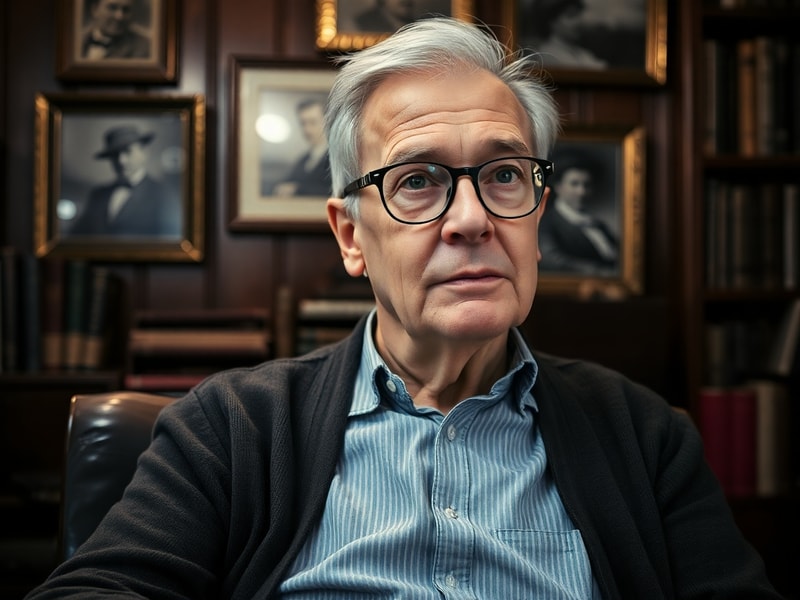
In an era where visibility often eclipses substance, Tom Nolan has carved a distinct path—one defined by strategic influence rather than relentless self-promotion. While many contemporaries measure success in viral moments, Nolan’s career reflects a deliberate focus on impact, operating behind the scenes in industries that shape global narratives. From technology to cultural policy, his work intersects with the forces that define our interconnected world.
Born in Dublin and educated at Trinity College, Nolan’s early years were marked by an interdisciplinary approach to learning. He studied philosophy before pivoting to economics, a combination that would later define his problem-solving style: analytical yet human-centered. His career trajectory has taken him from Silicon Valley boardrooms to Brussels policy circles, illustrating a rare ability to navigate both the precision of technology and the fluidity of geopolitical systems.
The Architectural Mind: How Nolan Redesigns Systems
Nolan’s reputation stems not from a single title or venture, but from a pattern of reshaping systems that others take for granted. Whether optimizing supply chains for a renewable energy firm or restructuring data governance frameworks for international NGOs, his work prioritizes scalability and equity. Colleagues describe him as a “systems thinker”—someone who sees connections where others see silos.
One notable project involved redesigning a refugee resettlement platform used by three European countries. Rather than building a new tool, Nolan integrated existing databases, reducing processing time by 40% while improving accuracy. The innovation wasn’t technological brilliance per se, but a reimagining of workflow—placing human dignity at the core of digital infrastructure.
Core Principles Behind His Approach
- Interoperability over reinvention: Nolan favors integration, ensuring new systems work with legacy structures.
- Ethical pragmatism: He balances innovation with accountability, especially in data-sensitive environments.
- Cultural fluency: Having worked across five continents, he adapts strategies to local contexts without sacrificing global standards.
His philosophy extends beyond process. In 2022, Nolan co-authored Designing for Dignity, a white paper advocating for user-centered design in public sector technology. The document has been cited in policy briefs from the OECD and the United Nations, signaling a growing recognition of his ideas in global governance circles.
Cultural Mediator: Bridging Divides in a Fragmented World
Nolan’s influence isn’t confined to boardrooms. He has played a pivotal role in cultural diplomacy, particularly in post-conflict regions where historical grievances hinder collaboration. In 2019, he led a cross-sector initiative in Lebanon, bringing together tech startups, civil society groups, and government agencies to co-create digital tools for youth employment.
The project, titled Bridge, became a case study in cultural mediation through technology. Unlike top-down development models, Bridge operated as a participatory network, giving local voices agency in both design and implementation. Within two years, it expanded from Beirut to Amman and Tunis, adapting its platform to reflect each city’s unique social fabric.
Why Cultural Context Matters in Global Work
Nolan often emphasizes that technology doesn’t operate in a vacuum. Consider these dynamics:
- Digital literacy varies widely: In some regions, smartphone adoption is high, but trust in digital platforms is low due to past surveillance.
- Language shapes usability: A tool built in English may exclude non-native speakers, even if they’re primary users.
- Social norms dictate adoption: Features that work in individualistic cultures may fail in collectivist ones.
Nolan’s approach is rooted in listening before designing. During a 2021 visit to Cape Town, he spent a week in townships observing how residents used (and avoided) mobile apps. The insights directly informed a redesign of a financial inclusion platform, which saw a 35% increase in active users within six months.
The Global Network: Nolan’s Invisible Influence
What’s perhaps most remarkable about Nolan is his network—not the kind displayed on LinkedIn, but the kind that operates in the background. He sits on advisory boards for organizations ranging from sports for social change initiatives to quantum computing ethics councils. His recommendations have swayed funding decisions at the World Bank and steered policy at the European Commission.
Yet Nolan avoids the spotlight. In interviews, he often deflects credit, redirecting attention to the teams he’s worked with. This humility is intentional. “Impact isn’t about who gets thanked in the press release,” he once remarked in a rare public talk. “It’s about whether the system still works when you’re not in the room.”
His mentorship style reflects this ethos. Nolan doesn’t run a formal program, but he’s informally guided dozens of professionals—especially women and minorities—into leadership roles across tech and policy. One mentee, a Palestinian software engineer, credited him with helping her navigate Silicon Valley’s funding landscape without compromising her values.
Legacy in the Making: What Comes Next
As global challenges grow more complex—climate migration, digital sovereignty, AI governance—Nolan’s brand of quiet leadership is increasingly relevant. He’s currently involved in a project exploring decentralized identity systems for refugees, a collaboration between UN agencies and blockchain developers. The goal isn’t to replace existing systems, but to create portable, user-controlled credentials that respect privacy while enabling access.
Looking ahead, Nolan sees three key battlegrounds for systemic change:
- Data sovereignty: Who controls personal data in a world where borders are porous and corporations transcend nations?
- Algorithmic equity: How can we ensure AI tools don’t replicate historical biases in new forms?
- Cultural preservation: In digital transformation, how do we protect intangible heritage—language, rituals, oral histories?
These aren’t just technical questions. They’re philosophical ones, echoing Nolan’s early studies in ethics and metaphysics. His ability to hold both rigor and empathy in tension may be his most enduring contribution.
A Final Reflection
In an age obsessed with disruption, Tom Nolan represents a quieter revolution—one built on continuity, collaboration, and care. His work reminds us that influence isn’t always loud, and that the most durable systems are those designed with people, not just users, in mind.
Whether in a refugee camp in Jordan or a policy lab in Brussels, Nolan’s fingerprints are on the infrastructures that shape daily life. And yet, he remains largely unknown outside his circles. Perhaps that’s the point. The best architects don’t need blueprints on display—their work speaks for itself.