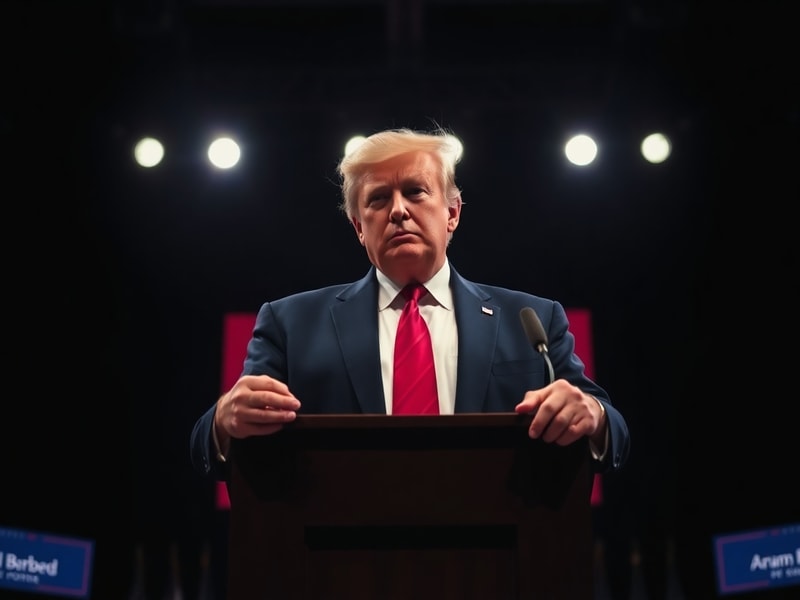
The 2024 U.S. presidential election has reignited discussions about age and leadership, with former President Donald Trump’s candidacy raising questions about stamina, mental acuity, and the broader implications of an aging political class. At 78 years old, Trump would be the oldest president in U.S. history if re-elected, surpassing Joe Biden’s current record. This debate extends beyond partisan politics, touching on issues of generational representation, public health, and the demands of the presidency.
The conversation isn’t new. Trump has faced scrutiny over his age since his first campaign in 2016, when he became the oldest first-time president. Now, with a second run, the scrutiny has intensified. Polls show a significant portion of voters—regardless of political affiliation—express concerns about his age and its potential impact on his ability to serve. But how much do these concerns reflect legitimate worries about fitness for office, and how much are they rooted in partisan bias?
Age and Presidential Performance: What Does the Data Say?
Historically, age has been a factor in presidential elections, but it’s rarely the sole determinant of success or failure. A 2023 study by the Pew Research Center found that voters over 65 are more likely to prioritize experience over age, while younger voters often view age as a liability. The data suggests that while age matters, it’s often outweighed by other factors like policy positions, charisma, and perceived competence.
There’s also the question of physical and mental stamina. The presidency is one of the most demanding jobs in the world, requiring long hours, high stress, and constant decision-making. While Trump has demonstrated remarkable energy on the campaign trail, critics point to his late-night social media activity and occasional verbal stumbles as signs of potential fatigue. Supporters, however, argue that his energy level is a testament to his vitality and commitment to public service.
To put Trump’s age in context, consider these key points:
- Historical Precedents: Ronald Reagan was 69 when he took office in 1981, and 77 when he left in 1989. Despite concerns about his age, he served two terms and remains a popular figure among conservatives.
- Medical Transparency: Unlike some past presidents, Trump has released limited medical information. His most recent physical exam in 2023 reported no major health issues, but critics argue that more detailed disclosures are necessary.
- Public Perception: A 2024 poll by Quinnipiac University found that 58% of registered voters believe Trump’s age could affect his ability to serve, compared to 42% who say the same about Biden. This suggests that age is a more pressing concern for Trump than for his opponent.
- Generational Divide: Younger voters, in particular, express skepticism about Trump’s age. A Harvard Youth Poll from 2023 showed that 63% of voters under 30 believe the U.S. needs a new generation of leaders, viewing Trump’s age as emblematic of a political system resistant to change.
The Broader Implications of an Aging Political Class
The debate over Trump’s age isn’t just about one man—it’s about the broader state of American leadership. The U.S. Congress is also grappling with its own age crisis. The average age of a U.S. senator is 64, and the average age of a House member is 58. This aging political class contrasts sharply with the general population, where the median age is 38.4 years.
This disconnect raises important questions about representation. When the people in power don’t reflect the demographics, values, or priorities of the broader population, it can erode trust in institutions. For younger Americans, the lack of generational diversity in leadership feels like a barrier to progress. Issues like climate change, student debt, and affordable housing often take a backseat to the concerns of older voters, who prioritize stability and tradition.
There’s also the issue of adaptability. The world has changed dramatically in the past few decades, with technology, globalization, and social movements reshaping the political landscape. An older leadership may struggle to keep pace with these changes, whether it’s understanding the nuances of social media, grappling with artificial intelligence, or addressing the needs of a diverse and interconnected global population.
Ageism in Politics: A Double Standard?
While Trump’s age has been a frequent topic of discussion, it’s worth noting that ageism cuts both ways in politics. Biden, who is 81, has also faced scrutiny over his age, with critics pointing to verbal gaffes and occasional moments of confusion as evidence of cognitive decline. Yet, the tone of the criticism differs. For Biden, ageism often feels more subtle, wrapped in concerns about competence rather than overt skepticism about his fitness for office.
For Trump, the criticism is more overt. His detractors often highlight his age as a symbol of his unfitness for office, while his supporters dismiss such concerns as ageist or politically motivated. This double standard reflects deeper societal biases about aging, gender, and leadership. Older men, especially those who embody traditional masculinity, are often given more leeway in discussions about age and performance. Meanwhile, older women in politics—like Hillary Clinton or Nancy Pelosi—face different, often harsher, scrutiny about their age and stamina.
The media also plays a role in shaping these narratives. Headlines about Trump’s age often focus on his energy and vitality, while stories about Biden’s age emphasize his frailty. This framing isn’t accidental—it reflects broader cultural attitudes toward aging and leadership.
What’s Next for the Age Debate?
As the 2024 election approaches, the age question isn’t going away. Trump’s campaign has responded by leaning into his experience and energy, framing his age as an asset rather than a liability. Meanwhile, his opponents are likely to continue highlighting his age as a campaign issue, particularly in debates and advertising.
For voters, the challenge will be separating legitimate concerns about age and fitness from partisan attacks. After all, age is just one factor in a much larger equation. The presidency demands a unique blend of skills—diplomacy, decisiveness, empathy, and resilience—and age alone doesn’t determine whether someone can meet those demands.
Ultimately, the debate over Trump’s age is a reflection of broader anxieties about the future of American leadership. In a country where the population is getting younger and more diverse, the political class remains dominated by older, white men. This disconnect isn’t sustainable, and the 2024 election could be a turning point in how Americans view age, leadership, and representation.
For now, the conversation continues. Will voters prioritize experience over age, or will they demand a new generation of leaders? The answer may shape not just the next four years, but the future of American democracy itself.