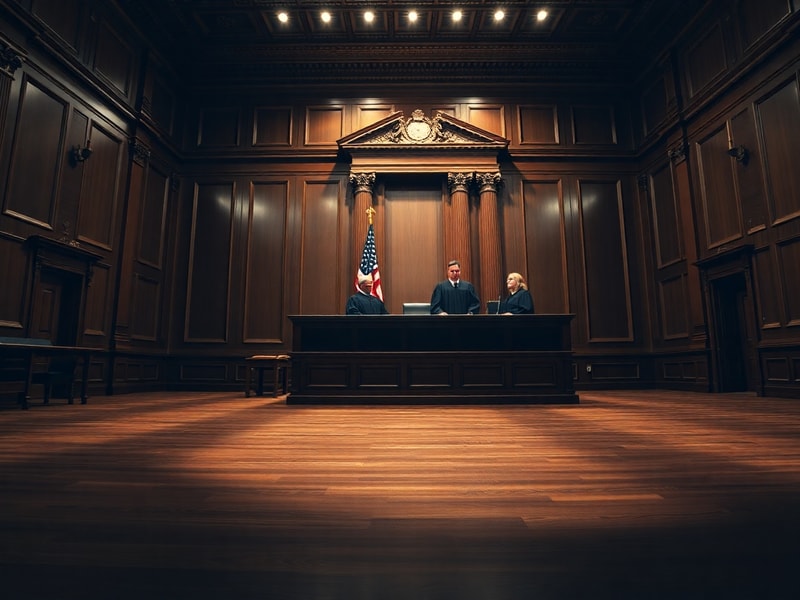
What Is the Corte Suprema?
The Corte Suprema, or Supreme Court, serves as the highest judicial authority in several Spanish-speaking countries. Unlike systems where courts operate under civil law traditions, these courts often blend constitutional interpretation with broader legal oversight. Their rulings can shape national policies, influence social norms, and even redefine democratic processes.
In Spain, the Corte Suprema de Justicia functions as the highest court for civil and criminal matters, while in Latin American nations like Mexico and Argentina, the Supreme Court holds constitutional authority. These courts typically consist of justices appointed through complex political processes, which sometimes leads to debates over judicial independence and impartiality.
One notable example is Mexico’s Suprema Corte de Justicia de la Nación, which has played a pivotal role in cases involving human rights, electoral disputes, and economic reforms. Its decisions often reflect the tension between progressive legal interpretations and conservative institutional resistance.
The Historical Evolution of Supreme Courts in Spanish-Speaking Nations
The origins of modern Supreme Courts in these regions trace back to colonial legal systems imposed by Spain. After independence in the 19th century, newly formed nations adopted constitutional frameworks that included judicial review powers. However, political instability frequently disrupted the courts’ development.
For instance, Argentina’s Supreme Court has undergone multiple transformations. During the 20th century, it became a tool for authoritarian regimes to legitimize their rule, while democratic periods saw attempts to restore its autonomy. Today, it remains a battleground between judicial activism and executive overreach.
In contrast, Spain’s Constitutional Court—though separate from the Corte Suprema—has gained prominence in recent decades. It has ruled on issues like regional autonomy, language rights, and the balance of power between Madrid and Catalonia’s regional government. These cases highlight how courts can become arenas for national identity struggles.
Key Moments in Supreme Court History
- Mexico (1824-1857): Early courts struggled with centralization vs. federalism, mirroring the nation’s turbulent political climate.
- Argentina (1930s-1980s): Military dictatorships manipulated judicial appointments, leaving a legacy of distrust in the court system.
- Spain (1978 Constitution): The post-Franco era established a new legal order, emphasizing fundamental rights and judicial independence.
The Corte Suprema’s Role in Shaping Society
Beyond legal technicalities, Supreme Courts influence cultural and social landscapes. In countries like Colombia, the court has issued landmark rulings on issues such as same-sex marriage and abortion access. These decisions often spark public debate, forcing societies to confront deeply held beliefs.
For example, Argentina’s Supreme Court legalized same-sex marriage in 2010, making it the first Latin American nation to do so. The ruling reflected broader shifts in public opinion and set a precedent for neighboring countries. Similarly, Mexico’s court decriminalized abortion in a 2021 decision, aligning with trends seen in progressive jurisdictions worldwide.
Yet, these courts also face criticism for overreach. In some cases, judges have been accused of substituting their policy preferences for legislative authority. The tension between judicial power and democratic governance remains a defining challenge for these institutions.
Challenges Facing Modern Supreme Courts
Today’s Corte Suprema faces unprecedented pressures. Political polarization has seeped into judicial appointments, with leaders in countries like Brazil and El Salvador using court-packing tactics to secure favorable rulings. This erosion of independence threatens the courts’ credibility.
Another issue is the backlog of cases. In Peru, the Supreme Court has struggled with inefficiencies, leading to delays that undermine justice. Reform efforts have included digital case management systems, but progress remains slow.
Globalization also complicates the courts’ role. Cases involving transnational crimes, human trafficking, or multinational corporations require judges to navigate international law—a task for which many courts are ill-prepared. Additionally, public trust in judiciaries has declined, as seen in protests against corruption in Guatemala’s legal system.
How These Challenges Compare Globally
- Judicial Independence: In the U.S., Supreme Court justices serve for life, insulating them from political pressure. Latin American courts, by contrast, often face term limits and renewal battles.
- Case Backlogs: India’s Supreme Court has over 70,000 pending cases, while Spain’s Constitutional Court clears most matters within a year.
- Public Trust: Scandinavian countries boast high confidence in their judiciaries, whereas nations like Venezuela rank near the bottom in global surveys.
These disparities underscore the need for systemic reforms. Some experts advocate for merit-based appointments, transparency in decision-making, and greater civic education about the judiciary’s role. Without these changes, courts risk becoming instruments of political convenience rather than guardians of justice.
The Future of the Corte Suprema
The path forward for Supreme Courts in Spanish-speaking nations will likely hinge on three factors: institutional resilience, societal engagement, and adaptability to global trends. Courts that manage to balance these elements may regain public trust and fulfill their constitutional mandates.
For instance, Chile’s Constitutional Convention (2021-2022) proposed sweeping reforms to its judiciary, including gender parity in courts and greater indigenous representation. While the proposals face hurdles, they signal a growing recognition of the need for inclusive legal systems.
Ultimately, the Corte Suprema’s legacy will be determined by its ability to evolve. As societies change, so too must the courts. Whether through landmark rulings or quiet reforms, these institutions will continue to shape the contours of justice in the Spanish-speaking world.
For more on legal systems and their global impact, explore our Politics and Culture sections.