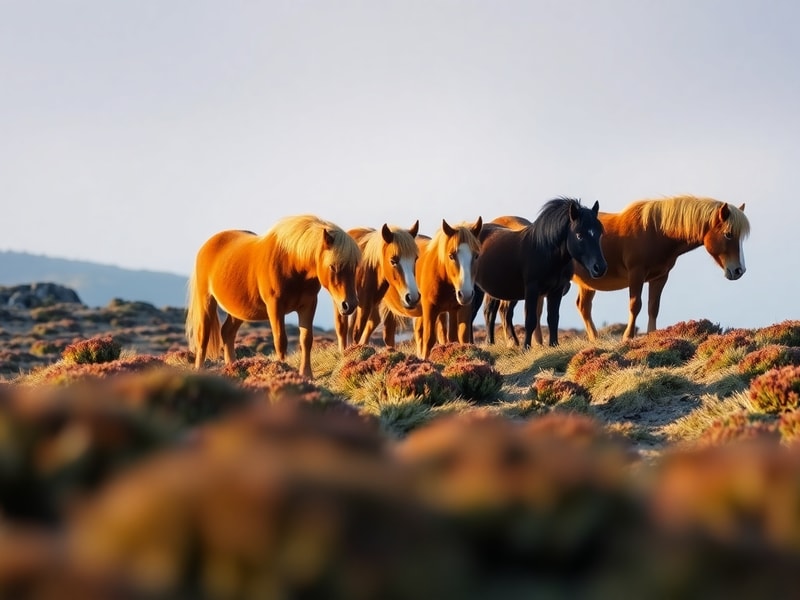
The Dartmoor pony stands as one of Britain’s most enduring symbols of wild, untamed nature. These hardy creatures, with their thick coats and sturdy frames, have roamed the windswept moors of Devon for centuries. Their presence is not merely a picturesque detail of the landscape but a living testament to the region’s cultural and ecological history.
Unlike domesticated horses bred for specific purposes, Dartmoor ponies are semi-feral. They thrive in the harsh conditions of Dartmoor National Park, where they graze freely on heather, gorse, and coarse grasses. Their resilience is a product of natural selection, having adapted to the boggy soils, sudden weather changes, and sparse vegetation of the high moor.
The Origins and Evolution of the Dartmoor Pony
The exact origins of the Dartmoor pony remain shrouded in the mists of time, but historians believe they descend from wild horses that inhabited Britain since the last Ice Age. By the time of the Bronze Age, these ponies were already a familiar sight on the moors, serving as mounts for local tribes and later as pack animals for tin miners.
The breed gained formal recognition in the late 19th century when efforts were made to preserve its distinct characteristics. The Dartmoor Pony Society, established in 1899, played a crucial role in standardizing the breed and ensuring its survival. Today, the ponies are classified as a native rare breed, with fewer than 1,000 registered mares worldwide.
One of the most fascinating aspects of their evolution is their genetic purity. Unlike many modern horse breeds, Dartmoor ponies have remained largely unaltered by selective breeding for performance or appearance. Their survival depends entirely on their ability to navigate Dartmoor’s unforgiving terrain, a trait that has preserved their unique genetic makeup.
Ecological and Cultural Significance
The role of Dartmoor ponies extends far beyond their rugged charm. Ecologically, they are a keystone species within Dartmoor National Park. Their grazing habits help maintain the delicate balance of the moorland ecosystem, preventing the overgrowth of certain plant species and promoting biodiversity. Without them, the landscape could become dominated by dense scrub, altering the habitat for birds like the curlew and the merlin.
Culturally, the ponies are woven into the fabric of Devon’s identity. They appear in local folklore, often depicted as wise and mystical creatures. One legend claims that the ponies were once the spirits of children who were transformed for disobeying their parents, a tale that reflects the ponies’ enduring presence in the collective imagination.
The annual Dartmoor Pony Festival, held in the village of Widecombe-in-the-Moor, celebrates this heritage. The event draws visitors from across the country who come to see the ponies, participate in traditional crafts, and learn about the breed’s history. It’s a reminder that these animals are not just relics of the past but living symbols of a community’s pride.
Key Characteristics of the Dartmoor Pony
- Hardiness: Adapted to survive on sparse vegetation and in harsh weather conditions.
- Size: Typically stands between 11.1 and 12.2 hands high, making them sturdy and agile.
- Coat: Thick and weather-resistant, often in bay, black, or brown, with a distinctive mealy nose.
- Temperament: Known for their intelligence, gentle nature, and strong herd instincts.
- Lifespan: Can live up to 30 years, a testament to their robust health.
The Challenges of Conservation and Tourism
Despite their cultural and ecological importance, Dartmoor ponies face significant challenges. The rise of tourism has brought both benefits and drawbacks. On one hand, visitors who come to see the ponies contribute to the local economy. On the other, the increased footfall can disrupt their grazing patterns and lead to habitat degradation.
One of the most pressing issues is the problem of ponies straying onto roads. The Dartmoor National Park Authority has implemented measures such as road signs, fencing, and public awareness campaigns to mitigate this risk. However, the ponies’ semi-feral nature means they cannot be easily controlled, and accidents still occur.
Climate change poses another threat. The moors are experiencing more extreme weather events, including prolonged droughts and sudden flooding. These changes can reduce the availability of food and water, putting additional stress on the ponies. Conservationists are working to monitor their health and ensure their long-term survival through sustainable land management practices.
The Future of the Dartmoor Pony
The future of the Dartmoor pony hinges on a delicate balance between preservation and adaptation. Conservation programs, such as those run by the Dartmoor Pony Heritage Trust, focus on maintaining genetic diversity and promoting responsible ownership. The Trust also offers educational programs to teach the public about the ponies’ ecological role and the importance of protecting their habitat.
For the ponies themselves, the key to survival lies in their ability to adapt. As the climate changes and human activity increases, their natural resilience will be tested like never before. Yet, if history is any indication, the Dartmoor pony will endure. Their story is one of survival against the odds, a narrative that resonates deeply in an era of environmental uncertainty.
For those who visit Dartmoor, the ponies offer more than just a scenic backdrop. They are a connection to a simpler time, when the rhythms of life were dictated by the land itself. Their presence reminds us of the importance of preserving not just the animals, but the landscapes they call home.
To learn more about the cultural and historical context of Dartmoor’s landscapes, explore our Culture section. For those interested in the intersection of nature and conservation, visit our Travel category, where we delve into the stories behind the world’s most unique ecosystems.
Conclusion
The Dartmoor pony is far more than a charming relic of Britain’s rural past. It is a vital component of the moorland ecosystem, a cultural icon, and a symbol of resilience. As pressures on the landscape grow, so too does the need to protect these remarkable animals. Their survival depends on the efforts of conservationists, the support of local communities, and the awareness of visitors who come to witness their beauty firsthand.
In a world where natural habitats are increasingly under threat, the Dartmoor pony stands as a reminder of what can be preserved when we commit to sustainable coexistence. Their story is far from over, and with continued care, they will continue to gallop across the moors for generations to come.